Home
Home Browse
 Close
Close Events
 Maps
Maps Email
Email Brightspace
 eCampus
 Handshake

 Email
Email eCampus
 Brightspace
 Handshake


Home Food Preservation
 The growing popularity of vegetable gardening and buying locally grown produce has sparked an increase in home food preservation, such as canning, freezing, and drying. While some home food preservation techniques are more difficult than others, it is important to know how to preserve food safely. Workshops are offered through the University of Rhode Island Cooperative Extension and the Department of Nutrition and Food Sciences throughout the year to ensure that residents know how to properly preserve produce without causing foodborne illnesses. Click here to learn more about growing produce safely.
Food Preservation Workshops
Nicole Richard, Cooperative Extension Food Safety Specialist and Sejal Lanterman, Cooperative Extension 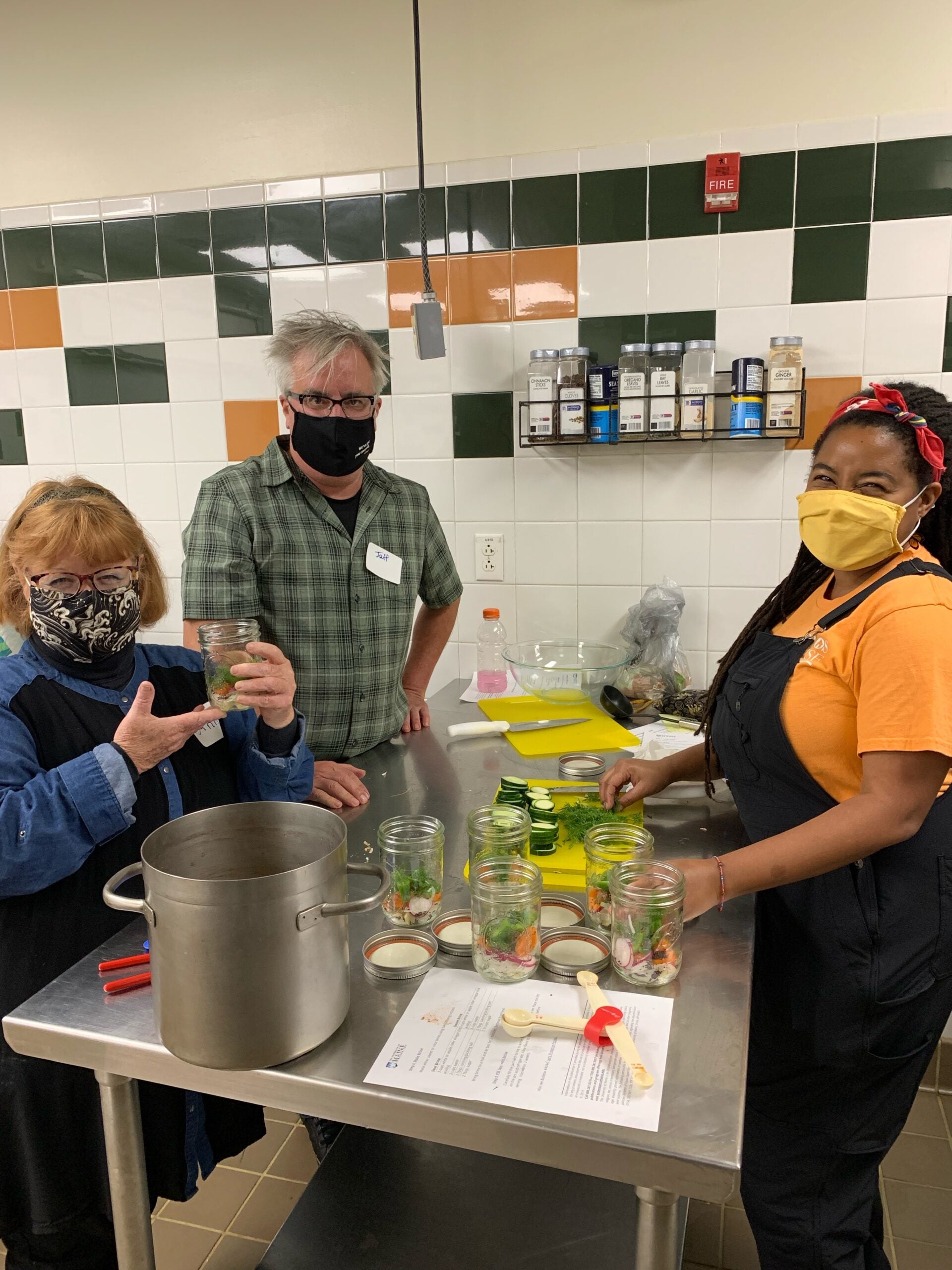 Educator/Coordinator, provide food preservation workshops throughout the year. We currently offer:
- “Hands-on” workshops: We offer a hands-on experience in the URI Food Labs covering water bath canning or pressure canning. Both workshops include instruction of safe canning methods, a book and a canning experience where you will walk a way with a jar of what you made! Interested in this option? Add yourself to the waitlist and we will contact you when we post a workshop.
- Canning Demonstration workshop: This is a two-hour workshop where we demonstrate how to water bath can after discussing important safety information relating to preserving food.
- Lecture workshop: This workshop can range from 1-2 hours, depending on the topics covered (i.e. 1 hour to discuss canning, 2 hours to discuss canning, freezing, and dehydrating).
- Food Recovery for Rhode Island: The six-week Food Recovery Course will help you make the most of your food while exploring the intersection of the food system and the environment. Gain valuable skills to bring back to your home, community or careers. By learning to make the most of your food, you can save money and incorporate healthy, seasonal food into your diet. Hands-on sessions in the field and in the kitchen will build skills in:
- Food preservation – water bath canning, fermentation, freezing and drying
- Composting at the individual and community scale
- Youth education
- Community engagement
- Food preparation and storage,
- Farming practices and more.
For more information or to find out about rates and book a workshop, please contact Nicole Richard at nicolerichard@uri.edu or call 401-874-2977. You can also add yourself to the waitlist for an upcoming hands-on workshop. We require a minimum of 10 people to conduct a workshop. If you want to host a demonstration workshop you must provide an indoor facility that meets the electrical requirements.
Resources
Use only the most recent research-based tested recipes by USDA, cooperative extension service at land grant universities, or the Ball® Blue Book (dated 1989 or later). These same principles apply to jams and jellies, salsas, and pickles and relishes. The processing times and temperatures have been scientifically tested and must be carefully followed. Too little time or too low a temperature may not destroy the bacteria, enzymes, molds, and yeasts in the food. For safe, high quality home canned food, it’s important to follow the directions.
Recommended Food Preservation Websites
Recommended Food Preservation Books
- Ball® Blue Book Guide to Preserving (dated 1989 or later)
- Ball® Complete Book of Home Preserving, Edited by Judi Kingry and Lauren Devine
- University of Georgia, So Easy to Preserve (mail order form found here)