
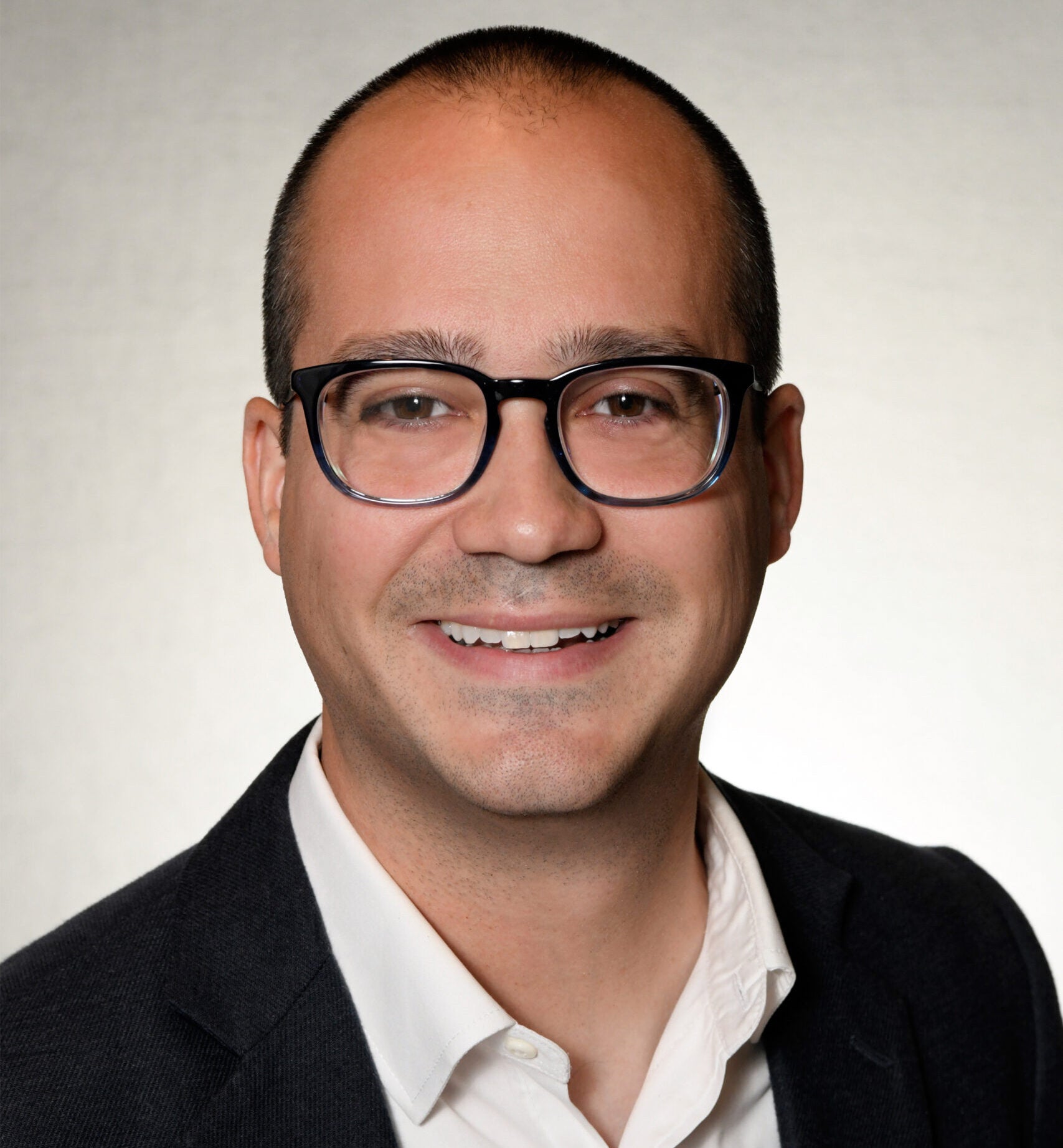
Meet Derek Dubois, a third-year Ph.D. student in Operations and Supply Chain Management at URI’s College of Business. His research explores service supply chains, paradox theory, and the evolving dynamics between supply chain management and media. Outside academia, Derek is also an award-winning filmmaker and writer, with work featured in international festivals and literary outlets. He is ATL’s Graduate Student Spotlight for November 2025. Read his full interview below.
What is your proudest teaching moment?
Documentarian Ken Burns once described his work as an attempt to “wake the dead.” I’ve always loved that line because, to me, excellent teaching is about bringing subjects to life. The best teachers, regardless of discipline, seem to share a few universal qualities.
First, they have a strong command of the material. However, I’d emphasize that mastery isn’t always possible or even necessary. Many of us are asked to teach new courses outside our research area, and in those moments, the key is to do our best and not be afraid to be human.
Second, great teachers can adopt their students’ perspective. Students’ lives are bigger than any one class. Life gets in the way sometimes, and empathy goes a long way. You can still hold high expectations while recognizing that not everyone is “on” all the time.
Finally, I think being cross-disciplinary helps immensely. As an undergrad, I double-majored in Psychology and Film Studies, but I spent most of my career in finance and retail operations at a Fortune 10 healthcare company. I also hold an MA in Media Studies and an MBA in Supply Chain Management (SCM). That mix of experiences helps me connect seemingly unrelated ideas and make classroom discussions more creative—and, hopefully, more relevant to the messy, fascinating real world.
What are you excited to do next in the classroom?
My very active dissertation research explores the conceptualization of the news media service supply chain. I’m most excited to eventually bring this emerging research directly into the classroom. I want students to see how supply chain concepts extend beyond manufacturing or logistics (i.e., through information, trust, and even media systems). By translating my research into interactive projects and case discussions, students can experience how theory-building connects to practice.
Separately, AI and digitalization are actively transforming education and supply chains. I would also be remiss if I didn’t highlight that a critical goal is to help students navigate that transformation critically and creatively through evidence-based, research-informed learning.
What do you hope students look back on in ten years and say about your classes?
It sounds simple, but I hope they remember me as a good person who cared about making complex subjects accessible. I hope students remember that my classes helped them think like scholars. I hope it made them curious, critical, and want to approach problems in new, scholarly, rigorous ways.
What is a time when an assignment/activity did not go as planned, and how did you make it a teachable moment?
Assignments never go perfectly the first time. This is especially true when you’re testing new ideas in a new course. One time, I misjudged the timing for a lecture and ended up with a good chunk of extra class time. Rather than dismissing students early (which I know they would’ve loved), I thought about what skills I wanted them to practice and decided to improvise.
I drew from my years as a hiring manager, where I used to ask candidates “Fermi questions.” (Side note: Fermi questions are problems that test how someone thinks through an impossible-to-know number by making reasonable assumptions). So I grabbed a bunch of dry-erase markers, split the class into groups, and posed a question: How many customer service representatives would Amazon need on Cyber Monday to handle all U.S. live chat inquiries?
The room came alive. Students debated assumptions, estimated data, built models, and defended their reasoning. The final answers varied wildly, but that wasn’t the point. They were thinking critically, collaborating, and checking the logic behind their results. Those fifteen minutes turned out to be the most engaging part of the semester. Now, I end every week with a new Fermi question. It’s become my favorite part of teaching.
How do you envision incorporating teaching into your future career?
I spent the first half of my career in industry. However, I taught part-time as an adjunct in the evenings whenever I could. At a point in my late 30s, I had what some might call a midlife crisis (though without the convertible) and decided to pursue a Ph.D. full-time. In many ways, my years as an adjunct were an extended trial run for what I really wanted to do.
Now, my long-term goal is to build a career as a scholar-teacher who bridges theory and practice. While teaching is what first drew me into academia, research has become an unexpected and deeply fulfilling part of the journey. I’m fascinated by how supply chains extend into domains like media and information systems. These are areas that haven’t traditionally been examined through an SCM lens. The process of creating new knowledge, mentoring students through research projects, and translating scholarly insights into teaching materials allows me to contribute to both academic and practitioner communities. This career truly offers the best of both worlds, and I’m eager to keep growing in both dimensions.
How do you relax after a long day of teaching?
“Relax” isn’t exactly in the job description for a Ph.D. student. However, I do try to make time for what matters. I’ve been married for 17 years, and my wife and I have a nine-year-old son, so quality family time is everything. That might mean watching a movie together or reading before bed, but we also try to find creative ways to explore.For example, this past October, my wife surprised me with a Rhode Island Food Fights Taco Mania pass. 50 coupons for free tacos at different restaurants around RI and MA. So we spent the month crisscrossing the state, following GPS directions and discovering new spots together. Those little adventures recharge me and remind me why balance matters.
What do you like to do for fun?
Back when I worked in industry, people used to ask what I did for fun, and I’d tell them that I taught college courses in the evenings. That always got a laugh. Now, teaching and research both energize me. Whether I’m analyzing data for my dissertation, developing a new classroom case, or brainstorming research questions that connect SCM to media systems, I genuinely enjoy the process of learning and creating.
Of course, outside of academia, I love spending time with my family. This involves exploring new restaurants, traveling, or watching films together. But even then, curiosity and storytelling often find their way back in.