
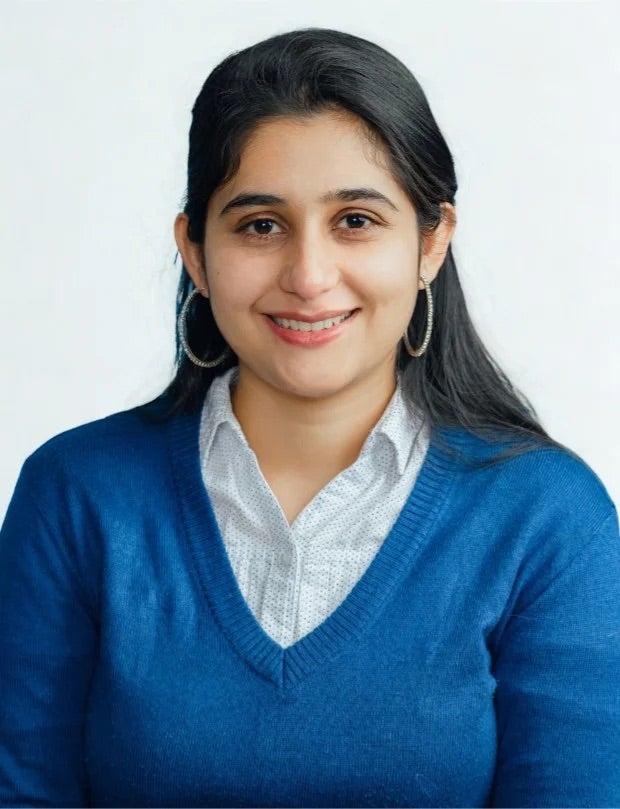
Meet ATL’s graduate student spotlight for March, Mariyam Abbas. Read her full interview below.
What course(s) do you or have you taught at URI?
I have taught PSY200 (Quantitative Methods in Psychology) lab sections and served as the Head Teaching Assistant for PSY113 (General Psychology). In PSY200, I lead labs where students learn how psychological research is conducted and analyzed. Students work with real datasets and learn to interpret results using statistical tools such as R and SPSS, often through collaborative exercises. We also use platforms like AppStream so students can access statistical software and practice analyzing data in a hands-on way. The goal is to help students see statistics not just as numbers, but as a way to answer meaningful questions in psychology. As Head TA for PSY113, I helped coordinate teaching support across sections and worked with other TAs to ensure students had clear guidance and resources while learning foundational concepts in psychology.
What are the three qualities that you think make for a great teacher?
Clarity, empathy, and adaptability. Clear explanations help students build confidence with new material. Empathy helps instructors understand where students are coming from, especially when they feel intimidated by challenging topics. Adaptability allows teachers to adjust their approach depending on what students need in the moment.
What do you hope students look back on in ten years and say about your classes?
I hope students remember that my classes helped them think critically about evidence and research. Even if they forget the details of statistical formulas, I hope they remember how to ask good questions, interpret data thoughtfully, and approach information with curiosity and confidence.
What is a difficult moment that you learned from in the classroom? What did you learn?
As an international student, teaching in my first year at URI was initially intimidating. I had to learn how to balance my own learning curve with supporting students in the classroom. Over time, I realized that effective teaching comes from understanding both students’ needs and your own as an instructor. That experience helped me become more intentional about creating a supportive and interactive learning environment.
How do you envision incorporating teaching into your future career?
Mentorship and teaching will always be central to my career. I enjoy helping students develop confidence in research, critical thinking, and problem solving. In the future, I hope to continue teaching and mentoring students while integrating research and training opportunities that allow them to actively participate in the scientific process.
How do you relax after a long day of teaching?
After a long day of teaching, I usually unwind by going for a walk, cooking, or watching travel and food videos. These small routines help me recharge and return to the classroom with fresh energy.
What do you like to do for fun?
I enjoy trying new and adventurous activities. Recently, I started learning how to ski, which has been both challenging and fun. It is not easy to pick up later in life, but it has been a great reminder that learning something new always requires patience and practice.