
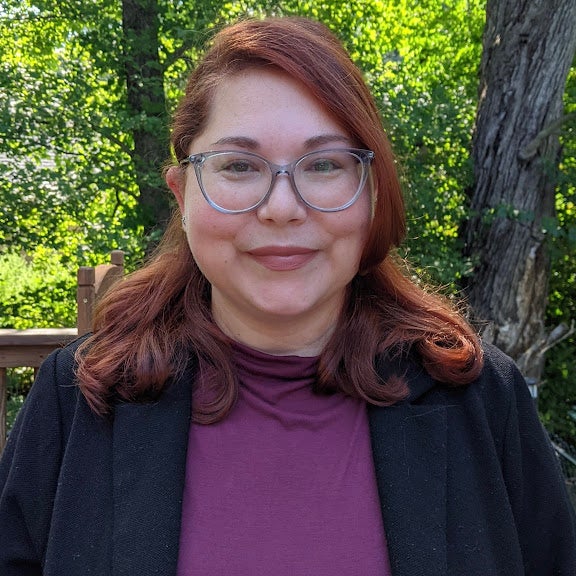
Meet ATL’s Faculty Spotlight for December, Dr. Brittany T. Martin. She joined URI as an Assistant Professor of Criminology and Criminal Justice in Fall 2023. Her research explores how criminal law and policy impact social inequity, focusing on punishment, collateral sanctions, and legal financial obligations. Using methods from interviews to advanced statistical analysis, Dr. Martin brings a comprehensive approach to understanding the justice system. She is committed to inclusive and innovative teaching while also fostering a learning community.
What course(s) do you teach, or have you taught, at URI?
I teach several different courses at URI, including Crime and Delinquency (CCJ230/SOC230),
Introduction to Courts and Criminal Procedure (CCJ285), Introduction to Corrections (CCJ290),
Criminal Law and Society (CCJ456), and Gender, Crime, and Justice (CCJ403).
What do you hope students look back on in ten years and say about your class(es)?
I hope that in ten years, students look back and say my class taught them how to think critically
and persevere, even when learning felt uncomfortable. I want them to remember that failure was
part of the process and that growth often comes from challenges. I hope they remember that we
valued evidence over opinion, explored ideas critically, and connected topics not just to future
careers but to becoming informed, empowered citizens. Most of all, I want them to feel that my
classroom was a place where curiosity, resilience, and respect mattered.
What is your proudest teaching moment last year?
My proudest teaching moment this past year was seeing four of my former students become
undergraduate classroom learning assistants for my CCJ230/SOC230 course. Watching them
transition from learners to mentors for new CCJ students has been incredible. They’ve started to
unpack why professors design lessons and assessments the way we do, and seeing that deeper
understanding develop has been so rewarding. It’s a full-circle moment, proof that the classroom
can inspire leadership.
What is one piece of teaching advice that you have received that you would like to pass on to
others?
One piece of teaching advice I’ve received and would pass on is this: Be flexible in your approach, but firm in your expectations. Teaching is dynamic, and students come into our classrooms with diverse needs, so it’s important to reflect on your own practices and adapt as needed. A big part of that flexibility is listening to students and their feedback, whether through formal surveys, informal conversations, or observing engagement. These are elements that often guide adjustments I’ve made from semester to semester. At the same time, maintaining clear, consistent boundaries and expectations helps create stability and fairness. For me, this means regularly asking myself, ‘Is this rule or method serving the learning goals and supporting my students?’ If not, I adjust, often based on what students tell me. One expectation I hold firm on is using scientific evidence to support claims rather than relying on opinion. This not only strengthens content mastery, but also builds critical thinking skills. Balancing self-reflection, student input, and evidence-based rigor fosters growth and a sense of community in my classroom.
What are the 3 qualities that you think make for a great teacher?
Student-Centered, Evidence-Based, Community-Builder.
What do you like to do for fun?
I go to yoga at least once a week! I have two young kids (almost 6 and almost 3), so yoga is my
me time!
What are you streaming that you want others to know about?
Honestly, I am rewatching The Great British Baking Show. It’s just a feel-good show, and I can
then have my husband bake the things we see on it.
Would you like to nominate a faculty member to be included in an ATL Monthly Spotlight?
Submit this form for consideration.