
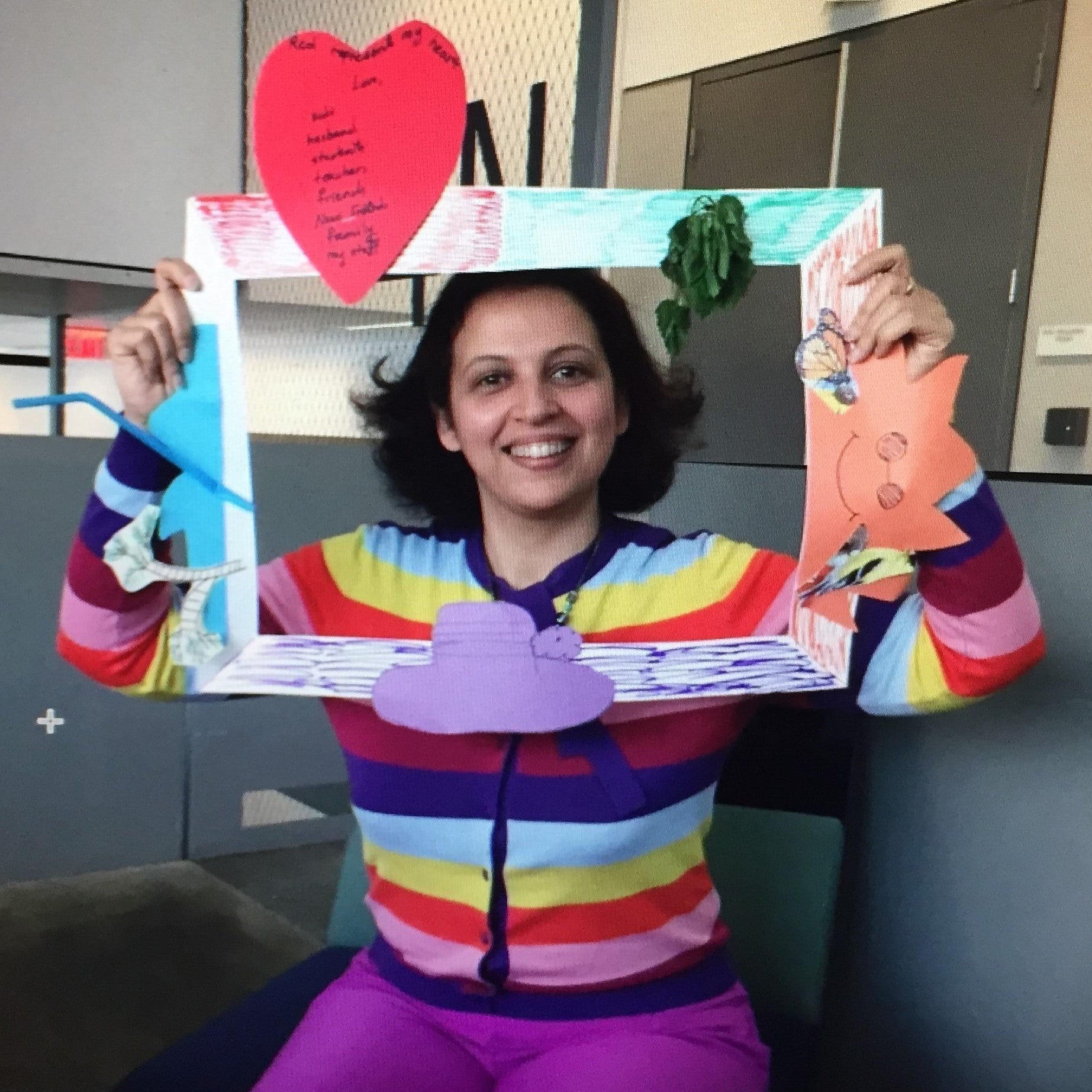
Hanan Mogawer, Assistant Teaching Professor in the Department of Chemistry (College of Arts and Sciences), is ATL’s March 2024 Faculty Spotlight.
Spotlight Statement
Ever since my high school days, I have been drawn to the fields of chemistry education and STEM, inspired by my remarkable chemistry teacher. Following the completion of my PhD at URI, I embarked on my teaching career and have not looked back since. My role as an educator is a two-way street: I learn from my students just as much, if not more, than they learn from me. I teach General Chemistry I & II, along with CHM 371, a new course titled “Undergraduate Learning Assistant in Chemistry” that I launched this fall. This course is designed to prepare undergraduate students to serve as mentors for their peers in CHM 101 classes.
I place a strong emphasis on connecting with my students, as I believe that forming meaningful connections is crucial to unlocking their intrinsic motivation. One student, on the verge of leaving the STEM field, once told me, “If it weren’t for your kindness and your innovative approach to teaching, I would have quit. Thank you, Dr. Mogawer; I’ll never forget you.” Such feedback reinforces my commitment to education. I maintain relationships with my former students, who reach out for advice or simply to check in, reflecting the lasting impact of our connection. Remarkably, many of my high school students have pursued careers in chemistry, pharmacy, or chemical engineering, often citing my influence as their inspiration.
My master’s degree in chemistry education from Brown University marked a pivotal moment in my career, shaping my teaching methodologies. I have since embraced collaborative and inquiry-based learning to foster active student engagement. My advisor taught me that teaching is a dynamic, multi-step process that requires patience to achieve desired outcomes—a lesson I apply daily. For example, whenever possible, I use analogies to demystify concepts, such as explaining oxidation through the familiar process of rust formation. This approach not only piques student interest but also cultivates an engaging and inclusive classroom environment. This motivated me to apply and receive with my colleague the Champlin Foundation grant to expand upon exposing our students to real life experiences while learning CHM 101 topics.
To my fellow educators, I share this: Teaching is indeed a challenging yet immensely rewarding profession. Witnessing students’ “Aha!” moments and knowing you’ve made learning enjoyable and impactful is truly gratifying. By connecting with students, adapting creative strategies, and embracing collaborative learning, we can make a significant difference. As I continue my journey in education, I remain committed to inspiring my students.
Outside the classroom, I find solace in socializing with friends and taking walks along the sea wall with my husband in Narragansett. These moments of relaxation and reflection prepare me for another exciting and unpredictable week of teaching.