
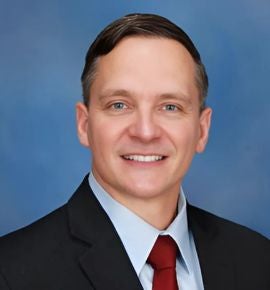
The May 2025 ATL Faculty Spotlight is Shane Tutwiler, an associate professor in the Feinstein College of Education and director of the PhD in Education program.
What course(s) do you teach, or have you taught, at URI?
I teach a blend of undergraduate and graduate level courses at the Feinstein College of Education. For undergraduates I most often teach courses on educational psychology (EDC 312) and an introduction to American education (EDC 102). At the graduate level I teach PhD courses on modes of Inquiry (EDP 610) and advanced quantitative research methods (EDC 624).
What is one piece of teaching advice that you have received that you would like to pass on to others?
Always take the time to get to know your students. Our ability to assess their learning and adjust our instruction to meet their needs is impacted greatly by the individual experiences and strengths that students bring with them to our courses. Try not to make any assumptions, or as few as possible.
What are you excited to do next in the classroom?
I am very excited to find ways to incorporate AI/LLMs into my classes through collaborative prompt-building and evaluation. For example, this might help my undergraduate students generate a broader initial range of ideas for their writing, or help my graduate students develop and debug the code required for their advanced statistical work.
What do you hope students look back on in ten years and say about your class(es)?
I always hope that my students look back and realize that they CAN learn new/complex things with the right scaffolding. I know that very few students will feel like they’ve *mastered* the content or skills from my classes, but I hope that most of them, in ten years, realize that they’re continuing to learn new things because of their success in my class.
How have you seen teaching evolve over your career? And/or where do you see teaching going?
It’s becoming increasingly difficult to view myself as the “authoritative source” of the information in the classes I teach, both undergraduate and graduate, given the widespread availability of free resources across many domains. An industrious student with access to Wikipedia and YouTube could probably learn a majority of the facts/content from my courses. As such, my job over time has evolved into becoming a facilitator and steward of that learning process. I can highlight the key concepts and make them real through sharing my own experiences as a high school science teacher, naval nuclear engineer, and professor. I can give feedback on their knowledge, skills, and beliefs as they change. And I can point them in the right direction in terms of additional resources and frontiers for new study.
What are you streaming that you want others to know about?
I am a HUGE fan of the K-Drama “Extraordinary Attorney Woo”, about a neurodivergent lawyer in Seoul, South Korea. I can’t recommend it enough!!!
What do you like to do for fun?
I study martial arts, train for and (slowly) participate in triathlons, and write speculative science fiction.