
At the University of Rhode Island, Disability, Access & Inclusion (DAI) supports a diverse and evolving community of students. Disability is not a single experience; it reflects a wide range of identities, conditions, and lived realities.
Over the past decade, we’ve seen a steady increase in students engaging with our office, particularly in areas such as ADHD and mental health.
This growth reflects
- Increased awareness and diagnosis
- Reduced stigma around seeking support
- Expanded access to educational pathways
We see this as a positive shift toward access, self-advocacy, and inclusion, and a sign that more students feel empowered to seek the support they deserve.
Student Data & Demographics
Our student population includes individuals with a wide range of disabilities, including but not limited to
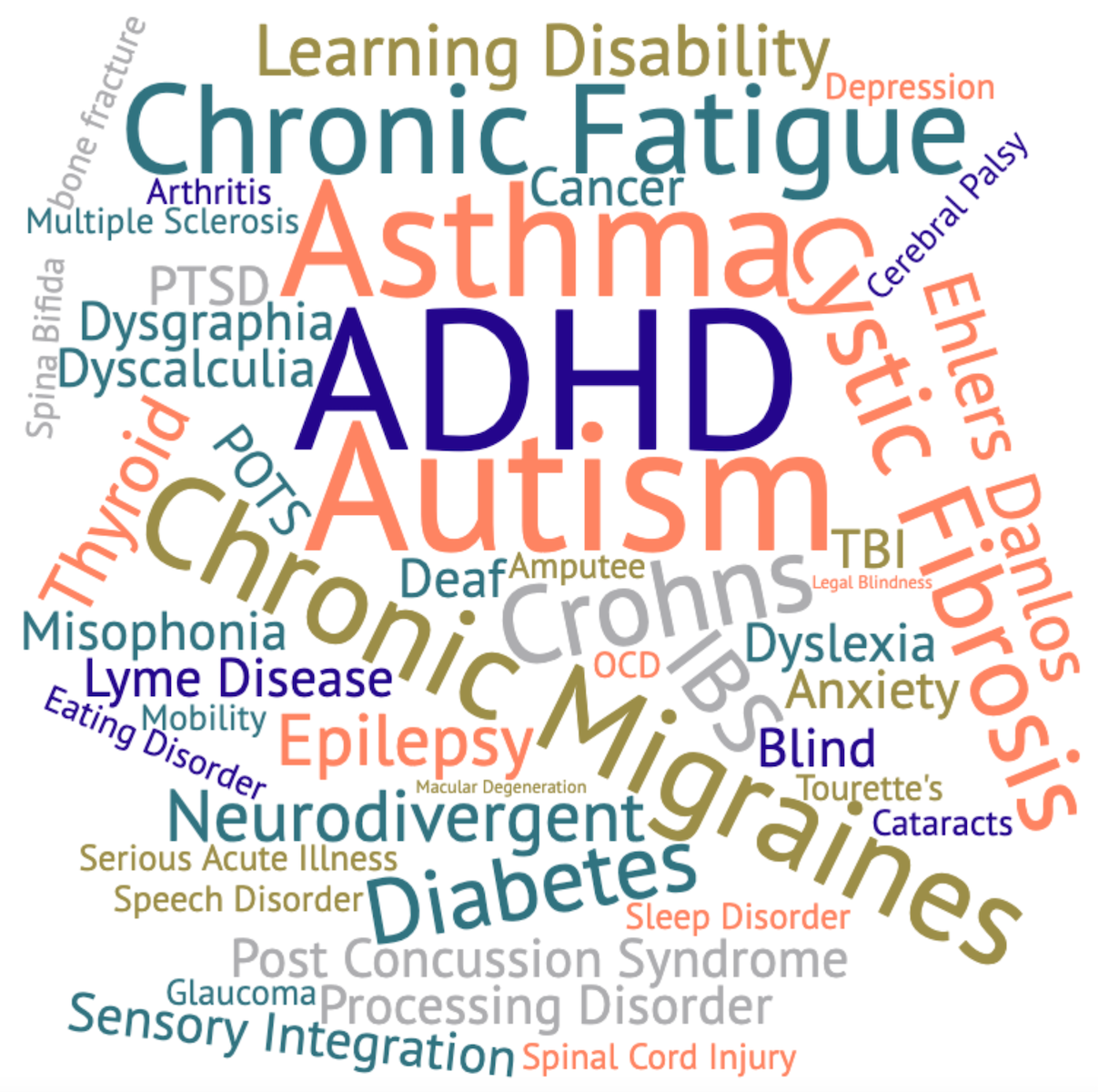
Our student population includes individuals who hold one or multiple disability identities that may be visible, non-apparent, permanent, temporary, consistent, or fluctuating.

Academic Year
2024-2025
Putting Data into Context
While some diagnoses, such as mental health and ADHD, represent a larger portion of our registered students, this does not mean other experiences are less significant. Every student’s experience is unique and equally valid. Our approach is not one-size-fits-all, but designed to be flexible and responsive.
We recognize disability as an important aspect of identity and diversity. Whether you have a recent diagnosis, a long-standing condition, or are still exploring your needs, you belong in this conversation.
All disabilities and student experiences are unique and equally valid. Our approach is not one-size-fits-all, because no singular approach could meet the needs of such a varied population.
We recognize disability as an essential component of human diversity. Whether it’s a recent or a long-standing diagnosis, you deserve an equal opportunity to achieve your goals!