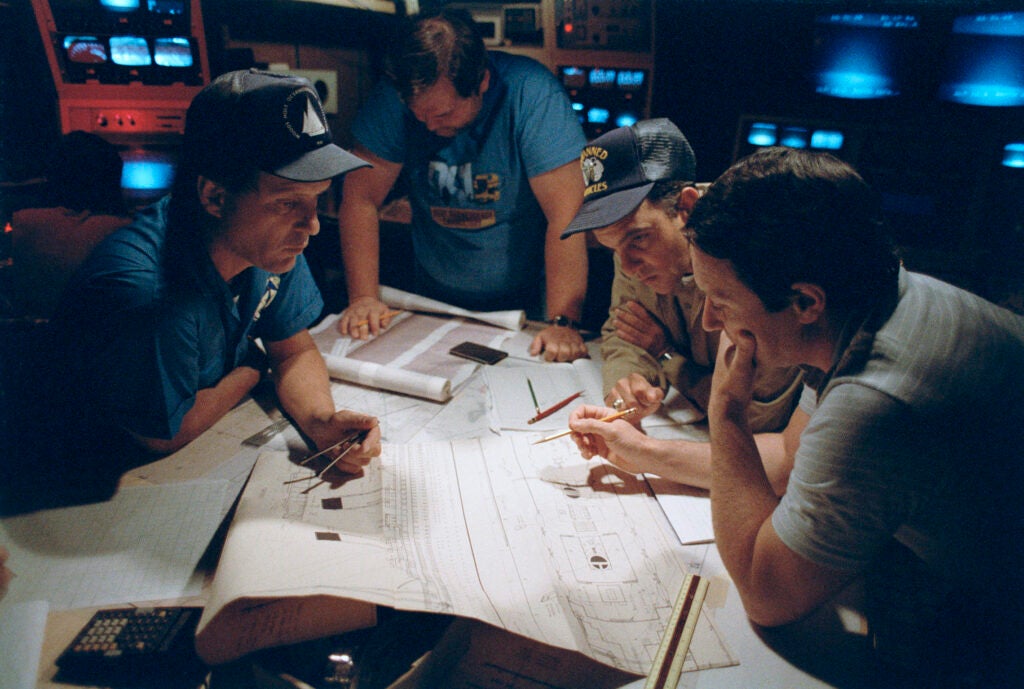
The evolution of telepresence in ocean exploration began as a visionary concept by Dr. Robert Ballard in 1981, aiming to use satellite technology to broadcast deep-sea discoveries in real time. This vision was first realized in 1989 with the JASON Project, which utilized Remotely Operated Vehicles (ROVs) to deliver live educational programming directly to classrooms and museums. By replacing the need for scientists to physically dive in manned submersibles, Ballard’s early “tele-presence” allowed a much larger and more diverse group of experts to participate in missions from the surface, effectively democratizing access to the deep ocean.
The paradigm shifted toward a permanent, global infrastructure in the late 2000s, leading to the construction of the Inner Space Center (ISC) at the University of Rhode Island’s Graduate School of Oceanography. The ISC was a downlink hub for high-bandwidth satellite feeds from vessels, receiving high-definition video and data feeds from the E/V Nautilus and the NOAA Ship Okeanos Explorer. The video and data was then rebroadcast to the internet for scientists and the public to participate in exploration in near real-time. This capability enables scientists from around the world to collaborate on dives, providing expertise in real-time as ROVs including Hercules and Deep Discoverer explore previously unseen seafloor features.
Today, telepresence has transformed oceanography into a 24/7, globally accessible endeavor that serves both scientific and educational purposes. Through the ISC, the general public can watch live streams and interact with researchers or others aboard a vessel at sea, turning deep-sea exploration into a shared human experience that has produced viral moments, such as the discovery of unique marine life or underwater cultural heritage. Collaborations using telepresence extend beyond the ocean, as NASA tests variations on the model for future space missions, proving that the systems pioneered by Ballard and the ISC are essential for exploring any extreme environment.