
The Inner Space Center (ISC) was established at the University of Rhode Island’s Graduate School of Oceanography (GSO) as a permanent hub for telepresence-based ocean exploration. Founded by Dr. Robert Ballard and Dr. Dwight Coleman, the physical facility officially opened on June 1, 2009, as part of the $15 million Ocean Science and Exploration Center.
The ISC has helped transform how people participate in ocean exploration. By connecting ships, shore-based experts, data, technology, and audiences, the ISC has helped make exploration a distributed activity—one that extends far beyond the people physically aboard the vessel.
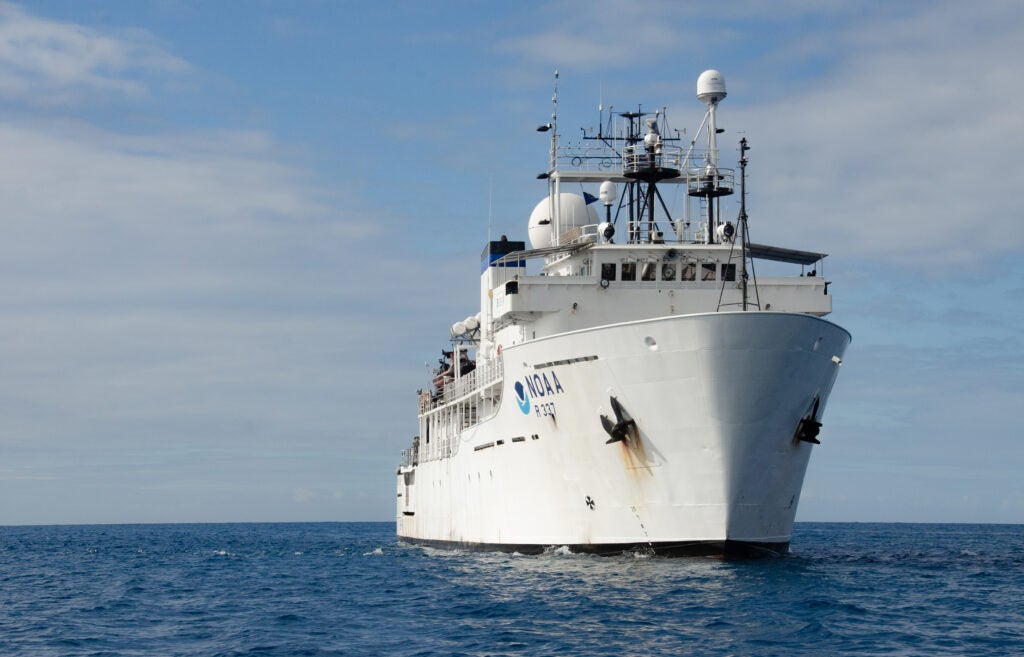
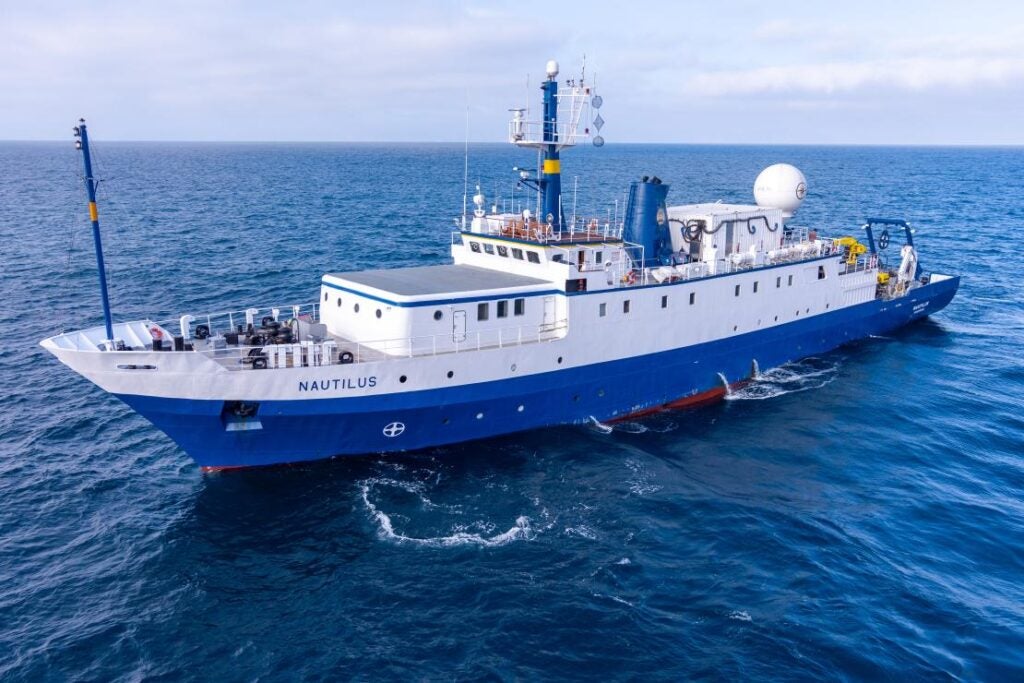
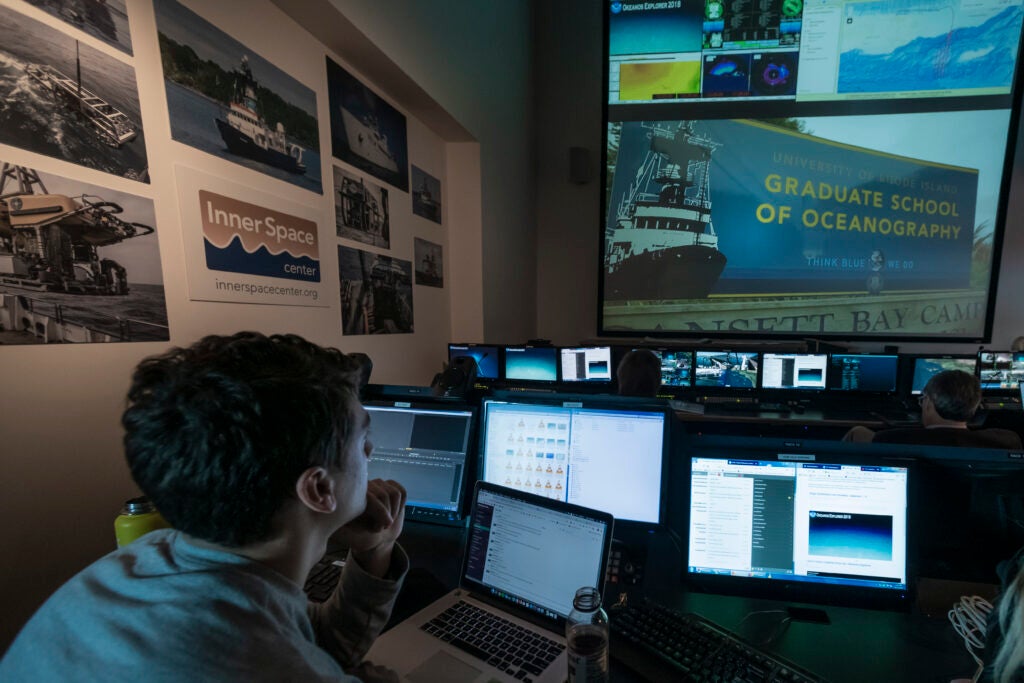
Since 2009 the ISC has served as the primary mission control for the world’s leading exploration vessels. ISC has provided critical ship-to-shore connectivity for the E/V Nautilus and the NOAA Ship Okeanos Explorer, the first two research vessels to be fully telepresence-enabled. The facility’s downlink for high-bandwidth satellite data enabled low-latency sharing of video and data. The Center’s Mission Control served as an operational and training space for support and participation in oceanographic missions, occasionally acting as a dynamic filming location as well.
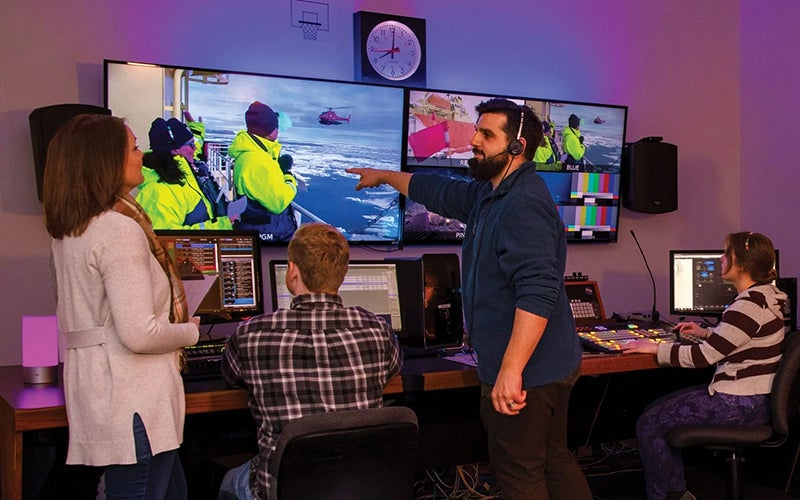
The Production Control Room functioned to broadcast live video and data from ROVs to a global network of scientists, educators, museums, aquariums, and the public. In the early years of the ISC, the production control room supported shore-based, live, programs for the Ocean Exploration Trust’s (OET) E/V Nautilus. Participating audiences benefitted from thousands of live interactions produced from teams working out of the Center. In one summer alone, there were more than 1,500 live interactions that connected to global audiences, directly, while they spoke with and learned from experts at-sea.
The Center’s mission has continually expanded beyond ocean exploration with ROVs to include diverse technical, educational, and scientific frontiers. Distributed operations using AUV Sentry aboard the Okeanos Explorer with remote engineering and data processing from the ISC was an early proof-of-concept in 2012 (Kaiser et al., 2012). In 2014 the National Science Foundation funded a project with a focus on undergraduate learning in ocean science through the use of telepresence (Pallant et al., 2016; Stephens et al., 2016). The ISC provided key facilities and experts for joint NASA-NOAA projects such as the 2018 and 2019 SUBSEA expeditions, using deep-sea environments as analogs to test communication tools and practices for future missions to Mars or Europa. While the main focus of the Center is providing real-time access to ships and platforms at sea, it also expands access after an expedition ends. The tape lab functions as a repository for high resolution deep-sea video and distributes video by request. And since 2019 live dive recordings have become a permanent public resource through a YouTube dive recording channel for E/V Nautilus created by the ISC. The Okeanos Explorer ROV video will have a similar public distribution path starting in late 2026.
In 2025 the ISC began operating the network and data systems aboard the NOAA vessel Okeanos Explorer. Since then the team has modernized and operated the data, network, and video systems with support both at-sea and on shore.
Today, the ISC remains a global leader in ocean literacy, supporting major national education initiatives and continuing to upgrade its technology to accommodate new research vessels like the R/V Narragansett Dawn.