
From biological family to found family, graduate assistant Leetal Young credits the influential women in her life for helping her become the woman she is today
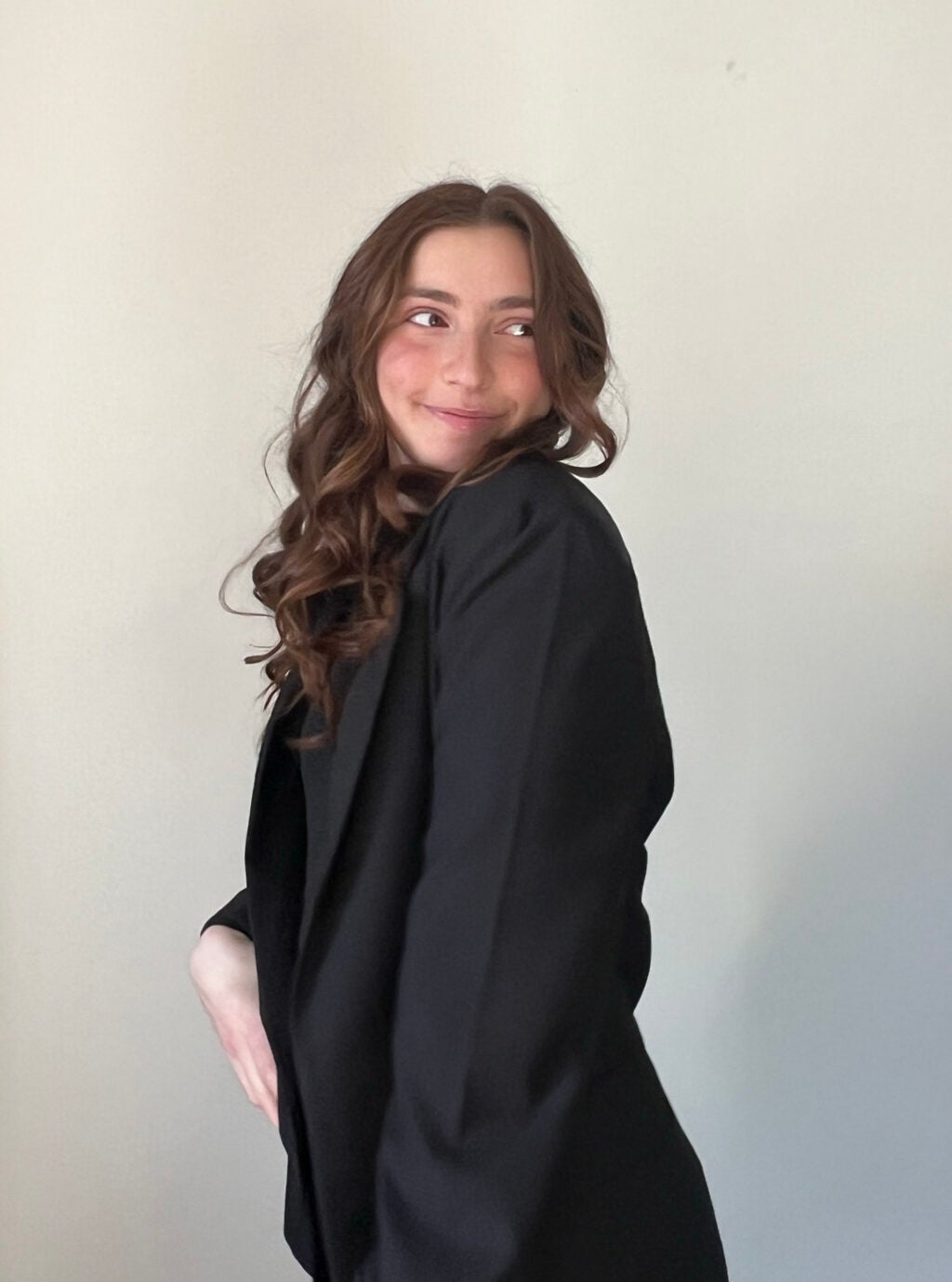
As part of Women’s History Month, we are profiling remarkable women within the Division of Student Affairs who contribute immensely to the fabric of our campus community and inspire others to push for gender equality and progress at URI and beyond.
KINGSTON, R.I. – March 7, 2026 – Going from her family of 17 siblings to the University of Rhode Island on her own was a big switch for Leetal Young ’25, but it proved to be the start of a very transformative six years in her life at URI.
Her lively household helped shape who she is and taught her to listen effectively, show up for others, and connect with people of different personalities and perspectives. All of these qualities help her to thrive in her new role in the collegiate recovery program (CRP), “Rams Together for Recovery & Wellness.”
Young, a Wyckoff, N.J., native, is the graduate research assistant for the CRP, which is a brand new program at URI within the Division of Student Affairs and Health Services to assist students in recovery, often from substance use. She has been a part of this project from the ground up since the second it secured grant funding. She has spent a lot of time designing the structure, programming, and student experiences from scratch.
She completed her undergraduate degrees in psychology and human development and family studies at URI in 2025 and is in the midst of completing her master’s degree in mental and behavioral health counseling, during which she has formed close mentoring relationships with Student Affairs staff. Influenced by her 10 sisters and strong female voices, she was inspired during college to remain at URI for graduate school.
Young recalls: “The impact this university and these people had on my life inspired me to stay and continue my journey here as a graduate student. I now have the opportunity to give back and support students in the same way others once supported me – especially students who are navigating a lot behind the scenes.”
Now that the CRP is up and fully running, she is able to give back as she hoped. Her main roles are assisting students in recovery or those seeking healthier coping strategies, building referral pathways with campus partners, and creating a welcoming environment where students can connect and feel supported.
CRP is collaborating with the Association of Recovery in Higher Education (ARHE), and Young has been given the opportunity to speak at an upcoming national conference about her design for “Move to Heal,” a support group she formed on campus. “Move to Heal” is a group experience that combines about 30 minutes of movement (tailored to all ability levels) followed by an hour of facilitated conversation about mental health and connection. The goal is to help students regulate, connect with others, and experience how physical movement can support emotional well-being. It creates a space where students can show up as they are, move their bodies, laugh, talk, and leave feeling more grounded and connected.
Young has been able to reflect inward during her time at URI while she’s away from her large family. In her words, “she has taken ownership of her own future,” and is hoping to continue to positively impact those around her. In today’s feature, we learn more about how she hopes to inspire others, the women who have impacted her life, her top piece of advice, and her thank you to URI. Above all, Young’s journey is a testament to resilience and growth, inspiring all who read her story.
How do you hope to inspire others in your role?
“I hope to inspire others by showing that growth and resilience are built through both authenticity and action. Life doesn’t always go the way that we expect, and many people are navigating challenges that others may never see. I try to encourage people around me to approach life with a growth mindset. To see challenges as opportunities to learn, and embrace mistakes that create space to do better.
“Balance is also something I talk about often. It’s easy to get caught up in constantly doing more, achieving more, and pushing harder, but taking care of ourselves, making space for gratitude, and spending time with people that fill our cups are just as important. A big part of my message is also about being real. I want people to know they don’t have to have everything figured out to move forward.
“The people who believed in me and helped guide me have made a lasting impact on my life, and I hope to pay that forward by creating spaces where others feel supported, encouraged, and capable of becoming the best version of themselves.”
As we celebrate Women’s History Month, is there anyone that has helped to make you the woman you are today?
“I feel incredibly fortunate to have been surrounded by strong women throughout my life. Growing up with 10 sisters meant I learned early on about deep empathy, strong communication skills, and unconditional support and protection.
“Many of the women I encountered through URI helped shape me in new ways. Through their mentorship and care, I learned to lean into my confidence and authenticity. They taught me how to support others, lift people up, and how powerful it can be when women genuinely support one another’s growth.
“Those experiences changed the way I show up for others. I try to carry forward the same spirit of encouragement and support that so many women showed me along the way, and I hope to create environments where people feel safe to grow, take risks, and become the best version of themselves.
“I also learned how to genuinely listen to the people in front of me and make them feel heard. The women I already named, my sisters, Catherine Copeland, Lindsey Amore, Jen Hodshon, Arielle Sherman, and my therapist throughout my undergrad definitely helped make me the woman I am today.”
What is your number one piece of advice you like to give to those you meet?
“One piece of advice I share often is to keep showing up for yourself, even on the days when it feels hard. Growth happens through small, consistent choices over time. I also encourage people to move their bodies in ways that feel good to them. Movement is one of the most powerful tools we have for regulating our minds, building resilience, and reconnecting with ourselves. Finally, I’d say be genuine and find your people. When you show up authentically, the right people tend to find their way into your life. And when they do, don’t be afraid to lean on them. Asking for help and accepting support is one of the most important parts of growing, moving forward, and connecting with others. I love the quote ‘two vulnerable people will always find a way to connect.’”
Anything else you’d like to share?
“I would just say I feel incredibly grateful to be part of a community like URI. So many of the opportunities and experiences that shaped me happened because someone took the time to encourage me, mentor me, or simply believe in me. That kind of support can change the direction of a person’s life. Because of that, a big part of what motivates my work is trying to create spaces where students feel seen, supported, and connected.”
###
Lyla Kiloski, intern for the URI Division of Student Affairs, wrote this news release.