
A learning outcome is a clear statement of what students should know, be able to do and demonstrate by the time they complete their program. Good outcomes are the foundation of meaningful assessment — they tell you what to measure and why.
How to get started
1. Ask the right question
Start by asking: “What are the most important things a student should know or be able to do after completing this program?” Work through this with a small group of faculty to surface different perspectives and challenge assumptions.
2. Draft 3–7 outcome statements
Identify the core domains your program covers. Write each as a statement that begins with an action verb and describes observable, measurable behavior — not attitudes or general goals. Use Bloom’s Taxonomy for a list of action verbs: analyze, evaluate, demonstrate, apply, design, compare, create — rather than vague verbs like understand or appreciate.
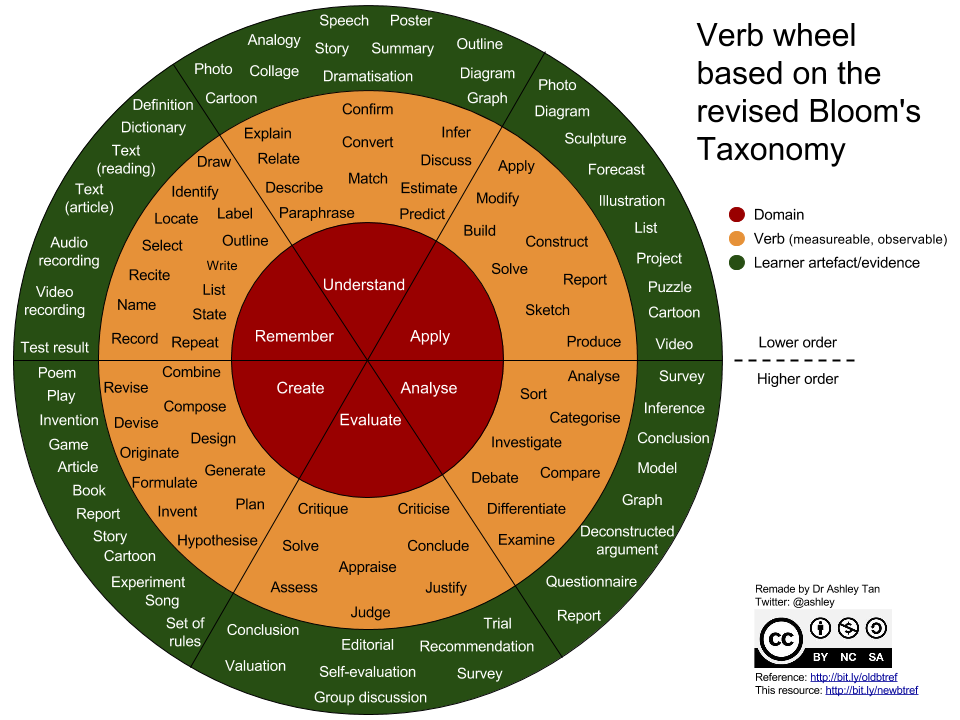
3. Test each outcome against 3 questions
Before finalizing, ask these about each outcome:
- Can it be observed in student work?
- Can it be measured consistently?
- Does it demonstrate learning? (Not just participation or satisfaction)
4. Publish your outcomes
All programs at URI are required to post their learning outcomes publicly on the program website. This is required by NECHE and by URI’s Faculty Senate assessment policy. Once published, send the link to the Assessment Office (assess@uri.edu).
What Looks Good vs. What To Avoid
| Too Vague & Hard to Measure | Specific & Measurable |
|---|---|
| “Students will appreciate the benefits of learning a foreign language.” | “Students will demonstrate reading comprehension in their professional field.” |
| “Students will develop problem-solving skills.” | “Students will apply basic research methods including design, data analysis, and interpretation.” |
| “Students will understand the complexity of sociocultural diversity.” | “Students will recognize and discuss the complexity of sociocultural diversity.” |
The key difference: Vague outcomes that describe attitudes or internal states, such as “appreciate” and “understand”, are difficult to identify in student work. Strong outcomes describe actions like “demonstrate,” “apply,” and “analyze” produce more substantive and collectable data.
What do you want to do next?
← Back: SLOAA Homepage
← Back: Program Assessment