
Program assessment is the process by which faculty collect and review evidence of student learning to understand how well a program is achieving its goals and to use data to make informed decisions. It is not about evaluating individual students, but about evaluating student learning opportunities within the program.
Program Assessment at URI is a structured, ongoing process that helps programs understand what students are learning and how the program can improve over time. Rather than a one-time task, it is a continuous cycle that supports reflection, decision-making, and program development.
This faculty-owned process is grounded in clear expectations for what graduates should know and be able to do, and aligns with requirements from URI’s accrediting body, the New England Commission of Higher Education (NECHE).
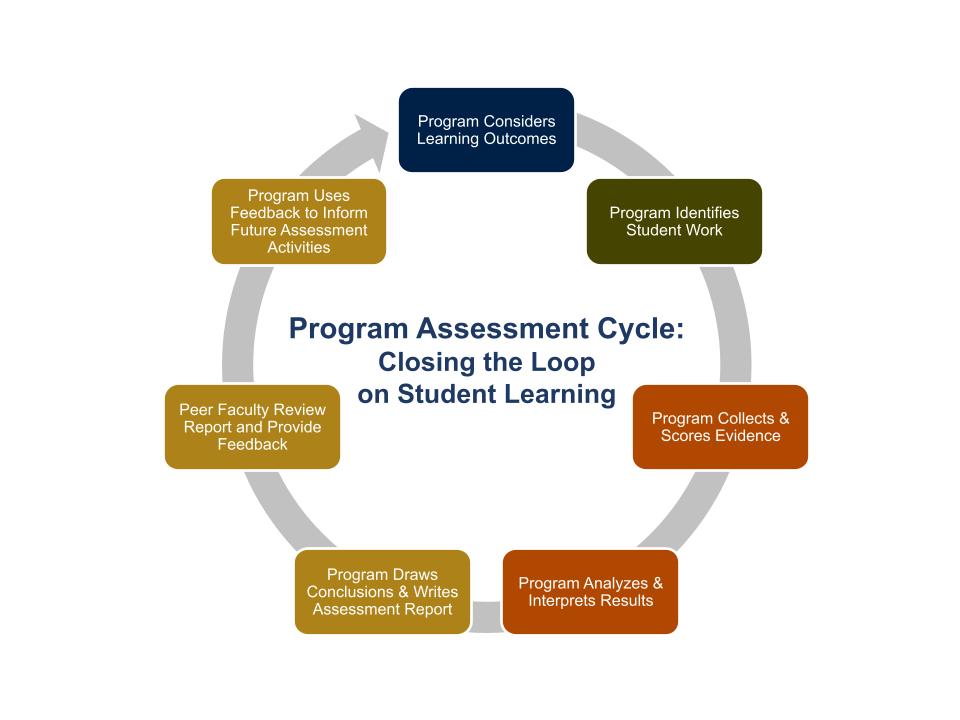
The Assessment Process
Step 1: Define Outcomes: Describe what students should know, value, or be able to do upon completing your program. Outcomes should be specific, measurable, and align with program goals.
Step 2: Identify Evidence: Determine how your program will measure student learning using direct and indirect evidence. Curriculum mapping helps identify where outcomes are addressed across courses.
Step 3: Collect and Analyze Data: Gather student work and evaluate it using consistent criteria to generate reliable information about student learning across your program.
Step 4: Interpret Results: Review findings as a faculty team to identify strengths, recognize gaps, and understand what the data means for your program. This turns data into actionable insight.
Step 5: Improve — Close the Loop: Use findings to make informed changes that lead to real improvement. Closing the loop is what makes assessment meaningful.
- Assessment Report Template (Accredited and Non-Accredited)
- Criteria for a Well-Developed Report
What do you want to do next?
← Back: SLOAA Homepage | Next: Assessment Forms and Resources→

Need Help?
Email assess@uri.edu with any questions.
sCHEDULE A CONSULTATION