More than 500 high school and middle school students visited the Kingston campus for the annual event
High school and middle school students from around the state got a hands-on experience with the high-tech equipment used by the University of Rhode Island College of Health Sciences during URI’s annual celebration of National Biomechanics Day in Mackal Field House on April 8.
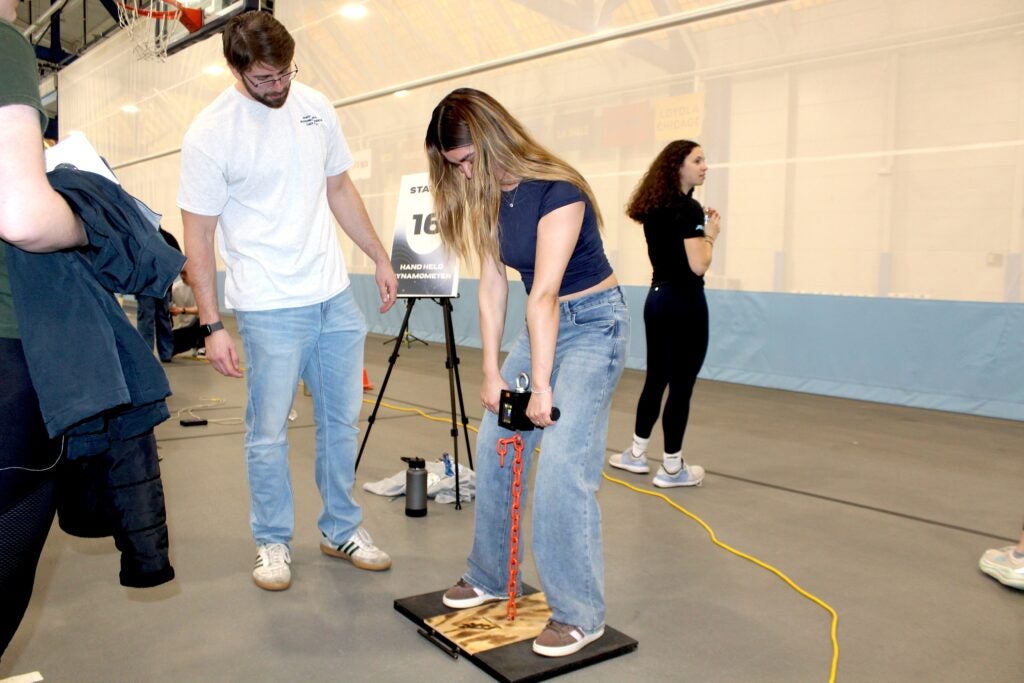
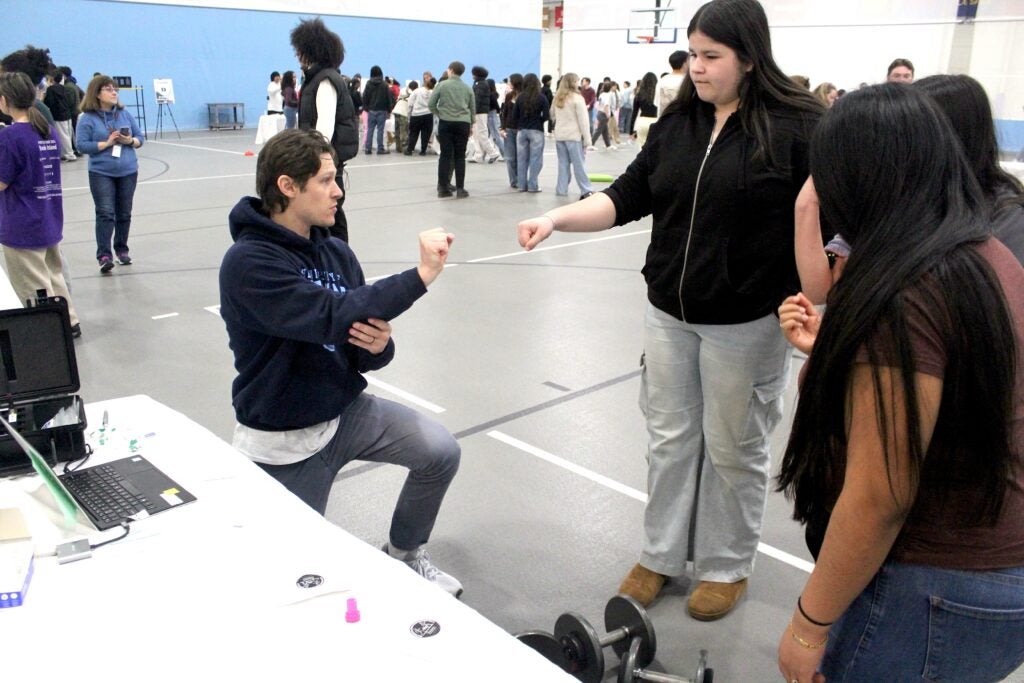
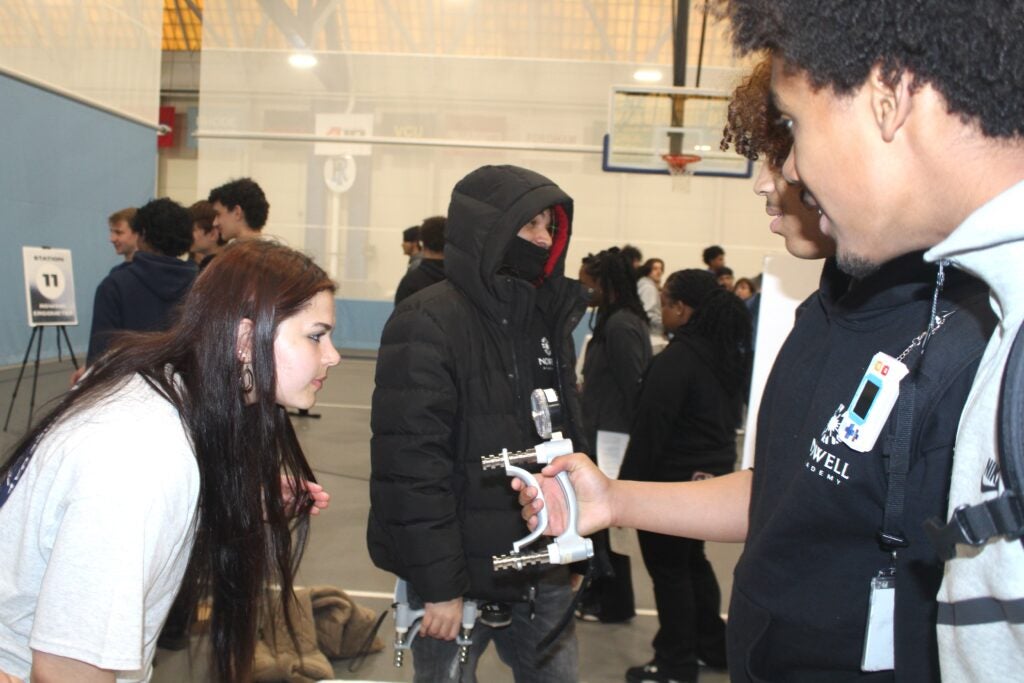
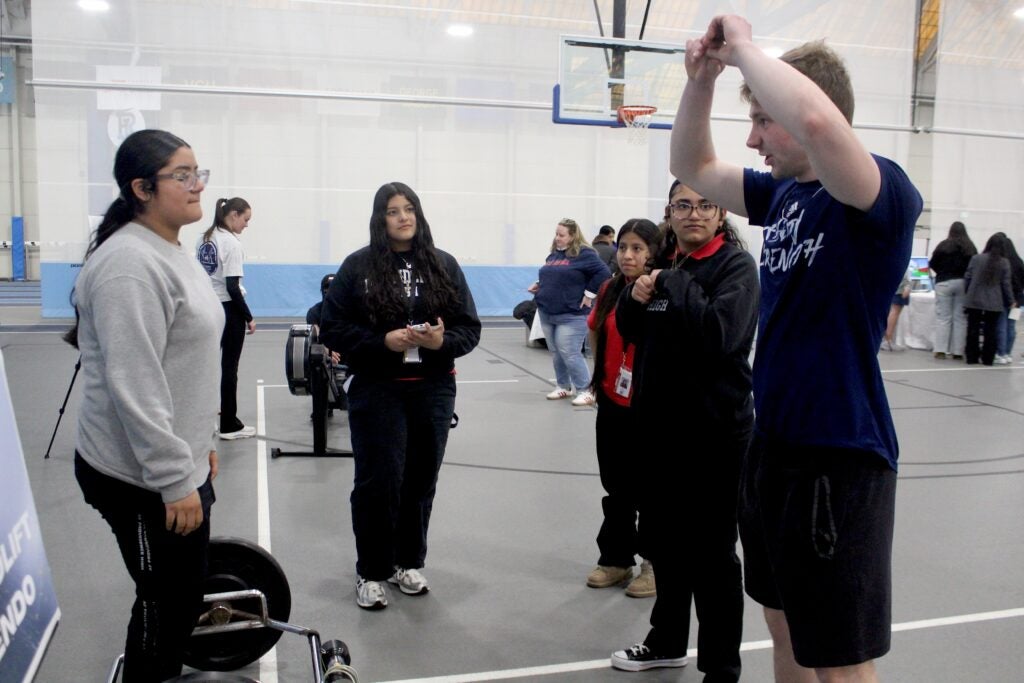
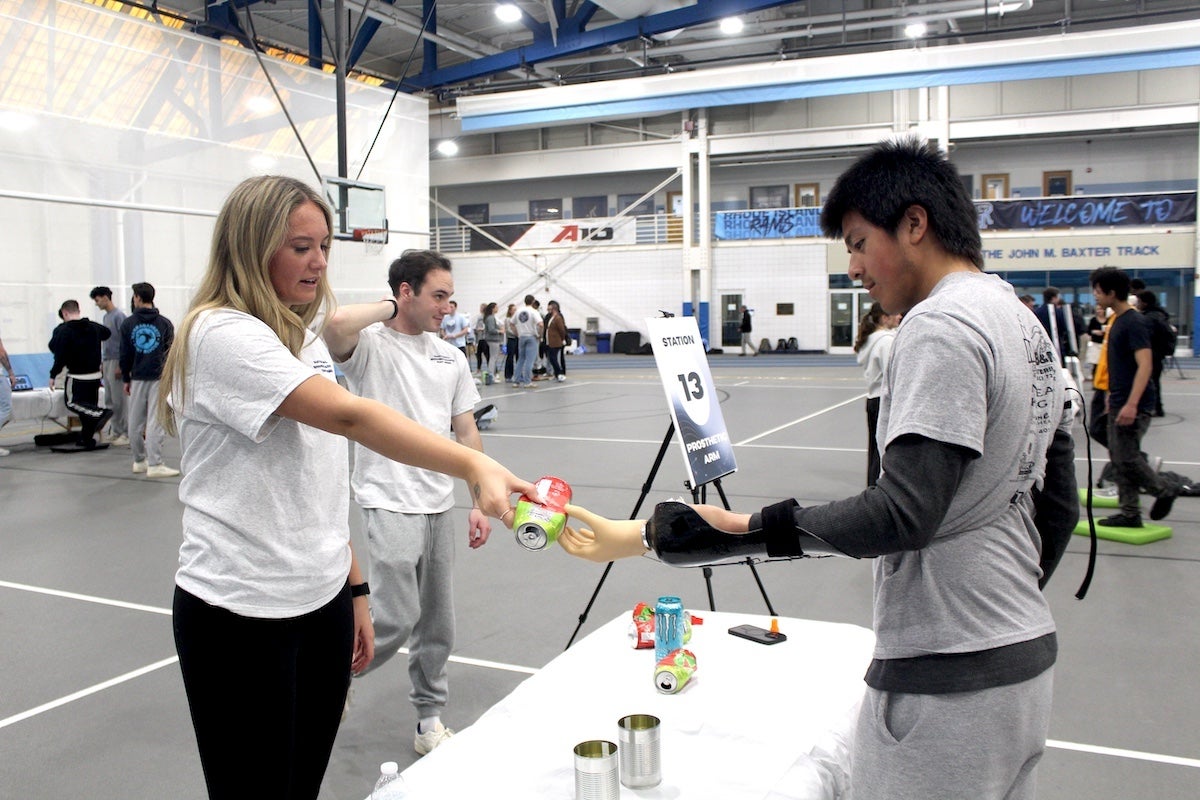
More than 500 students from got interactive lessons on biomechanics and other science, technology, engineering and math (STEM) fields from students in the college. The younger students sampled the equipment used in biomechanical research and challenged themselves—and each other—in several physical tests laid out across the field house.
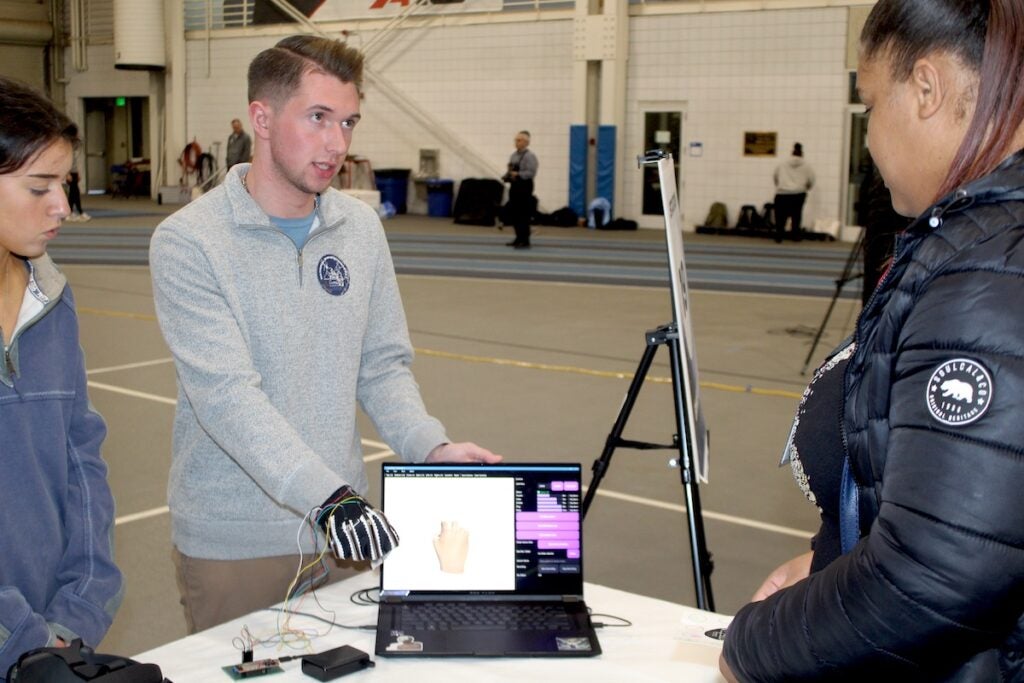
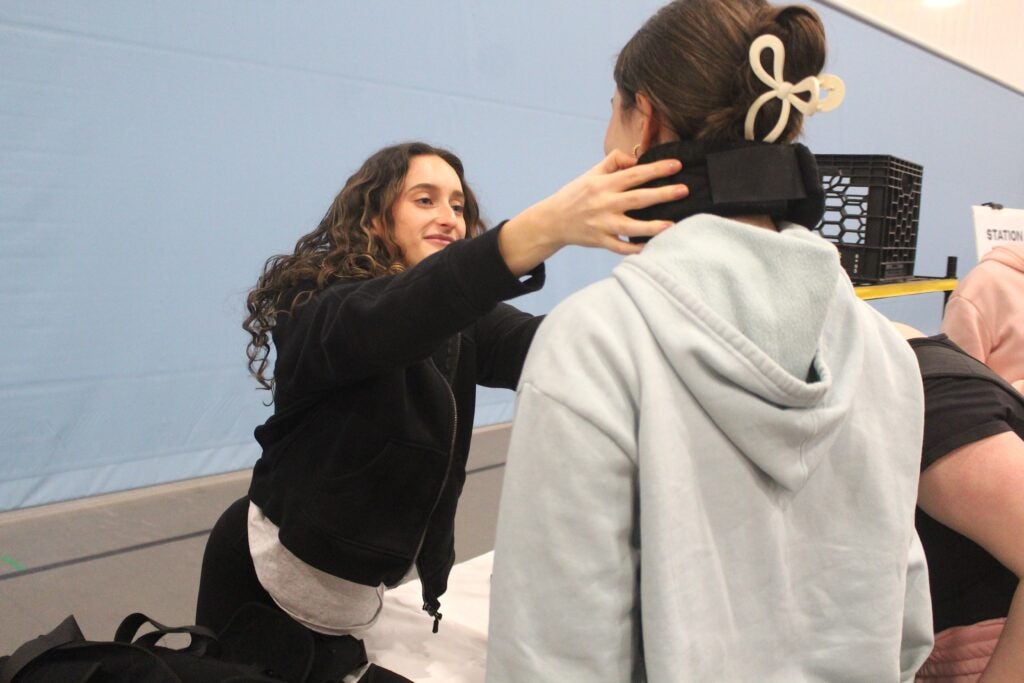
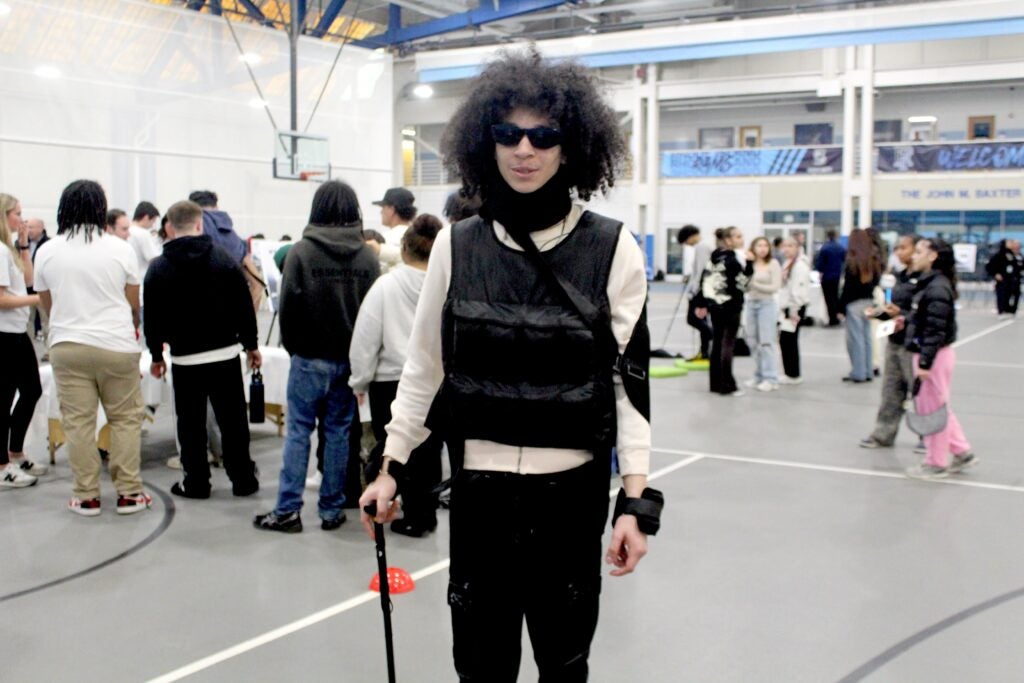
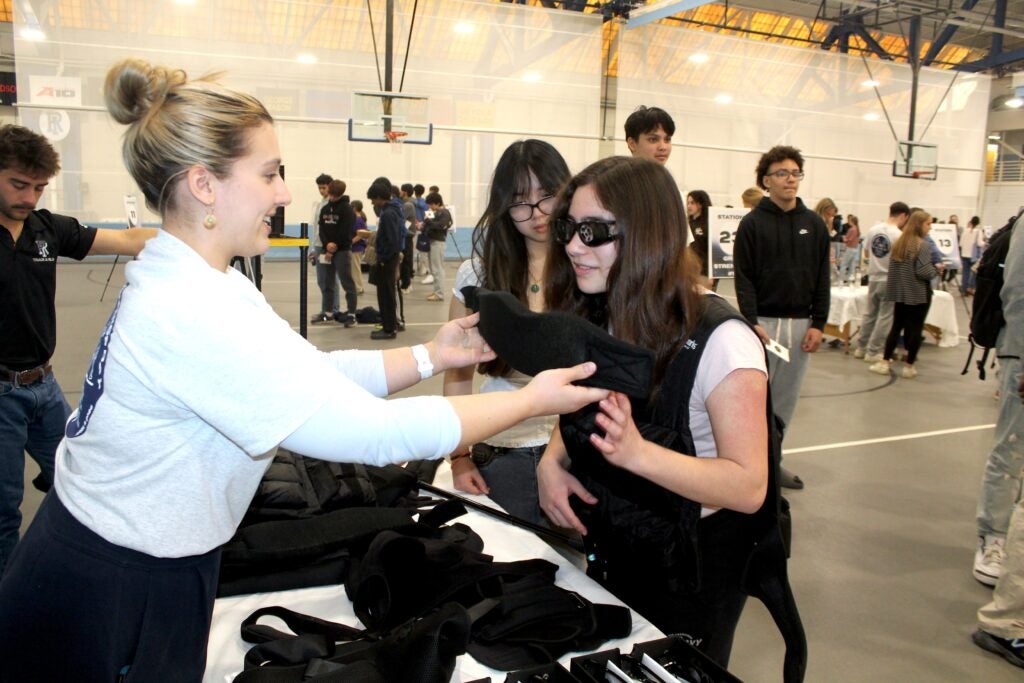
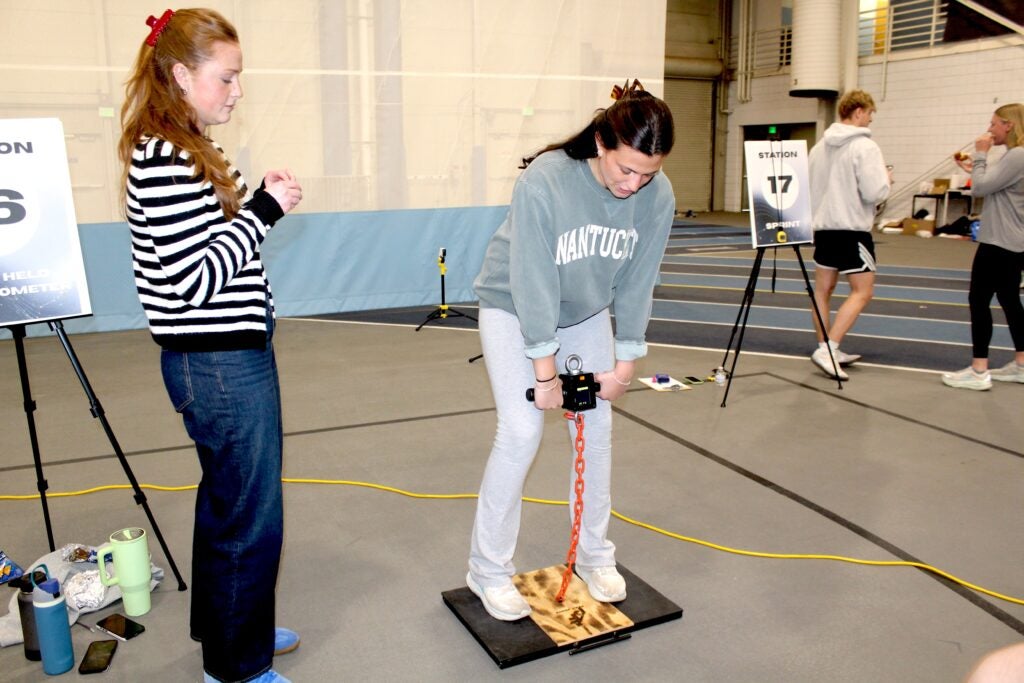
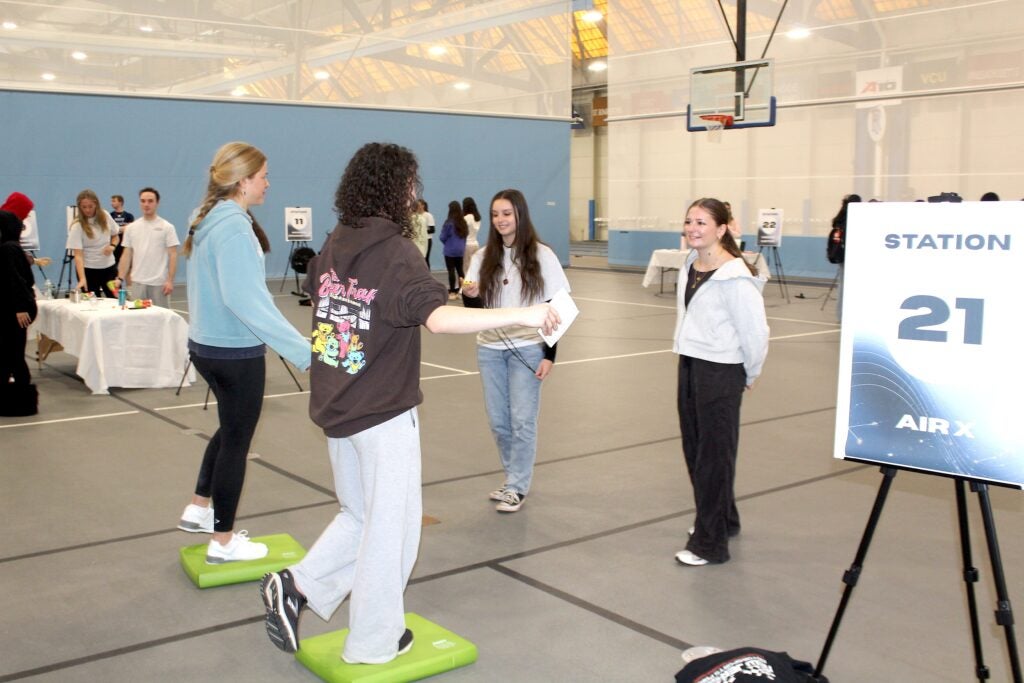
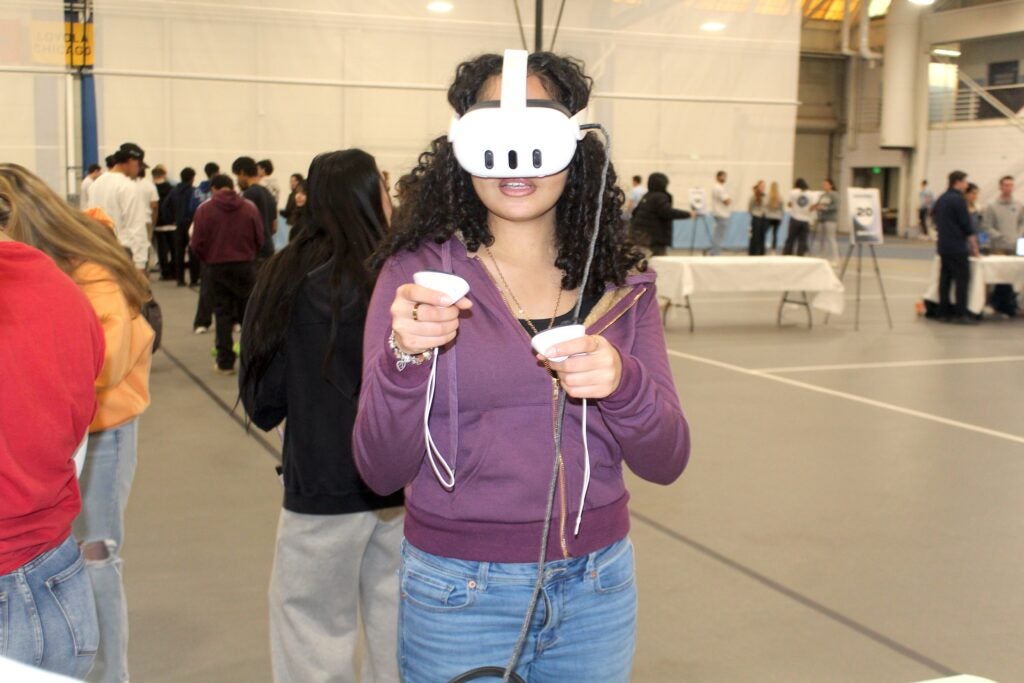
Students tested their jumping ability, sprint speed, grip strength and dead lift ability. They sampled motion capture technology to watch their bodies’ movements on a computer screen; wore a weight vest, cataract simulation glasses, and knee braces to get a sense of what it feels like to move as an older person; and stood on force plates to test their balance and determine the amount of force they put on their feet. Virtual reality and augmented reality gaming systems taught the students how such equipment is used in motor skills rehabilitation; and biomedical engineering students displayed a high-tech glove they designed that connects to a computer to show how the hand and fingers move.
The exhibits organized by professors and graduate students in kinesiology, physical therapy, biomedical engineering, and strength and conditioning showed students what is available to them at URI. The hands-on nature of the disciplines showed students how science can apply directly in their daily lives and, hopefully, encourages those interested in science and technology to see kinesiology, biomechanics, or other STEM fields as a viable option for them in the future, according to Associate Professor Susan D’Andrea.
“I talk a lot with the teachers, and several have said students have come up to them saying ‘I now know exactly what I want to do. I want to go into kinesiology; I want to do sports science. I can see myself doing this,’” D’Andrea said. “It doesn’t touch every student who comes, but it does touch a lot of them. I always say, if I get one person interested from this who applies to URI and comes into our program or biomedical engineering, I’ve done my job.”
D’Andrea has emphasized recruiting under-resourced schools to give their students the chance to see technology to which they may not otherwise be exposed. Working with a STEM specialist at the Rhode Island Department of Education, she invited schools around the state, including younger students in middle schools like Sophia Academy, an all-girls middle school in Providence.
It is important to expose younger students to scientific disciplines at events like Biomechanics Day, which help make such technological fields feel more accessible to them, according to kinesiology Assistant Professor Ryan Chapman. These events help encourage more students to pursue scientific endeavors that are critical to the advancing nature of society, he said.
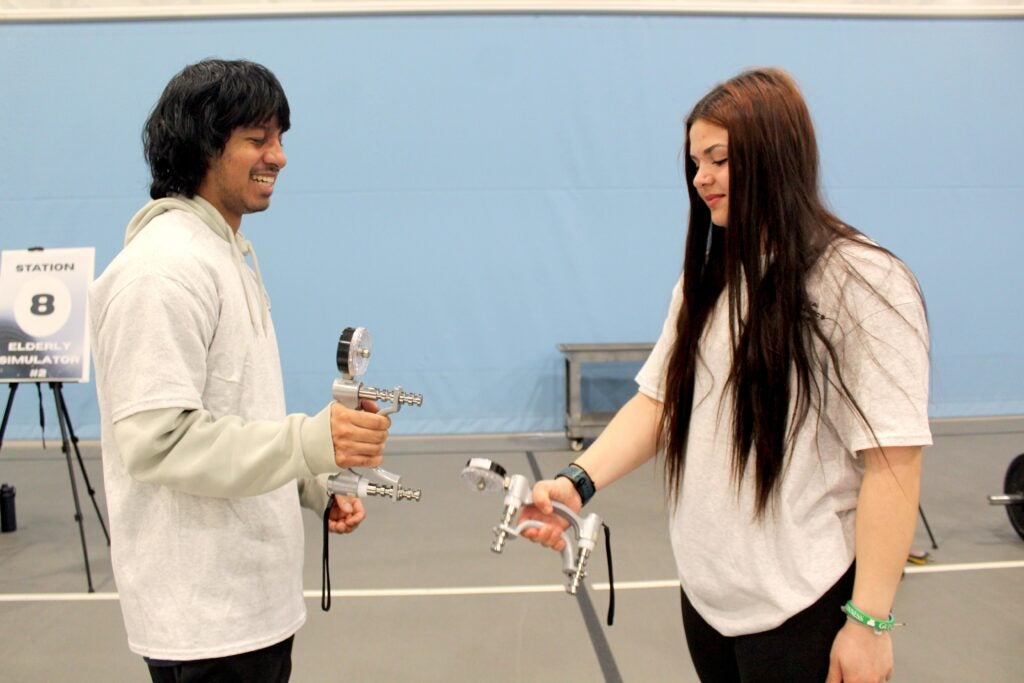
“Sometimes, there can be a little fear about going into STEM, that students maybe feel they might not be able to handle it. We bring it into a real-world, hands-on setting and they think, ‘Oh, I could do that.’ It helps shift their mentality,” Chapman said. “The world is ever-evolving with more demand for different kinds of tech. There’s never not going to be a need for kids to come into STEM. There’s an omnipresent need, whether it’s a health discipline or tech development. So this type of outreach to students who might otherwise never have this experience helps them realize that they have an option to be a STEM person.”
The annual event at URI is part of National Biomechanics Day, a world-wide celebration of biomechanics in its many forms for high school students and teachers. Biomechanics investigates “the broad expanse of biology in the physical world,” according to the Biomechanics Initiative, which organizes the national event. The discipline contributes to biology, physics, medicine and health care, human movement and performance, biomedical engineering, prosthetics and human-machine interactions, among many other endeavors.