
Lay the Foundation for Entrepreneurial Success
By Chris Barrett ’08
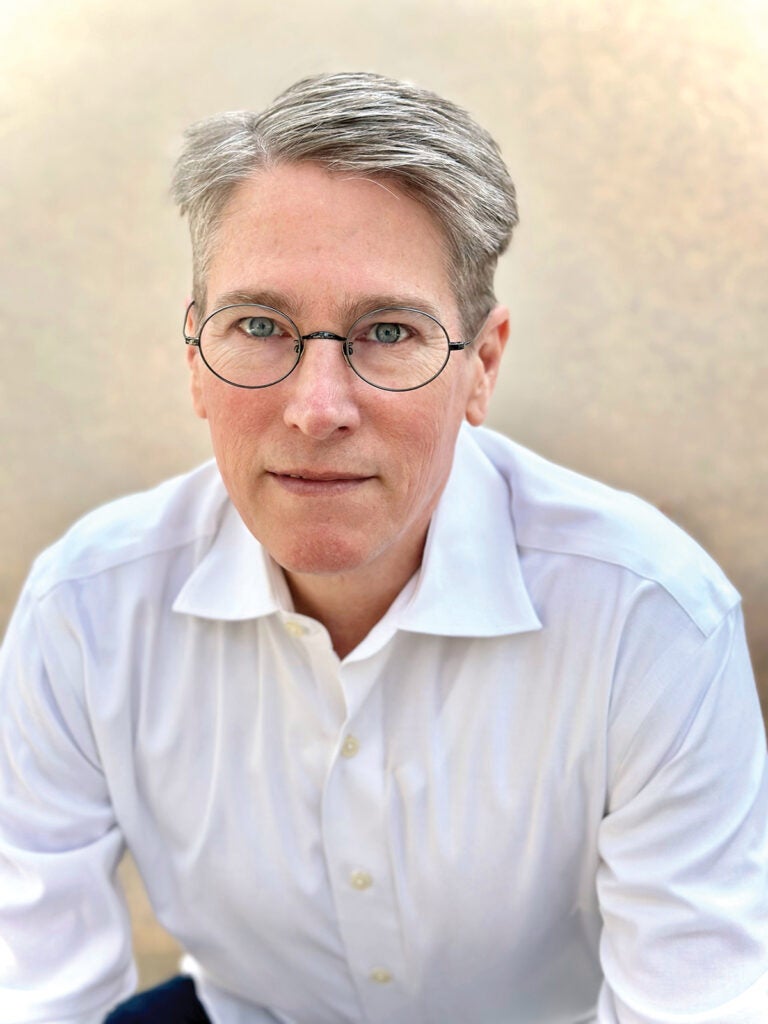
CEO, McCarthy X Enterprises
Patrick McCarthy (’01) brings scientific breakthroughs to market. He’s the rare executive who is just as comfortable discussing first-quarter financials as he is explaining the finer points of chromatography. And his success all started as a doctoral chemistry student at the University of Rhode Island (URI).
“URI gave me a strong foundation in science. This foundation gave me judgement, judgment I wouldn’t have if I had just taken an MBA,” says McCarthy, who later earned an MBA from Carnegie Mellon University. “As an entrepreneur most of the time you’re making a decision without full information. If you have the full information, you’re probably too late and you’ve already lost. A science foundation gave me the ability to understand technology risk closer in on a decision curve.”
After graduating from URI, McCarthy faced complex decisions as an executive and later business founder. At each step of his career, he can point a clear line back to his URI research days.
“A research foundation gave me the ability to understand technology risk closer in on a decision curve.”Patrick McCarthy
During his first semester at URI, McCarthy enrolled in a required physical chemistry class taught by chemistry Professor Sze Yang, whose research group leveraged concepts and processes from biology to create synthetic materials. McCarthy, seeing endless possibilities, abandoned his initial plan to research therapeutic drugs from natural sources and joined Yang’s lab brimming with young researchers and sophisticated equipment.
Yang created a culture that “allowed you the freedom and creativity to explore any topic,” McCarthy says. “It gave you the opportunity to be in an environment that’s similar to an early-stage startup.”
He’s the rare executive who is just as comfortable discussing first-quarter financials as he is explaining the finer points of chromatography. And his success all started as a doctoral chemistry student at the University of Rhode Island.

Yang specialized in electrically conducting polymer complexes like paint that prevents rust on cars, boats or military fighter jets, or polymers that adjust how light filters through windows or eyeglasses.
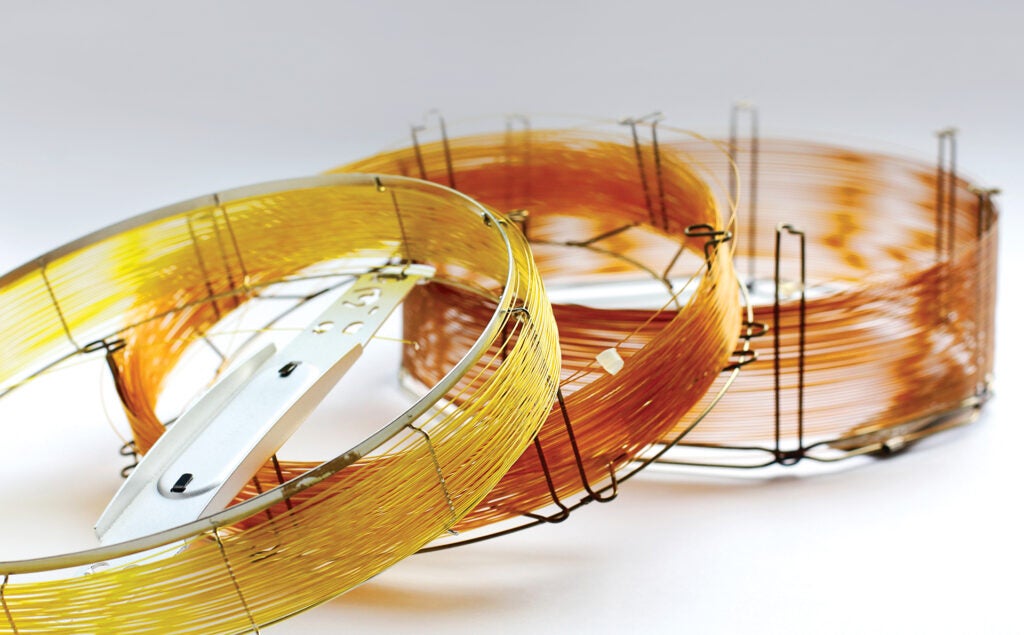
McCarthy quickly became an expert, and with a group of peers, adapted the technology for chromatography—a process scientists use to separate the parts of a mixture so they can study each one. Industries like pharmaceuticals, semiconductor processing, paint, food, and environmental protection all depend on chromatography to improve their products.
“It was exciting because we were working on things that could change the world,” he says.
McCarthy’s research drew the attention of chromatography analysis company Dionex Corp. Then research executive Chris Pohl saw potential in both the research and McCarthy and offered him a position.
Pohl recalls McCarthy as a proactive and persistent researcher engaging with scientists across the industry as he worked to make stationary phases using the conductive polymer he studied at URI. His proposal represented an entirely new approach to ion-exchange materials, or substances made of special resins or membranes that trade ions to purify or separate substances. They’re a vital tool in clean water systems, energy storage, and chemical manufacturing.
Although the project didn’t reach the market, McCarthy leveraged the experience to design devices—still in use today—that make it easier to separate and purify ingredients used in modern medicines.
“He was a major contributor to our team while he was with us,” Pohl says.
McCarthy then took a leap to start ATRP Solutions, which focused on the commercialization of a novel polymerization technique for making highly custom polymer structures possible. But before he took the leap, he made one call. His former doctoral advisor Yang told him to go for it. It was a giant risk, but McCarthy says URI prepared him. While at URI, McCarthy estimates at least half, if not 70 percent, of his 1,000 or so chemical reaction experiments failed.
“More failures mean more learning and ultimately a strong foundation,” he says. “If you’re going to be in the business of building businesses, you will be constantly building your foundation.”
McCarthy built ATRP Solutions and invented polymers to improve personal care and cosmetics products, home care products, and oil and gas additives. After a decade he sold ATRP Solutions to Pilot Chemical Co. and became its vice president of technology and innovation.
Later, he took a similar role at Corning Inc., an S&P 500 company with a relentless focus on innovation, that asked McCarthy to spearhead its program to build early- stage businesses. McCarthy found the company, like the environment in Yang’s lab where being unsure of the next step was embraced.
“If you’re at all uncomfortable with ambiguity you will really struggle with early-stage business building,” he says. “The URI research environment really made you feel like ambiguity was OK and to be comfortable with it. Don’t force the solution but allow the creative process to reveal the solution.”
In 2024, as artificial intelligence started to muddy the scientific waters, he branched out again and started his second company, McCarthy X Enterprises, with a focus on incubating startups, consulting, and weaving AI into today’s businesses.
Today, McCarthy is substantively giving back to URI with his time and expertise, helping URI researchers find pathways to commercializing their intellectual property.
“Dr. McCarthy has been so generous with his time and expertise and has stepped up to be an incredible mentor to URI researchers and leaders to help us holistically support our community members who seek commercialization outcomes of their URI research. We are so appreciative of his engagement, “ says URI’s Vice President for Research and Economic Development Bethany Jenkins.
“It was exciting because we were working on things that could change the world.”Patrick McCarthy