
During winter break, more than 200 new pieces of equipment, including weightlifting platforms, machines, and branded dumbbells and plates, were installed at both on-campus fitness locations
KINGSTON, R.I. – Jan. 22, 2026 – New Year’s resolution makers and avid gymgoers, unite – the University of Rhode Island has made long-awaited upgrades to its on-campus fitness facilities.
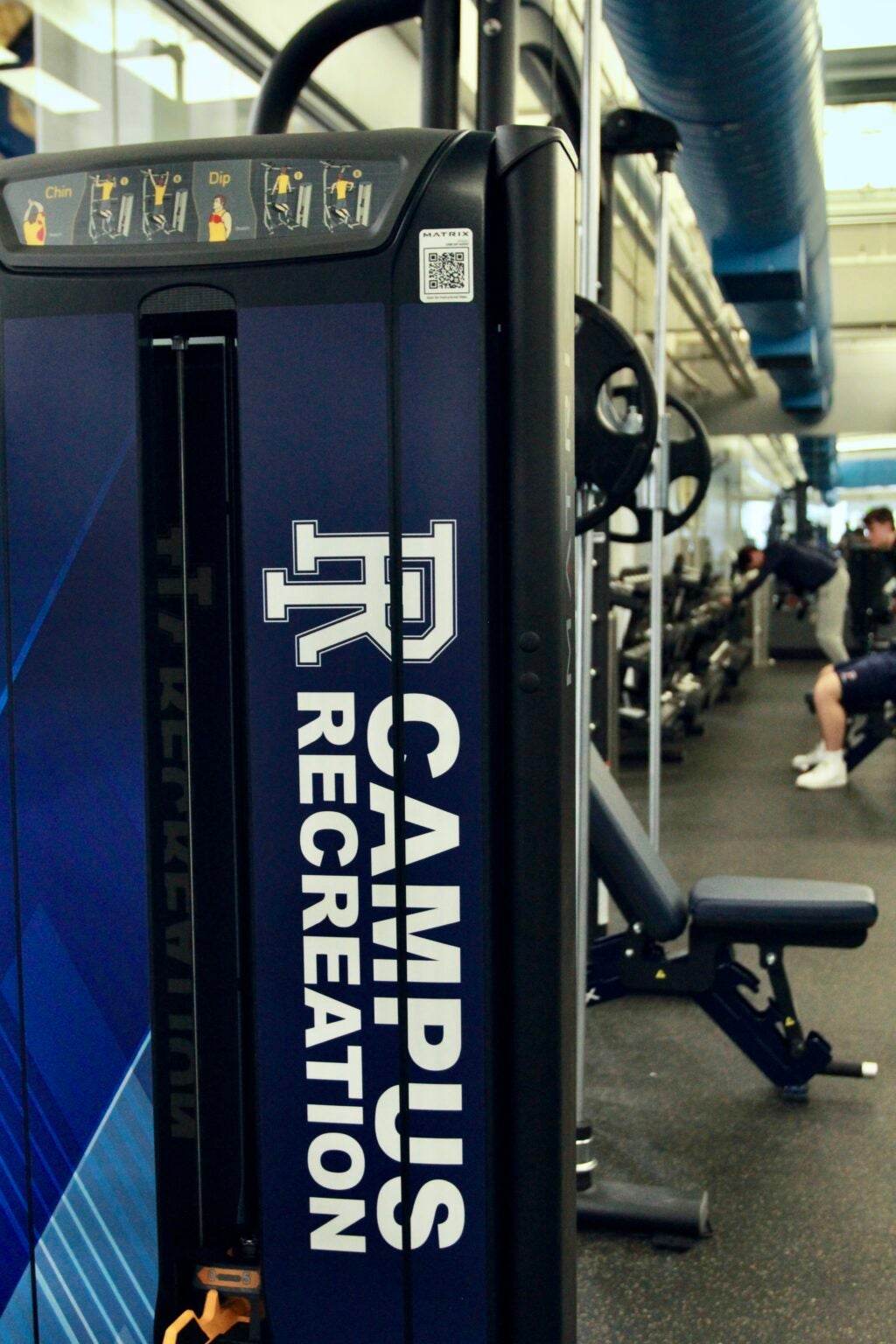
Students returned from winter this break to find new strength equipment at both the Anna Fascitelli Fitness & Wellness Center and Mackal Field House, including a full replacement of all previously-existing machines, plus the addition of new machines and more weightlifting platforms, used primarily for heavy barbell exercises like squats, deadlifts, and other Olympic lifts. All new dumbbells and plates are currently en route.
The overhaul at both facilities includes more than 200 new pieces of equipment, all of which are specially branded to represent URI’s Campus Recreation department. For Fascitelli, this is the first strength equipment overhaul since the facility opened in 2013.
Dr. Jarrell Garcia, URI’s associate director of Campus Recreation, who was instrumental in the selection process alongside David Jenkins, the department’s coordinator of fitness, health, and well-being, said replacing the equipment from a functionality and safety standpoint was long overdue – “Everything has a certain warranty,” Garcia said – but the team also felt a more pressing need through the years to update the inventory based on space needs and ever-changing fitness trends.
Garcia noted that they didn’t want to fall into that trap of chasing trends that change year to year. “We wanted the most efficient, highest-quality, and best-looking products so that our students feel not just comfortable entering our space, but confident entering our space,” he said.
Jenkins, who created URI’s Faculty and Staff Fitness Training Program, otherwise known as FAST, said he and Garcia took a deep look at equipment manufacturers who specialize in higher education spaces to help determine which machines are more commonly used among college students.
“In some cases, we lean on those manufacturers and say, ‘What are you guys seeing across different universities about equipment that’s being put in?’” Jenkins said. “Then, of course, we look at our community specifically. ‘What are they asking for?’ Then we look at, from a facility standpoint, ‘What is and isn’t being used?’ We’ve trained our rec attendants to see where people are throughout the facility and throughout the week and throughout different hours, and that helps us determine what’s trendy for the industry and what’s actually being used here at URI.”
The breakdown of inventory added during winter break is a combination of replacement equipment and newer, more functional versions of previously-existing equipment – for example, cable crossover machines that aren’t necessarily new to Fascitelli or Mackal, but are modern versions designed to allow for more users at one time. Campus Recreation also added more of what’s popular, including more hack squat machines and twice as many weightlifting platforms. The latter is a nod to the recent increase in popularity of Olympic lifting, which, Garcia says, shows that Campus Recreation is still paying attention to fitness trends even if it’s not the sole source of determining which upgrades are necessary.
Likewise, some of the new equipment is more streamlined in that it takes up less space, allowing for a redesign of the floor plans in both facilities.
“To the naked eye, people might think there’s less here, but it’s actually way more,” Garcia said. “We’re just able to be better and more intentional with how we designed the space. It’s about being as efficient with the space we have. I’m sure we probably could fit another five pieces of equipment in Fascitelli, but then the user experience suffers.
“It’s finding that balance of having equipment that is more functional and having more pieces of equipment so that more people can exercise at one time, but it’s not to the point where you don’t even feel comfortable using the space because someone’s breathing down your neck, literally.”
The equipment upgrades also reflect the growing population of URI gymgoers; Garcia said there’s been a 15% increase in student attendees year over year, and Campus Recreation is anticipating more than 50,000 visits over the first six weeks of the spring semester, so the timing of this project is perfect. With the university’s new housing project underway, which will add more than 900 new beds via two new residence halls on Flagg Road by 2028, the need to upgrade the fitness facilities and accommodate more students becomes even greater.
From a branding perspective, the new equipment fashioned with the Campus Recreation trademark increases the department’s identity, which Garcia said is something the department has been working on over the last several years under the guidance of Haley Menezes, Campus Recreation’s assistant director of marketing and outreach. Everything from the actual machines to the bumper plates used on barbells will feature Campus Recreation branding.
“Through that work, Garcia said, “we have slowly started to build the reputation of not just being service-oriented, but also knowing you can go to Campus Recreation for a variety of fitness and wellness needs. I wanted to build upon that, so people know it’s going to look a certain way, it’s going to feel a certain way, and it’s going to come with a certain level of quality. We knew that when the time came to purchase new equipment, that brand identity needed to be tied into the process.”
The next step, which is expected within the next years, according to Garcia, is replacing cardio equipment at both facilities, which will require the same level of industry analysis and studying of trends that went into the selection process for this year’s strength equipment overhaul.
###
Michael Parente, director of communications and marketing in the URI Division of Student Affairs, wrote this news release.