
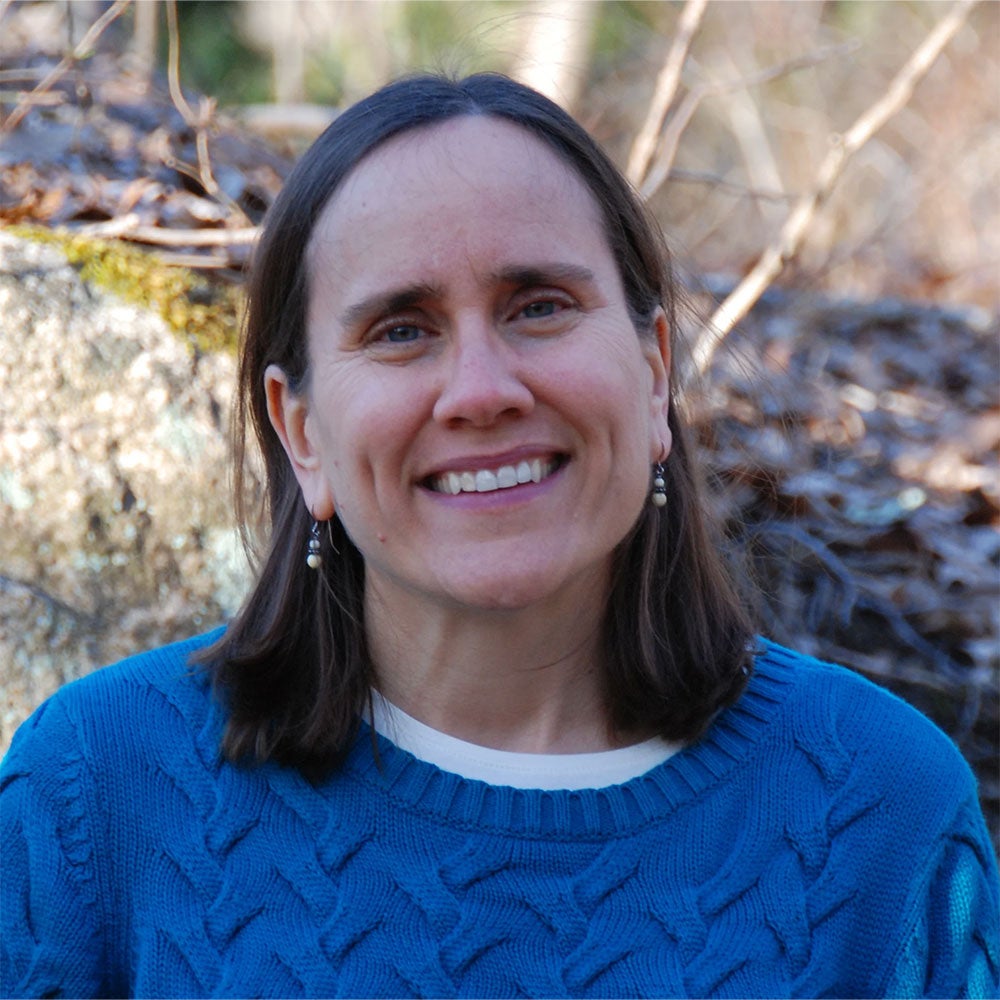
Those of us who are lucky enough have had a teacher in our academic careers who has shaped who we are today. For Kristine Bovy, professor of anthropology, it was her high school biology teacher. The course included an archaeology unit in the curriculum, which inspired Bovy to explore the topic further. In her first year at the University of Wisconsin, she enrolled in an archaeology class and was accepted into a field school her first summer. From there, she was hooked.
After earning her Ph.D. in archaeology from the University of Washington, Bovy found her focus in the field as a zoo archaeologist, where she studies animal bones from archaeological sites. Due to her specialty on birds from the Pacific Northwest, she spent much of her time on coastal sites because bird bones preserve well on the coast.
“I couldn’t really have done that in Wisconsin because the bird bones don’t preserve very well, but you see them in coastal sites,” Bovy said. “So that’s how it kind of became interested in coastal archaeology.”
In 2006, the University of Rhode Island was looking to add an archaeologist with a coastal focus to their department, which is how Bovy landed in the Ocean State. Over the last twenty years, she’s created a coastal archaeology course based on her research and field interests.
“Coastal archaeology is almost all majors, minors, or people in really adjacent fields. Then you have the intro course with engineers and nursing students and people from all over campus,” Bovy said.
The anthropology department sees varying student interests in field focuses, ranging from cultural anthropology, biological anthropology, forensic anthropology, and many more. In each of her classes, Bovy covers archaeology in America, with a focus on the indigenous people of the area.
“It’s something that a lot of public schools don’t learn much about,” Bovy said. “They sometimes have little units about native peoples, but they don’t really learn anything about the Narragansett people who are right here in Rhode Island.”
By bringing local history into the classroom, Bovy hopes to deepen students’ understanding of the land they live on and the people who came before them. Throughout her work at URI, she continues to inspire a new generation of students to explore and connect with history in meaningful ways.
By Erin Malinn ’28, journalism, Intern for the College of Arts and Sciences