
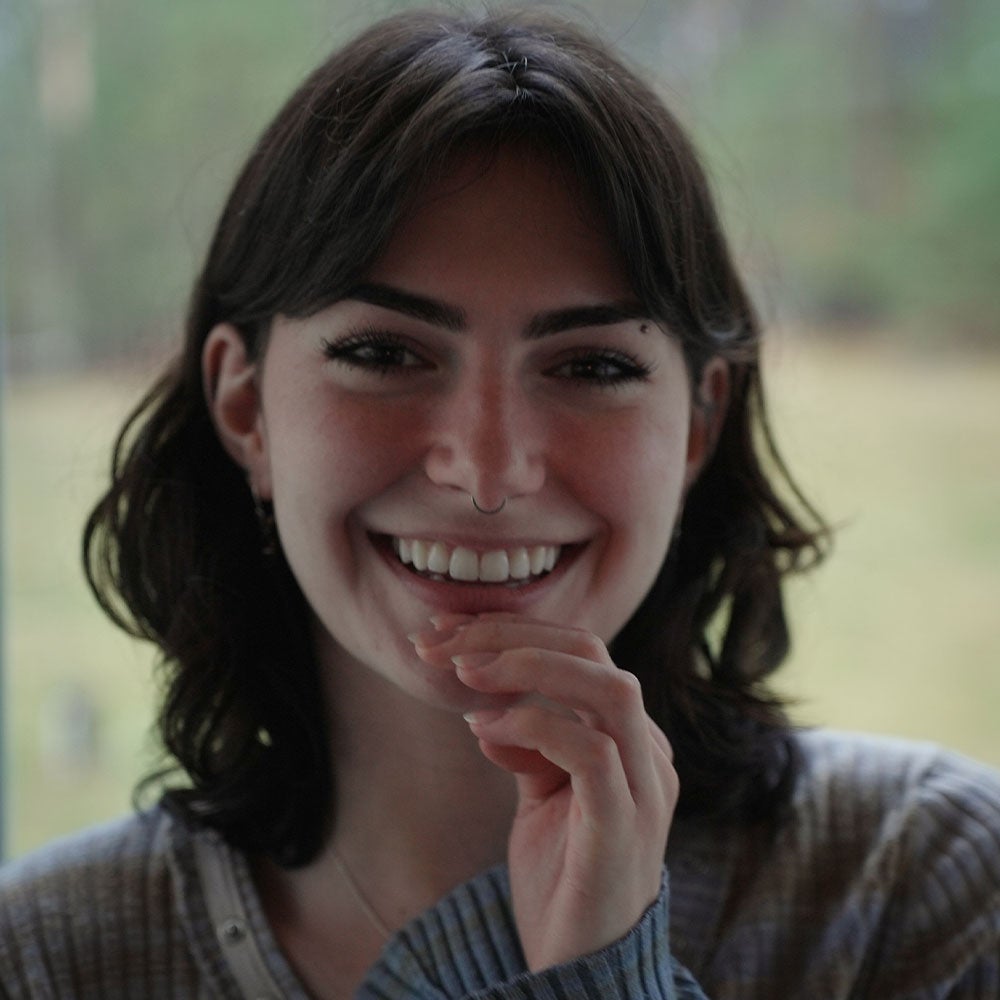
Where are you from, and why did you choose URI?
I am a Rhode Island local, specifically from Coventry! I chose URI because of the financial aid I was offered, but even more so because of the sense of community I found here. From the tours to conversations with professors and during events like RhodyFest (where I learned about the many student-run clubs that URI has), I gained an unshakeable feeling of belonging and excitement. Connecting with like-minded people, professors, and finding opportunities that spoke to me seemed very possible at URI.
Why did you choose economics as your major?
I chose economics after taking Introduction to Microeconomics with Dr. Mead, who is now retired. Dr. Mead pointed out how I tended to ‘think like an economist,’ and ask questions like one, but what does that mean? To me, thinking like an economist means evaluating problems from all angles and finding solutions. In the economics discipline, critical thinking and analysis arw always necessary—you must think about every possibility and how all parties are affected. Microeconomics was one of the first classes I took that made me eager to do my homework and readings. Economics encompasses the overlap between financial institutions, development, history, public policy, human behavior, and so much more! It also teaches you quantitative methods for evaluating problems that don’t always seem quantitative, which is very interesting to me.
Was there a specific moment, person, or class that interested you in economics?
After taking Introduction to Microeconomics with Dr. Mead, I also took Competing Traditions in Economics with Dr. Vechsuruck, as well as Introduction to Macroeconomics and Economic Growth and Development with Dr. Ramnarain. These classes were extremely eye-opening, as I learned about how economies develop and the mechanics behind many economic institutions. The eagerness I felt when learning about topics like colonialism’s effects on developing economies, the money supply and the Federal Reserve, ways to evaluate public policies, unemployment, and the history of great thinkers like Karl Marx and Adam Smith confirmed that I was in the right major.
What’s been your favorite class or topic you’ve studied so far?
I would say it’s a tie between what I learned in Competing Traditions in Economics with Dr. Vechsuruck and Economic Growth and Development with Dr. Ramnarain. Competing Traditions in Economics taught me about the history of economic thought, and this involved learning about the philosophies of thinkers that are still relevant today. Learning about critiques and theories surrounding the consequences of capitalism and international trade in Dr. Vechsuruck’s class has become increasingly relevant. Learning about economic development under Dr. Ramnarain taught me more about international perspectives, and reframing the Eurocentric thinking of what we think a ‘developed’ economy looks like. A high GDP per capita and a reputation for being a ‘rich’ and ‘developed’ country does not always mean that a country’s citizens are happy, have easy access to healthcare and necessities, political freedom, etc.
What has your experience been like with the department regarding research opportunities, internships, fellowships, etc.
The economics department and its close-knit nature at URI has granted me many opportunities that I am so thankful for. I’ve had the pleasure of serving as a T.A. for Dr. Vechsuruck’s Introduction to Microeconomics class, as well as for Dr. Ramnarain’s Introduction to Macroeconomics class. Serving as a T.A. taught me more about what life would look like within academia, and how much I enjoyed helping students face-to-face. Through being a T.A., I became inspired to serve as a tutor at the Academic Enhancement Center, which has been a great experience. The Economics Student Association here at URI has also given me many professional development and networking opportunities, and I highly encourage anyone with an interest in economics to attend a meeting! This summer, I am hoping to apply more of the skills I’ve learned in my classes—as well as more data analysis—through research with Dr. Vechsuruck on financialization in emerging Asian economies.
What’s one thing you’ve learned that changed how you think about the world?
I would say that learning about the many metrics we use for economies and how they can be misleading altered how I viewed the world. Critical thinking is so important within economics, and learning about what isn’t captured when measuring GDP, unemployment, and how ‘developed’ an economy is is very interesting to me.
What are your career goals or plans after graduation?
After obtaining my degree in economics, I am hoping to supplement my education by learning more technical skills, especially those in the field of data science/analysis. I would love the opportunity to attend graduate school and pursue research on public policy and financial institutions, but we shall see where my path takes me!
What makes the Economics Department unique at URI?
I would say that the economics department at URI is relatively small, but very interconnected. The professors here are so passionate about what they do, and really care about connecting with students to provide them with opportunities to help them succeed. As the vice president (and soon-to-be president!!) of the Economics Student Association, I have had the pleasure of becoming closer with many of my peers in the major, and I adore so many of them! I think a significant portion of students pursuing an economics degree are very down-to-earth and wise. We all have a deep-seated need to learn more about how the world works, which I find admirable!