
Whether positive or negative, emotion may increase consumption
While, historically, men in the United States have tended to drink more than women, that trend has reversed over the last decade, prompting a University of Rhode Island behavioral science psychology student to study the implications of the shift, and examine how emotion and craving are impacting alcohol use among women.
Alcohol use disorder (AUD) has increased in women by 84% over the past 10 years relative to a 35% increase in men, according to the National Library of Medicine. The increase in female drinking is alarming given that women experience greater alcohol-related health consequences compared to men, according to Melissa Rothstein, who recently defended her doctoral dissertation, earning earned her Ph.D. in behavioral science psychology, part of the URI College of Health Sciences. Women metabolize alcohol faster and can become inebriated quicker. They are at increased risk for both short-term alcohol-related consequences, like memory blackouts and motor impairment, and long-term consequences, like cancer and liver disease.
“This research was motivated by shifting epidemiological trends,” Rothstein said. “The study sought to really address two aims: We wanted to see how emotion was influencing the motivation to consume alcohol, and we also wanted to see if emotion could moderate the association between craving, and speed and volume of consumption. Basically, seeing how emotion is influencing craving and predicting increased alcohol use.”
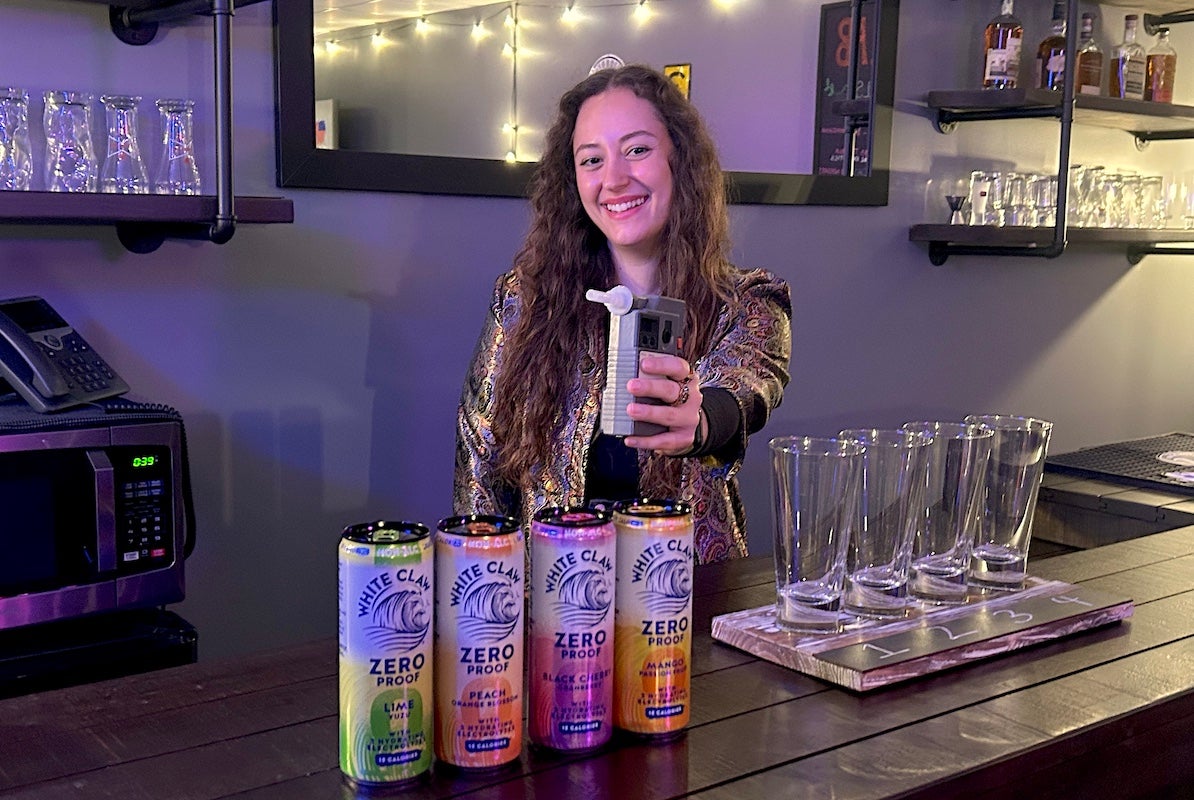
Rothstein recruited 111 women from URI who reported having had at least one alcoholic beverage over the last month. The volunteers believed they were participating in a study involving spiked seltzers in the college’s simulated bar laboratory in Chafee Hall. However, rather than “putting participants at risk for the pharmacological effects of alcohol,” the volunteers were served non-alcoholic placebos as part of a designed deception protocol study.
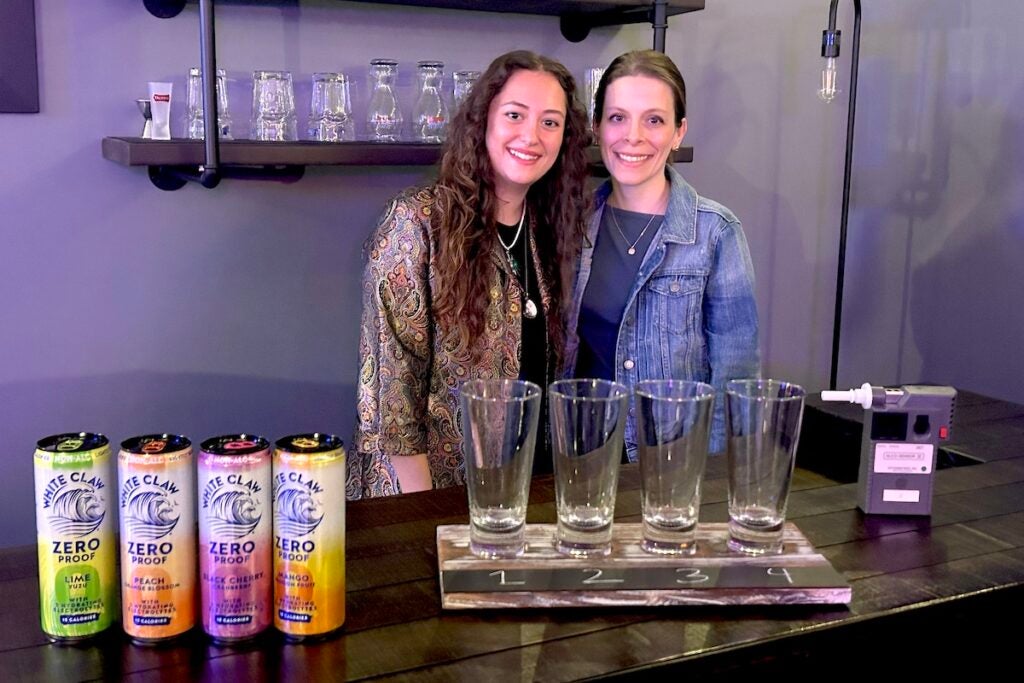
Rothstein, who was mentored by psychology Associate Professor Amy Stamates, began by interviewing each volunteer about their typical alcohol use over the last 30 days. She asked such questions as how many drinks they had each day, how long they typically spent drinking, whether they’ve experienced any consequences, and if they consumed any other substances.
She then divided them randomly among three groups—positive, negative, and neutral emotion. Each participant watched a video clip to encourage emotion specific to their group—a sit-com scene for the positive group; an emotional scene from a sad movie for the negative group; and a clip from a 1970s politically themed movie unlikely to produce strong emotion for the neutral group.
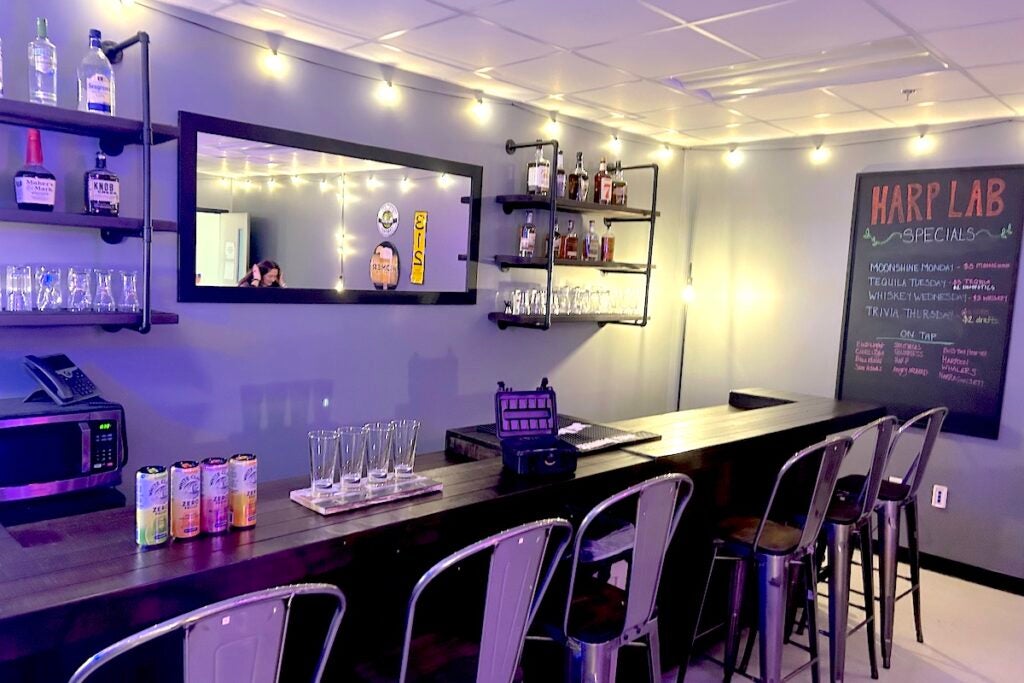
Once the participants’ moods were established, they were offered their pick of flavored seltzers to drink in the simulated pub, which is equipped with a full bar, stools and tables, a dart board, and even a drink specials board, all in the attempt to recreate an actual bar experience. Volunteers were allowed to drink as much as they wanted, for as long as they wanted, while Rothstein compared and contrasted their habits and behaviors with those in other groups. Though they were drinking placebos, the volunteers believed they were consuming alcohol, and most tended to act accordingly, Rothstein said.
“We found that those in the positive and negative conditions drank way more than those in the neutral condition,” Rothstein said. “And not only did they drink more in volume, but they also drank for a longer duration. Those in the neutral condition did not drink as much or as long, which is what we thought: If you were feeling very positive or very negative, that would influence your drinking, and it did.”
Rothstein continually questioned the volunteers about their emotions and craving levels on a scale of 0-100. Results showed that cravings shot up among the positive and negative groups immediately after watching their videos, but that all three groups experienced craving. Interestingly, Rothstein said, craving levels tended to peak in all groups about 10 minutes into the study, after they had already been drinking.
“They all have the drinks in front of them, they’re in a bar and they know they can get more alcohol. They were drinking it, and they’re craving it more,” Rothstein said. “So that could also be the proximity, the location itself making them crave more.”
All three groups exhibited similar emotions when asked how they were feeling—nervous, excited, distracted, etc. However, those in the negative category indicated using more emotional regulation strategies such as consciously holding back their emotions or shifting their attention when thoughts of the emotional details of the video occurred.
“If you are feeling more positive or more negative, it may increase your motivation to drink and the volume you drink. I expected that,” Rothstein said. “I also expected emotion to influence craving, and how much and how fast you drank, but I didn’t find that. Craving increased over the course of the task independent of emotional condition. It may be that craving and emotion operate through different processes, and you don’t necessarily have to have strong cravings to drink more. Emotion can influence consumption even when self-reported alcohol craving is unaffected.”
Ultimately, the study shows that people need to be aware of their emotional state when they are drinking, particularly for those who may be more negatively impacted by overconsumption.
“We’ve seen abstinence programs be less effective in college populations,” Rothstein said. “I am supportive of harm reduction approaches: have a glass of water in between drinks, have a designated driver, keep track of the number of drinks you consume, and be aware of how emotions may be linked to your substance use. For example, if someone is feeling very sad or stressed, perhaps they may be drinking to cope with those emotions or those life events. Understanding those behaviors could be critical for individuals aiming to reduce their substance use.”