
Inclusive Excellence Awards
2026 Awardees
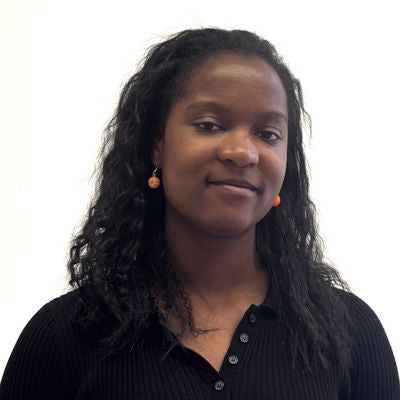
Undergraduate Student Inclusive Excellence Award
Sharday Johnson
Sharday Johnson is a passionate advocate for inclusivity, with the goal of bridging the gap between humanities and STEM, and bringing about meaningful change at the university.
Notable achievements include rectifying a historical injustice by identifying the names of and working to create a monument for forgotten black and indigenous soldiers who fought to protect South Kingstown, serving as treasurer of Rhody F1rst– a student organization that ensures first-generation students feel seen, supported, and equipped to succeed, serving as a student leader through URI RISE UP’s 2024 Innovation Challenges, encouraging over 200 students with sustainable business ideas to compete and implement their visions on-campus, and lastly, through her role as treasurer in Northwoods Hiking and Conservation Club, where she sets the example for those in the sciences– that nature is for everyone, and anyone can help to be a steward of the land.
Committed to creating a sense of community, advocacy, and sustainability, Sharday strives to empower students and encourage them to forge their own path.
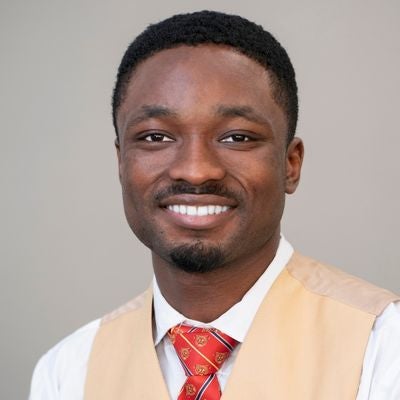
Graduate Student Inclusive Excellence Award
Victor Olaoye
Victor began his doctoral studies at the University of Rhode Island’s College of Pharmacy in the fall of 2024. Prior to this, he developed a strong background in diversity, equity, leadership, and community service in his home country, serving in roles such as Campus Director, Provost for a renowned initiative, and President of a United Nations Sustainable Development Goals (SDG) group.
Motivated by this passion, Victor became actively involved in the Graduate Assistant United (GAU) upon arriving at the University of Rhode Island. GAU represents nearly 600 graduate teaching, research, and administrative assistants. He served as the departmental representative for the College of Pharmacy and currently serves as Vice President, where he contributed to recent contract negotiations to help protect graduate students’ rights and strengthen the union contract.
He has also contributed to the Graduate Student Association (GSA) as a graduate student senator and Chair of the Budget and Finance Committee. Through these roles, Victor remains committed to advancing advocacy, representation, and building a more inclusive and diverse community.

Staff/Administrative Inclusive Excellence Award
Paige Ramsdell
Dr. Paige Ramsdell is a respected leader in disability and inclusion whose work has made the University of Rhode Island a more equitable and welcoming place for students to learn and thrive. As Director of the Disability Access and Inclusion office, she has championed disability as a vital dimension of diversity, led transformative policy advancements, and ensured students with complex access needs can fully thrive. Known for her empathy, and collaborative leadership, Dr. Ramsdell has built a professional culture rooted in innovation, affirmation, and student‑centered excellence. Her impact extends beyond the university through statewide advocacy that strengthens educational equity across the state of Rhode Island.
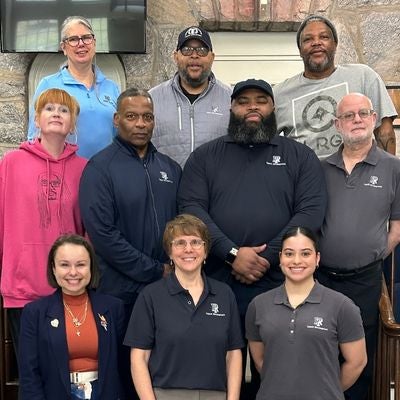
Inclusive Excellence Team Award
Talent Development
Talent Development recruits and serves high school graduates from Rhode Island with strong college potential, many of whom come from under-resourced schools and districts across the state. They provide comprehensive advising and support to students throughout their academic careers and beyond. Their core values are grounded in the University’s mission of enriching students’ lives through its land, sea, and urban grant traditions. This commitment is reflected in their focus on respect, academic excellence, mental health and wellness, and scholar success.
They are deeply invested in cultivating the intellectual, social, and cultural development of their scholars. Through their work, they inspire students to discover, create, and innovate, while fostering leadership and personal growth that builds a strong foundation for persistence and long-term success.
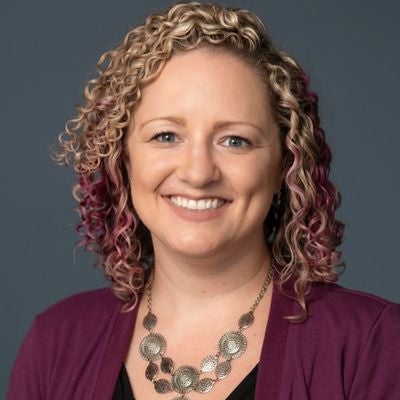
Faculty Inclusive Excellence Award
Samantha Meenach
Dr. Samantha A. Meenach is a Professor of Chemical, Biomolecular, and Materials Engineering and Biomedical & Pharmaceutical Sciences. As Founder and Program Director of the NIH-funded URI ESTEEMED Undergraduate Research Training Program and Director of the RI-INBRE Training Core, she has dedicated her career to expanding access to high-impact STEM research experiences for students underrepresented in science, engineering, and biomedical fields.
Her work spans high school through graduate training and includes growing underrepresented student participation in the RI-INBRE SURF program from under 10% to nearly 40% over 4 years, and implementing evidence-based inclusive mentoring practices across URI and the broader Rhode Island research community. Through intentional program design, external funding, and a sustained commitment to structural change, Dr. Meenach has strengthened pathways into STEM and fostered a more inclusive campus culture for students of all backgrounds and identities.
Faculty Excellence in Inclusive Teaching Award
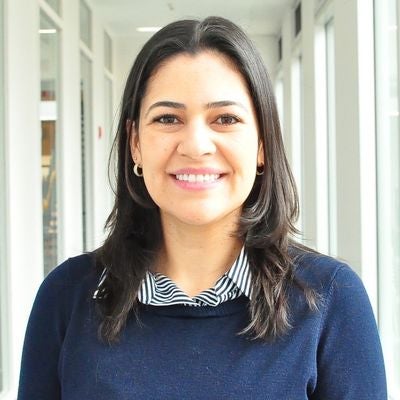
Daniela Lopes Paim Pinto
Dr. Daniela Lopes Paim Pinto is an Associate Teaching Professor in the Department of Biological Sciences at the University of Rhode Island’s College of the Environment and Life Sciences. She earned her B.S. in Forest Engineering and M.S. in Genetics and Plant Breeding in Brazil, and her Ph.D. in Genomics and Crop Sciences in Italy. She joined URI in 2016 as a postdoctoral researcher, where her teaching journey began. Since 2017, she has taught large-enrollment introductory biology courses and, early in her career, she understood the importance of intentional representation and inclusion in transforming large lecture halls into welcoming, accessible environments where students feel comfortable and supported.
Dr. Daniela combines evidence-based teaching practices with intentional relationship-building to ensure that every student feels seen, heard, and valued. Through strategies such as small-group interactions, including the support of Undergraduate Learning Assistants, she works to make large classes feel more personal and accessible, while actively incorporating student feedback to shape the learning experience. Drawing from her own experiences as a first-generation Latina and non-native English speaker, she seeks to break down traditional barriers between instructor and student, reframing perceived challenges as strengths and sources of resilience.
Her commitment to inclusive teaching has grown through continuous engagement with professional development, campus partnerships, and, most importantly, listening to her students. She is known for creating rigorous yet supportive learning environments that empower students to seek resources, advocate for themselves, and persist in their academic journeys. Through her work, she has helped many students not only succeed in science courses but also rediscover confidence, belonging, and a sense of possibility in higher education.
Inclusive Excellence Lifetime Achievement Award
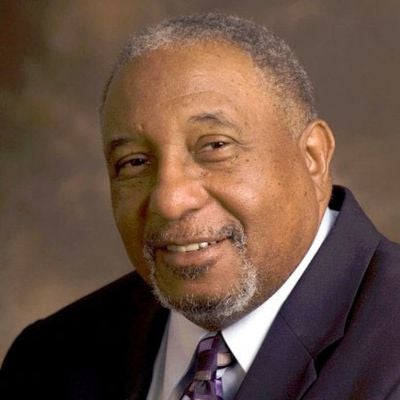
Bernard LaFayette Jr.
Born July 29, 1940, in Tampa, Florida, LaFayette was one of a delegation of Nashville students who in 1960 helped found the Student Nonviolent Coordinating Committee, which organized desegregation and voting rights campaigns across the South.
Following the Supreme Court’s ruling in 1960 banning segregation in interstate travel, LaFayette dropped out of college in 1961 to join an official Freedom Ride, one of many that sought to force Southern authorities to comply with the court’s ruling. He was beaten in Montgomery, Alabama, and arrested in Jackson, Mississippi, becoming one of more than 300 Freedom Riders sent to Parchman Prison.
Two years later, he was named the Alabama Voter Registration Campaign’s director, helping prepare the Selma, Alabama, community for the 1965 Voting Rights campaign, which led to passage of the federal Voting Rights Act.
During that time, Doc endured violent attacks and persecution yet persisted in advancing civil rights in the United States. In his memoir, he wrote that the ever-present threat of death during those years taught him that the value of life “lies not in longevity, but in what people do to give it significance.”
LaFayette also became an associate of Dr. Martin Luther King Jr. in the Southern Christian Leadership Conference and national coordinator for King’s Poor People’s Campaign. He last saw King the morning of April 4, 1968, during a staff meeting where King’s last charge was to “institutionalize and internationalize” nonviolence as a way of life and an approach to constructively solving problems.
After King died, LaFayette returned to American Baptist Theological Seminary (now American Baptist College) to complete his bachelor’s degree and then earned a master’s degree and doctorate from Harvard University. He became a nonviolence educator, serving in many positions over the years including head of the Southern Christian Leadership Conference, King’s organization.
After serving as president of his alma mater, Doc joined URI in 1998 as a distinguished scholar and became the Center for Nonviolence and Peace Studies’ first director, holding the position from 1999 to 2009. He collaborated with Lynne Derbyshire and Art Stein on the Honors Colloquium “Nonviolence: Legacies of the Past; Bridges to the Future,” and became a Distinguished Scholar in Residence in 2000. Later that year, he facilitated the award of an honorary doctorate to Mrs. Coretta Scott King.
Under his leadership the center began hosting a summer institute and training hundreds of educators and other leaders from many countries around the world. It has since become an academic gathering place where students, scholars, educators—the change makers—come together to promote mutual understanding, reconcile conflicts, and build peaceful, sustainable, and inclusive communities.
Doc authored the basic nonviolence training curriculum the center has used for the last 25 years. As a result, the institute is recognized, along with the King Center in Atlanta, as a place where nonviolence training is offered that stays very close to King’s teaching and writings.
Charles Collyer, psychology professor emeritus and co-founder of the URI Center for Nonviolence and Peace Studies, says Doc was described by colleagues as “Little Ghandi” for his deep understanding of nonviolence and for his wise solutions to the problems they had to solve. LaFayette was also a beloved teacher and mentor to hundreds of students at the University, Collyer says, often taking URI students to communities and countries that invited him to do nonviolence training for people involved in struggles for civil and human rights.
Several URI faculty, staff and students accompanied Doc on more than 20 Civil Rights Tours to the southern United States, where students learned about the Civil Rights Movement in the places where it happened, Collyer says.
“In these and many other ways, Doc was a master of experiential learning and teaching by example,” Collyer said. “Whether you were a first-year student or a professor on the brink of retirement, he had new things for you to know about. And his approach was simply to put them in front of you.”
After accepting an appointment at Emory University in Atlanta in 2009, LaFayette remained affiliated with the URI center as a Distinguished Visiting Scholar through its International Nonviolence Summer Institute. In 2014, URI awarded him an honorary Doctor of Humane Letters.
The University of Rhode Island and the nation lost a civil rights trailblazer and a leader in the nonviolence movement last week with the passing of Bernard LaFayette Jr. LaFayette, known as “Doc” to many in the URI community, served as the inaugural director of the University’s Center for Nonviolence and Peace Studies. He was 85.