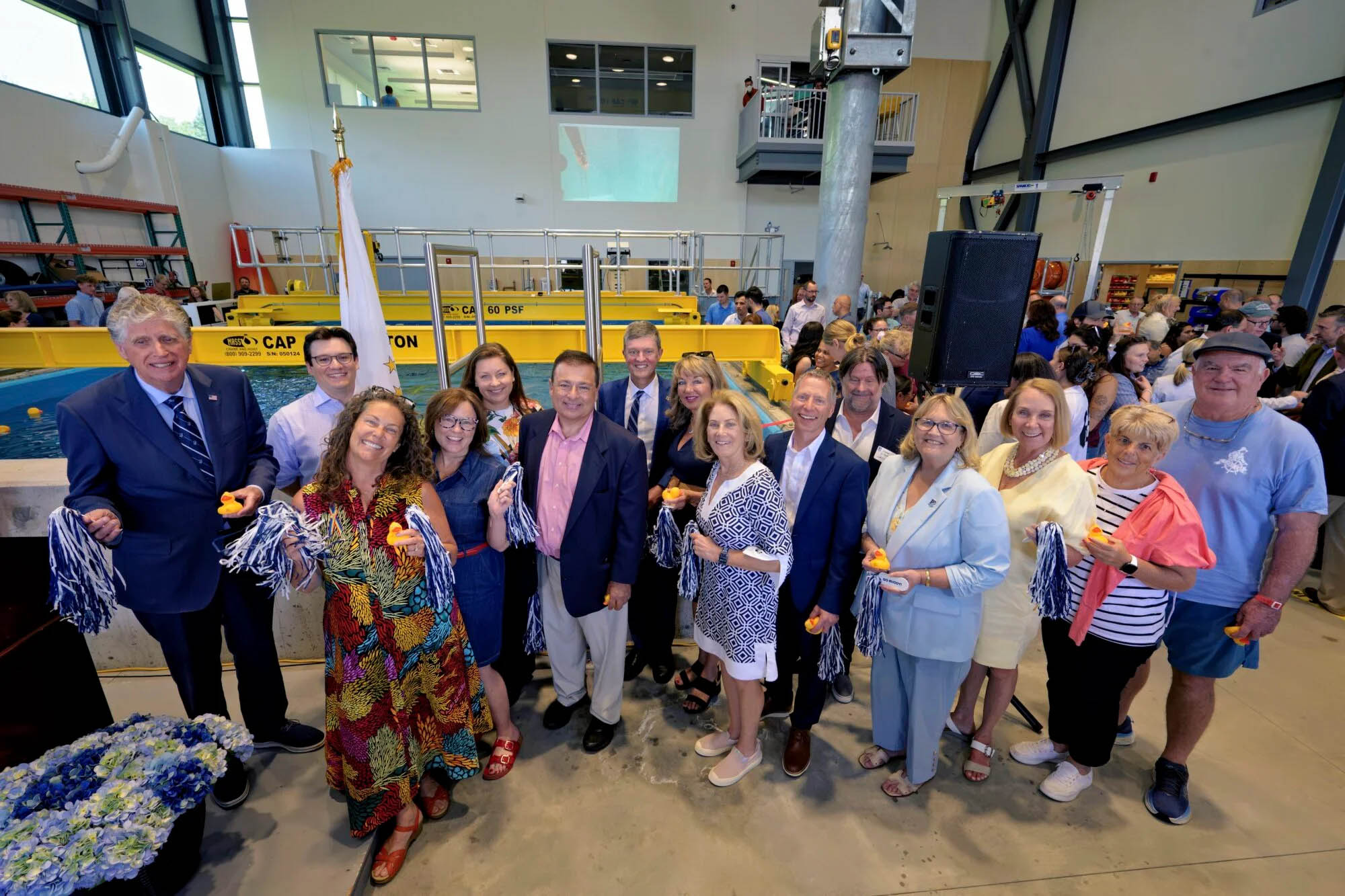
KINGSTON, R.I. – June 26, 2026 – The University of Rhode Island celebrated a major milestone in the $300 million, multi-phase revitalization of the Narragansett Bay Campus with a ribbon cutting ceremony for the new Ocean Robotics Laboratory on June 25.
Continue reading "Underwater ribbon cutting ushers in new URI Ocean Robotics Laboratory"Category: Water
Master’s graduate receives 2026 Academic Achievement Award from the American Water Works Association
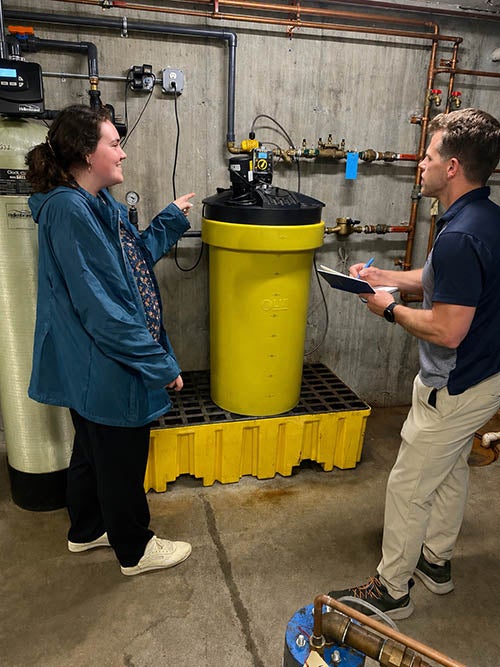
WASHINGTON, D.C. — June 25, 2026 — Carrie Ellis received the 2026 Academic Achievement Award at the American Water Works Association Annual Conference and Exposition (ACE26) this June. The Academic Achievement Award recognizes contributions to the field of public water supply via a master’s or doctoral dissertation. Ellis’s thesis, “Electrochemical Regeneration of Manganese Oxide (MnOx)-Coated […]
Continue reading "Master’s graduate receives 2026 Academic Achievement Award from the American Water Works Association"Above the waves: A URI senior’s view from atop the wind turbines off Block Island
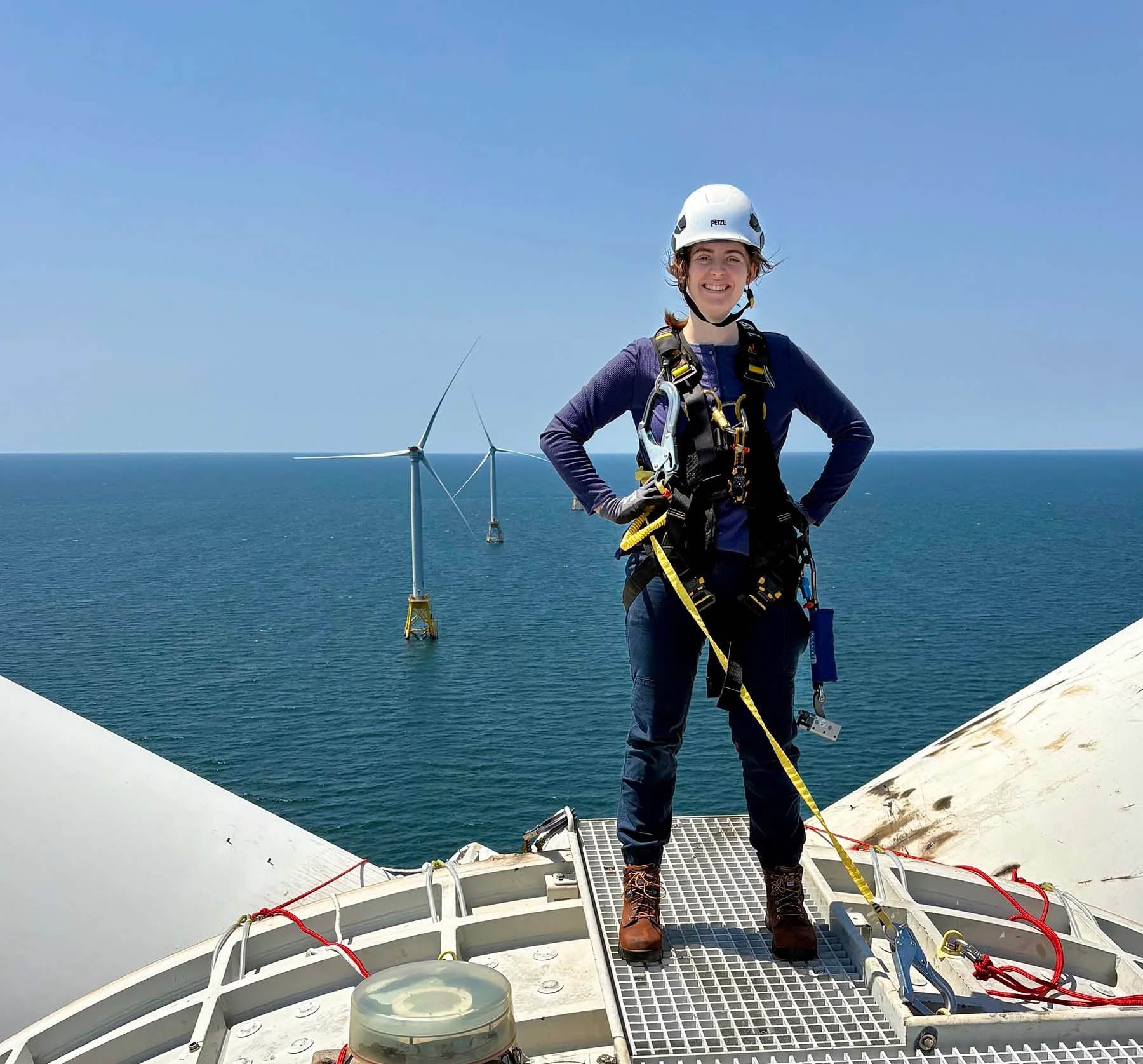
Samantha Kipper, a senior at the University of Rhode Island in the College of Engineering, views the turbines through a different prism.
Continue reading "Above the waves: A URI senior’s view from atop the wind turbines off Block Island"Graduate student pursues commercialization of startup
Andrew Sheerin, civil and environmental engineering, M.S. ’23, Ph.D. ’25, of Newport, Rhode Island, came to the graduate program at the University of Rhode Island to deepen his understanding of sustainable systems and address his research gaps. He had a background in systems engineering and computer science, having earned a B.S. from George Washington University […]
Continue reading "Graduate student pursues commercialization of startup"International Collaboration on Arctic Research Between U.S., Norway and Canada
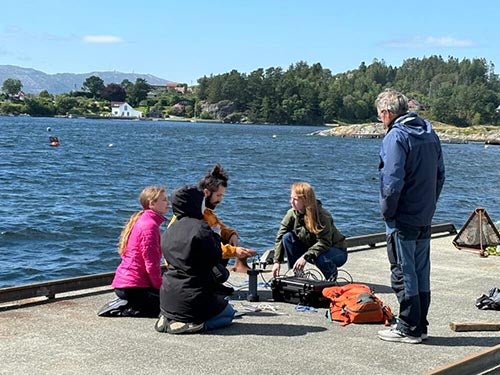
Dramatic changes have been observed in the Arctic Ocean in the past decades in terms of ocean temperature and salinity structure and ice-cover. Because sound travels long distances underwater, scientists have been able to use acoustic signals to localize oceanographic platforms and vehicles underwater and ice, but the way sound travels depends on the oceanography.
Continue reading "International Collaboration on Arctic Research Between U.S., Norway and Canada"