
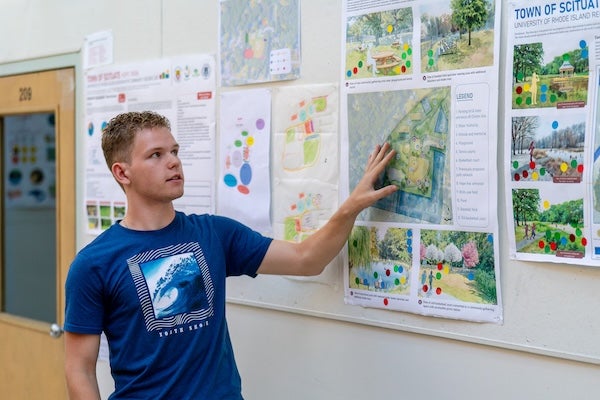
KINGSTON, R.I. — Sept. 14, 2026 — A pavilion nestled among white pines. A trail winding through a forest. A revitalized pond where neighbors can meet, play, and relax. Those are some of the possibilities University of Rhode Island landscape architecture students envisioned this summer through the Regenerative Community Design Lab (RCDL).
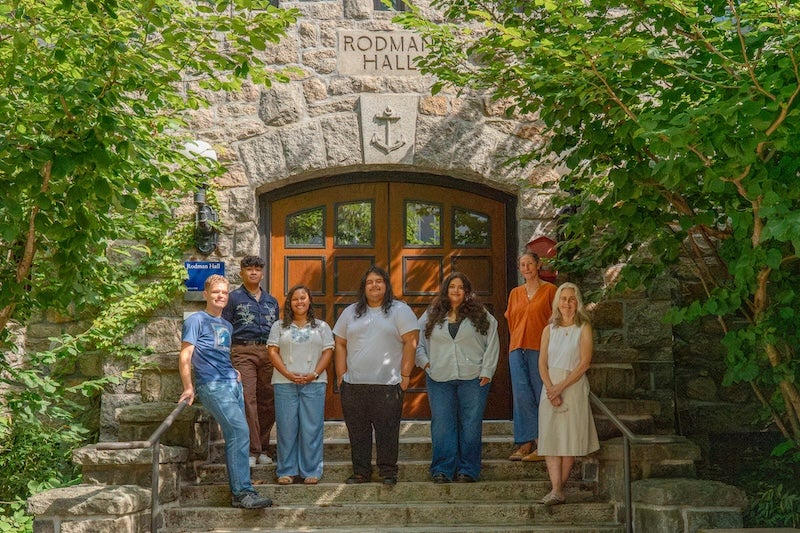
Barbara Aldana, Anthony Cordova, Nyla Darosa, Brandon Thorp, and Mags Valente worked with residents and local officials in Richmond, North Providence, and Scituate to develop community-informed conceptual plans. Stephanie Nordhoff ’25 served as project manager.
The lab, a collaboration between URI’s Landscape Architecture program and the Rhode Island Department of Environmental Management’s Urban and Community Forestry Program, launched in 2024 under the direction of Associate Professor and Program Director Jane Buxton.
“We’re doing community-led, data-driven design,” Buxton said. “We’re really engaging with the community to find out what they want, but we’re also looking at the bigger picture including how the environmental and human systems are interconnected. By bringing those pieces together, we can develop solutions that address community priorities while also improving the health and resilience of the landscape.”
Listening Before Designing
That process begins long before students draw their first concept. The team studies each community’s history, culture, demographics, municipal plans, and priorities. Using GIS, students examine circulation, recreation opportunities and connections to larger ecological systems such as watersheds.
But maps and data tell only part of the story. “As designers, it’s our responsibility to represent the people we’re designing for, not impose our designs on them,” Nordhoff said. “We’re conduits to help them achieve their goals.”
That means talking with the people who use a space — and learning to listen when their priorities differ from those of municipal officials or designers. “People want to be involved,” Nordhoff said. “They want to be heard.”
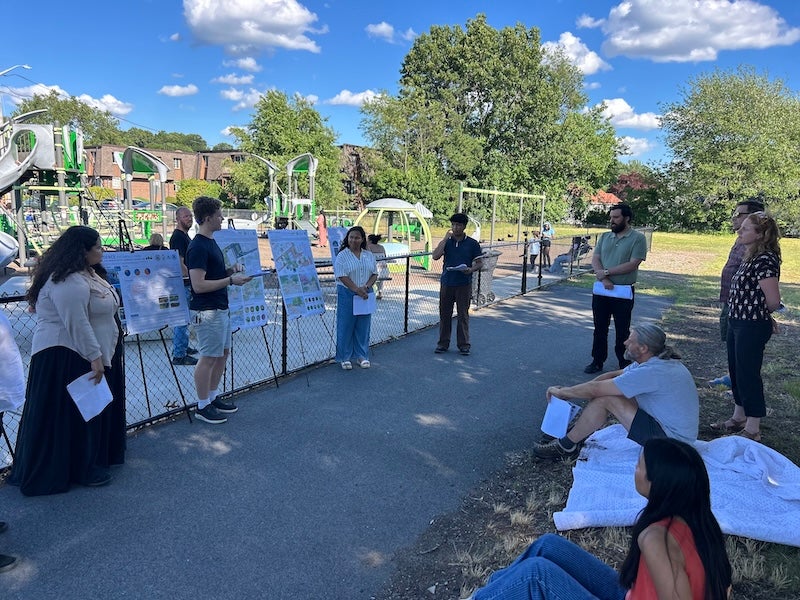
Community engagement is built into each project. Students survey residents and host events to speak directly with people about what they want to see changed or added. They use that feedback to develop concepts, and then return to the community for another round of input and to refine their plans.
For Cordova, that public-facing work was initially intimidating. “I’m very shy,” he said. His first community engagement event was “nerve-wracking.” But by the second project, he wanted to keep doing it. “People were glad that we were there, wanting to help them in some way,” he said.
Three Communities, Three Visions
In North Providence, students focused on Encompass Park, exploring ways to make it cooler, safer, and more welcoming through increased tree canopy, formalized parking, green stormwater infrastructure, and improvements to the park’s overall character and function.
In Scituate, students worked with a park featuring tennis courts, recreation areas, and a pond. They developed two concepts: one focused on practical, near-term improvements and another that envisioned the park’s longer-term potential.
That more ambitious “dream” plan included additional gathering areas, a dog park, and a revitalized pond. It also proposed an ice-skating rink — an idea that resonated with longtime residents who remembered skating there years ago. At the same time, students considered whether warmer, less predictable winters would make outdoor skating a viable long-term investment.
Residents helped shape the final proposal by placing stickers on the features and concepts they preferred. Students then turned that feedback into a phased plan that could help the town pursue grants for individual improvements, such as new trees, benches and picnic tables.
The town of Richmond presented a different kind of challenge: how to create a community gathering place while protecting an existing forest.
Students proposed trails through white pines and native vegetation, along with new trees, grass, a pavilion and a learning center. Rather than removing the site’s existing rocks and boulders, they incorporated them into the design as part of the landscape’s character.
Art With Purpose
For Nordhoff, the projects demonstrate why landscape architecture is more than creating attractive spaces. “Our medium is alive,” she said. “It’s moving and evolving.”
That makes the work both creative and practical: students must understand the landscape as it exists today while thinking about how it might function years from now — for the people who use it and the natural systems that support it.
A URI landscape architecture alumna, Nordhoff first joined the lab as a rising senior during its inaugural year and has since returned as project manager. Buxton credits her commitment to the lab, belief in its mission, energy and passion as driving forces behind its work.
For the RCDL students, this summer was an opportunity to practice landscape architecture in its fullest sense — combining design, ecology, data, communication, and public service to help Rhode Island communities imagine what comes next.
A Reciprocal Relationship
Buxton sees the Lab as creating a reciprocal relationship between the university and the communities it serves. Students gain firsthand experience working with residents, community organizations, and municipal leaders, learning how to connect data, environmental systems, and community priorities to real-world design and planning challenges. Communities, in turn, gain new ideas, technical expertise, and conceptual plans that can help them envision and move toward future projects.
She also believes this work is especially well aligned with URI’s new Department of Earth Science, Planning and Design, which brings together expertise in landscape architecture, planning, and the earth sciences. Together, these disciplines create opportunities to look at community challenges from multiple perspectives and to develop solutions that are both grounded in science and responsive to the people and places they serve.