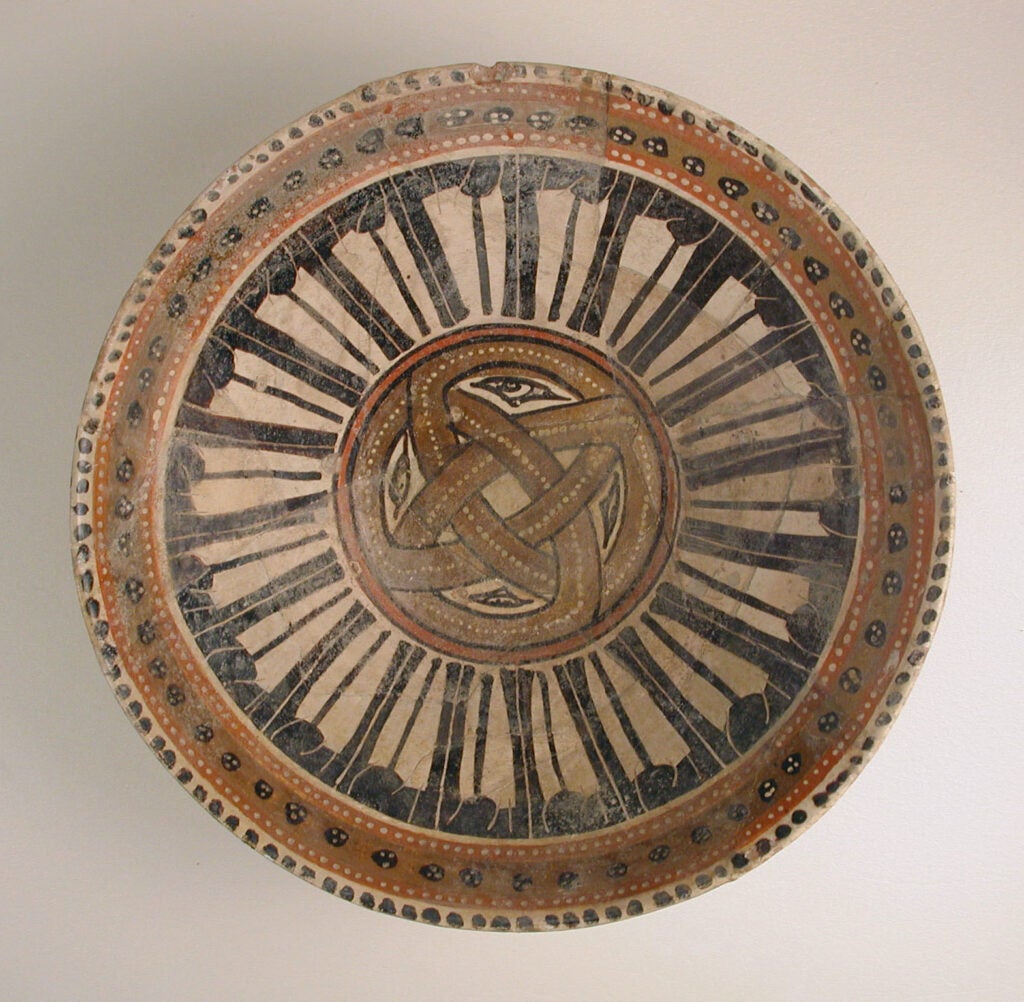
The use of script as a decorative motif has long been regarded as one of the foremost characteristics of Islamic art, and epigraphic ceramic—those decorated with inscriptions—have become almost synonymous with the discipline. They are lauded for their artistic achievements and sophisticated inscription content. However, through the creation of an epigraphic ceramic database, the evidence indicates that legible inscriptions constitute less than half of the epigraphic ceramics produced in the early Islamic period. A substantial number of illegible, ambiguous, and patterned epigraphic forms are also present, though they are generally underreported. The widespread application of such inscriptions indicates that legibility was not required for their production, purchase, or use—the semblance of script was of prime importance. Moreover, the epigraphic wares of the period were probably not made for the highest echelons of society. They likely reflect the presence of an increasingly broad constituency outside of the courtly class that desired script or script-like decoration on their everyday possessions, including ceramic tableware. This new data therefore provides Rebecca Wrightson the means to examine epigraphic and artistic trends, as well as the widespread aestheticization of Arabic writing, amongst broader sections of society than are traditionally included in art historical surveys, and allows for a fuller examination of the varied and nuanced context of epigraphic objects in the early Islamic world.