
Bridget Buxton, History Department
Unfortunately this event was not recorded.
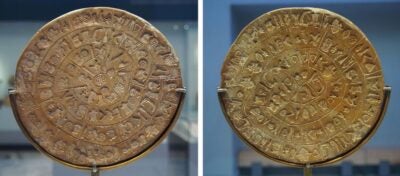
The Phaistos Disk, discovered in the ruins of a Minoan Palace on Crete in 1908, is a unique stamped spiral inscription conventionally dated to the MMIII period c. 3700 years ago. Today it is one of the crown jewels of classical archaeology and among the most famous undeciphered inscriptions of the ancient world. For more than a century, scholars, linguists, cryptographers, and more recently computational researchers have attempted to decipher its mysterious spiral text without reaching consensus on the meaning of a single symbol. This talk presents the first public discussion of an interdisciplinary Humanities-Computer Science research project (the Ariadne Project) that re-examined the Disk using CS-supported constraint-based methods inspired by the history of codebreaking, from the Rosetta Stone to Bletchley Park. The results challenge long-standing assumptions about the object, its language, and even its authenticity, while raising broader questions about archaeology, nationalism, and the construction of the ancient past. The lecture will explore how one of archaeology’s most elusive ancient scripts may finally have been deciphered.
Ariadne Project Team and co-authors: Francisco Xavier Alves Pereira (PhD student, CS); Liam Carcieri (MA student, History); Parker Holland (recent graduate, CS); Dr Daniel Carpenter (Classics, Languages); Dr. Shaun Wallace (CS).