
About Luis Joel Méndez González
Luis Joel Méndez González is an award-winning environmental investigative reporter at Puerto Rico’s Center for Investigative Journalism. Born and raised in Puerto Rico, he is a passionate, data-driven journalist with a strong interest in investigative stories about the island and the broader Caribbean. He holds a master’s degree in Information Design and Data Visualization from Northeastern University. His work has been supported through fellowships with leading environmental journalism organizations, including Climate Tracker, The Uproot Project, Metcalf Institute, and Ocean Nexus. His reporting has been recognized by the A-Mark Foundation, the Overseas Press Club of Puerto Rico, the Caribbean Tourism Association, Climate Tracker, and the Puerto Rico Journalists Association.
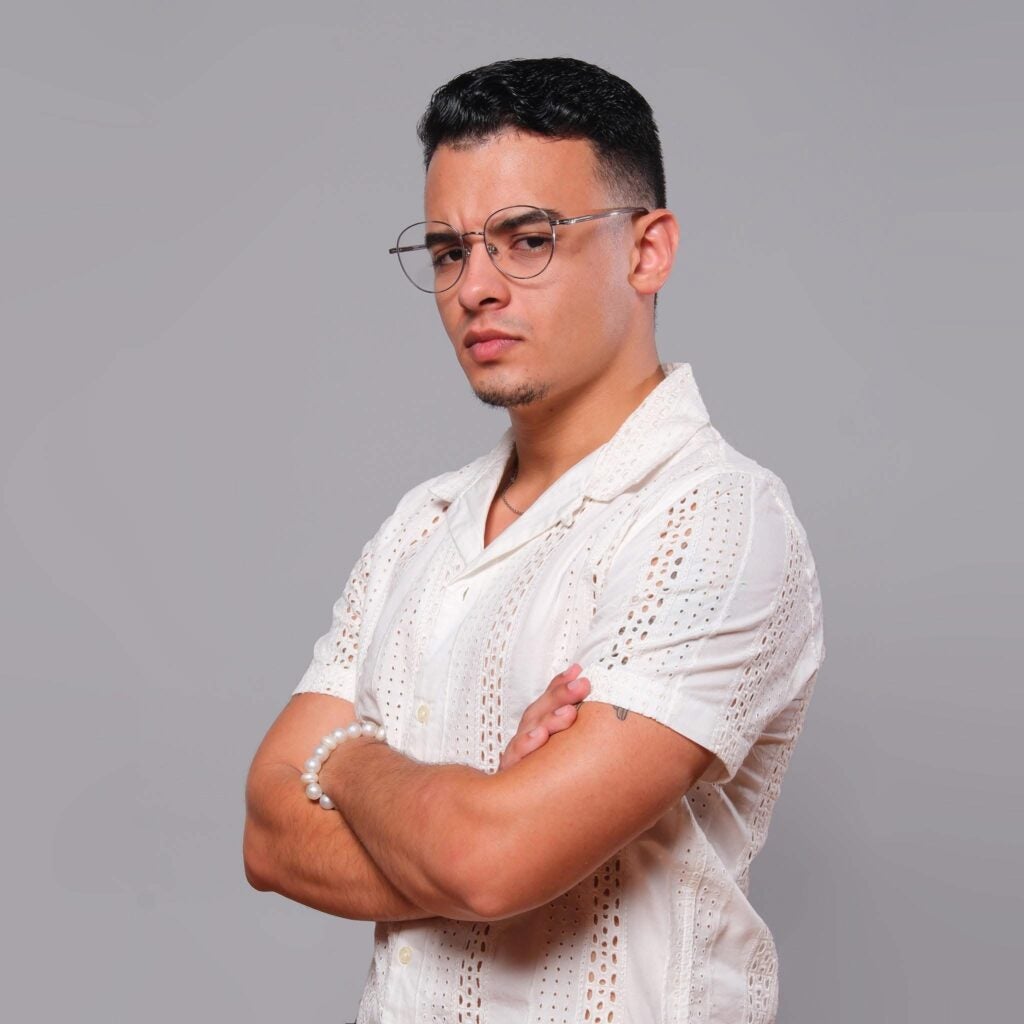
Luis spoke with Metcalf’s Mel Thibeault about his most recent investigative series for Puerto Rico’s Center for Investigative Journalism, what’s giving him hope, and what he learned as a Metcalf Ocean Nexus Academy fellow.
You’ve published several stories for a series, “The Weight of Cruise Tourism,” for Puerto Rico’s Center for Investigative Journalism on the impact of the cruise ship industry in the Caribbean, with financial support from the Metcalf Ocean Nexus Academy fellowship. Can you tell me about this project, including your process?
LJMG: This investigative series is about the social, environmental, and economic toll of the cruise ship industry in the Caribbean, in partnership with The BVI Beacon, a very well-known newspaper in the British Virgin Islands. We wanted to give a view of this industry, not just in Puerto Rico – where I am based and where I grew up – but also in other places in the Caribbean. Puerto Rico is a U.S. territory, so we often compare what is happening to the island to what is happening in other territories or states; we don’t often compare to other places in the Caribbean, which have many other things in common with us, especially in environmental terms.
We published a first piece about how cruise ship companies are building larger ships, which is producing less profits for the different territories they go to. The second story was about the impact of the cruise ship industry on the historic infrastructure of Old San Juan in Puerto Rico, which is our main cruise port. The third story was about residents of the U.S. Virgin Islands [calling for the] diversification of their economy. The U.S. Virgin Islands rely heavily on the cruise ship industry; what we found during our trip to the territory was that they really want more industries and a real effort from the government to make them less reliant on the cruise ship industry.
It’s also important to acknowledge that this investigation was done thanks to the collaboration and funding that Ocean Nexus, Metcalf, and The Uproot Project provided. As an investigative reporter, I often rely on documents and data and information that is not well-known. But I wanted to do this reporting on the impact on local communities, which required me to go to the places and talk to people.
I also learned how big companies invest so much money trying to greenwash their narrative to make themselves look good. [Many people] love to travel but sometimes people forget the impact that industry can cause, especially on marginalized communities with gentrification, displacements, a higher cost of living, and low wages. We also addressed colonialism, which makes it harder for these places to hold these industries accountable.
Why is this work so important, especially right now?
LJMG: We often think only about money and not about the communities and the impact these industries have on ordinary people and kitchen-table issues. [As part of this series], we really talked with people about the price of rent, the price of groceries, their wages, how much time it takes to go to their homes, and many other things. We really wanted to connect this broad issue to kitchen-table issues that really affect people, which is always my goal as a reporter. I focused on giving marginalized communities the space to talk, be honest, and share what can be improved – both from the private side and the public side.
What’s giving you hope these days?
LJMG: As a reporter, you always have to think that things can get better. I have faith in our generation, and I have faith in young people that really understand the complexities and urgency of the climate crisis. At least in Puerto Rico – and also in the U.S. – I see a big interest among our generation to understand and deal with the climate crisis. I believe that people are pretty aware that the climate is changing and that it is impacting their daily lives, and that gives me hope. The challenge is how to transform that hope into policies.
How has your experience with Metcalf impacted you and your career?
LJMG: Without the funding that the fellowship and Metcalf provided, I wouldn’t be able to travel to the U.S. Virgin Islands. I spent a week there: I talked with local people, I walked their streets, I had a grasp of their culture, I traveled to the different islands. That was a very life-changing experience and really changed my perspective of how I see these issues. Now I would say I have this aim to find places outside the U.S., outside of Puerto Rico, where the issues I’m reporting on are happening and [learn] what solutions they have pursued. This new way of me interacting with journalism, it was something that I got thanks to this fellowship, and I really appreciate it. I hope more opportunities like this are available in the future for reporters because it is very important to build this type of international and regional reporting, especially these days when funding is limited for media outlets.
What do you remember most about your time with Metcalf?
LJMG: I built very strong relationships, especially with [the other] MONA fellows [Rachel Ramirez and Eva Tesfaye]. We still keep in touch. I follow their work. We often share the stories we publish. We share sources. Rachel republished one of my investigative stories on her newsletter, The Confluence.
What I really appreciate and value is fostering those types of relationships. I believe journalists need these types of collaborations – not just in the place where you work but also the rest of the world. The journalism industry is shrinking – which can be awful for democracy – but the advantage of that is we can get to know each other, and we can be a working block in order to build great things together. The fact that Metcalf provided us the space to share that week together and to have that personal bonding is very important. Having those types of human spaces is crucial for reporters, especially nowadays.
This interview has been edited for length and clarity. Read Luis’ series here.