
About the Tomaquag Museum
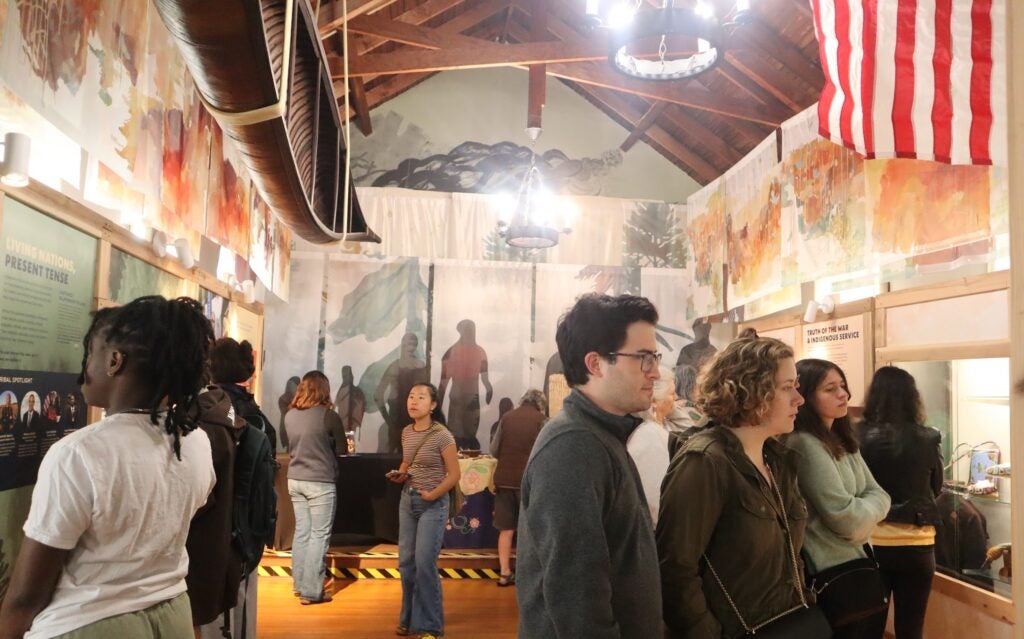
The Tomaquag Museum, located in Exeter, is Rhode Island’s only Indigenous museum. It provides a space where visitors can learn about Indigenous history and culture, specifically around Southern New England tribal communities.
Audio Transcript
The Tomaquag Museum was founded in 1958, and it was actually Eva Butler, who was non-Native, that began the museum, and she was supported by Red Wing: her name is Mary Glasgow and she identified as Narragansett and Wampanoag. And together, those two women came up with this concept of having a museum as an educational space, but allowing for Native people to teach their own history. So they were decolonizing museums before that was even the catchphrase of the day. And we give them credit for that. They brought in community members to educate at the museum, and our communities are quite large, so that museum space was never a tribal museum focusing on just one specific tribe. It was very much inclusive of a lot of the Native people in southern New England, so that’s why we have remained that way.
We are not a tribal museum. We are a separate nonprofit organization that is Native-led. So our board always has to be at least 51% Native. We’re much more than that; I think we’re like 80%. Our staff is predominantly Native. All of our educators are Native. So we want to maintain that tradition that was built in of teaching from a first-person perspective about Native history. So we collaborate with lots of different tribes around the southern New England region. We support them, they support us. But we are a separate nonprofit organization, not a tribal museum. So, after Red Wing and Eva Butler and even Tall Oak Weeden was very involved at that time, the museum… The museum was originally in Tomaquag Valley in Rhode Island. It was one of those little hamlets in the Ashaway area. And that’s why they took the name Tomaquag Museum. “Tomaquag” just means beavers. So this was an area with lots of beaver activity. That’s why it was called Tomaquag Valley. That’s where the name came from.
When Eva Butler passed away, because she owned the property the museum was on, it was left to her family. So the museum needed to find a new home. It approached the Dove family, and the Dove family were a Narragansett tribal family. They had a homestead in Exeter, Rhode Island, where they were running a business known as Dovecrest Indian Restaurant. It was very successful in its day, so it was the perfect place to bring a Native-focused museum. And so that’s how the Dove family became caretakers for the museum space, but it remained a nonprofit even after that time. It was always mostly volunteer-run, and the Dove family for years kind of acted as executive for the museum space until its growth in more recent Tomaquag history. But that is how we ended up in Exeter. That is how we have stayed a non-profit even after tribal recognition for many of the tribes of the southern New England region. We’ve just always stayed a separate space, and it allows us to be very inclusive of all the Native community that now call this place home.
Back to Start: Tour Home