

KINGSTON, R.I. – February 2 – The era of New Hollywood was a period of social distress in America. It overlapped with the Vietnam War, Watergate, anti-war movements, and civil rights and racial tensions. The film industry reflected this social unrest, producing more complex media as a commentary on society.
While studying film and media studies at UCLA, Justin Wyatt, Interim Director of the Harrington School of Communication and Media, and Interim Associate Dean for Undergraduate Studies, focused on this era, finding interest in director Robert Altman, famed for his 1975 film Nashville. The film follows 24 characters in Tennessee whose lives cross paths and begin to intersect. With each character, there is room for representation of archetypes within American society.
“It’s a great example of the way all of us intersect with other people’s lives,” Wyatt said. “You could be a supporting player in a professor’s life…or you may be an extra…but all of us connect with other people in different ways. That’s what the movie’s about.”
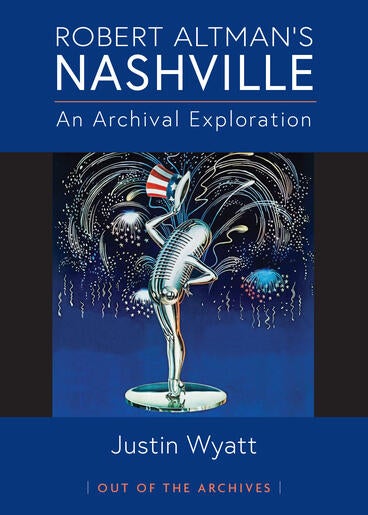
In 2017, Wyatt was introduced to Altman’s archival material in the University of Michigan special collections, which consisted of roughly 700 boxes of material. Over the course of three weeks and three separate trips visiting the archives, Wyatt realized that each document held its own story. His proposal for the Nashville book detailed that each chapter would focus on one aspect of the archive, whether it be a publicity still, a contract, or an advertisement.
“I spent as many hours as I could each day looking at materials,” Wyatt said. “You can take pictures with your cell phone and take notes, but nothing else.”
He also interviewed several collaborators from the film, from assistant director Alan Rudolph and production assistants like Maysie Hoy and the director’s son Stephen Altman to editor Dennis Hill and screenwriter Joan Tewkesbury.
Wyatt’s goal with this project was to view Nashville from the perspective of the archives, but also to explain his personal experience with the film, which is detailed in the preface. Born in England, and growing up in Canada, Wyatt, at age 11, had little connection with the U.S.. But watching a film that showcased everything about the American dream, no matter how violent, confusing and frustrating, resonated with the young movie fan..
“All that stuff played out for me at a very young age, and I was like, ‘Oh, my goodness. I want to be in that country. I want to live in the U.S.A,’” Wyatt said. “It made me think about what an amazing, alive, vital country this is. And, yes, there’s all these problems, but there’s all this excitement, too… I have lived in America for over 40 years, and it’s partly because of this film.”

Wyatt has published two other books connected to his research at the Altman archives. Wyatt’s most recent publication, 3 Women, analyzed one of Altman’s most challenging films, a dreamlike psychological drama about changing identities.. His previous Altman work allowed him to approach the Nashville book with a more developed understanding of the creative collaborations behind the film. Accepting that so many Altman films center on human flaws and contradictions afforded him a better approach.
“Knowing the background of Altman’s other films and his creative methods was super helpful when I went into looking at Nashville,” Wyatt said. “Because if I tried to evaluate it, without my work in the archives and knowledge of his other films, I would think about Nashville quite differently.”
When it comes to newer movie audiences, they are likely to have either never heard of Nashville or have little interest due to its age and nearly three-hour run time. But by publishing his work, Wyatt hopes to change this perception. Through his analysis of the film and its social, political and cultural themes, he aims not to replicate any previous work done on the film, but to give more insight and perspective on the classic.