
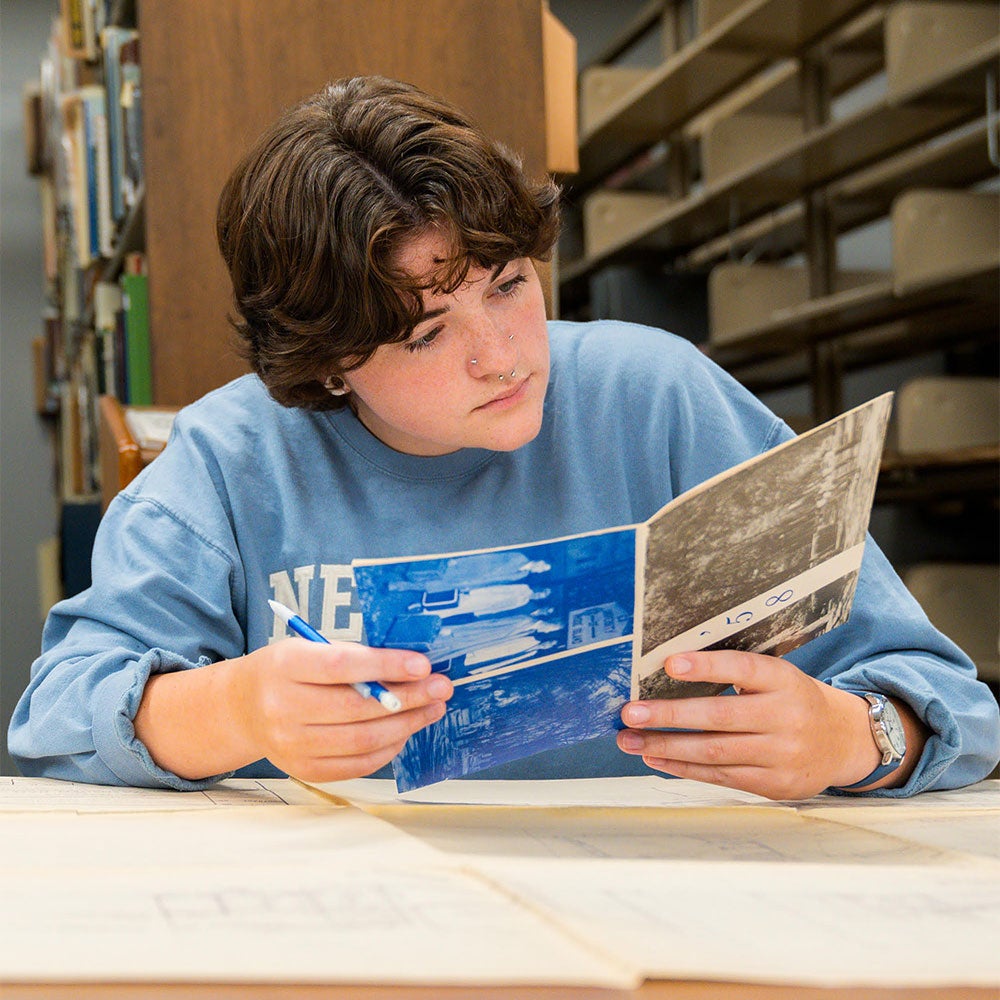
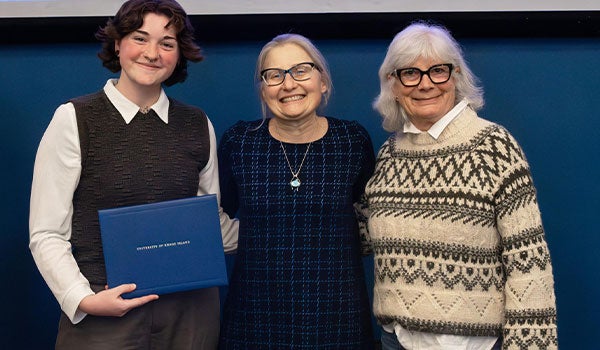
Molly McDonagh ’25 graduated this past December with a degree in history and anthropology. She was drawn in by URI’s coastal setting, historic campus, and strong academic offerings, but her decision was solidified after receiving the Thomas M. Ryan Scholarship. She is now continuing her academic journey through the Accelerated Bachelors to Masters (ABM), where she remains passionate about understanding the human experience through time, both in the classroom and through hands-on work in university archives and archaeology fieldwork.
Where are you from, and why did you choose URI?
I’m from Philadelphia, PA, but I used to take trips in the summer to visit relatives in New England. I always sort of had it in my head that I wanted to go to school in that area. When I visited URI, I immediately fell in love with the school. I loved the idea of being close to the beach, the historic look of the quad, and the class offerings for my major. When I was notified I’d be awarded the Thomas M. Ryan scholarship, there was no doubt in my mind where I’d be going that September. I couldn’t be happier with my choice!
Why did you choose to major in history and anthropology?
History has the power to explain how things came to be the way they are, and I think that context is incredibly important when it comes to making decisions for the present and future in every discipline. Anthropology helps illuminate the “human” side to history beyond just names, dates, and events. History informs a timeline, and anthropology weaves in the culture, emotions, and psychology of that period. By studying them together, I feel I’m able to get a more comprehensive understanding of the past.
What is your favorite time period to study?
Though I don’t have a particular time period I prefer over others, I do have specific themes I tend to gravitate towards. I have always been interested in death culture across geography and time. For my history capstone project, I investigated religious and revelrous emotional responses to the Black Death. This semester, I’m researching cultural shifts in English mourning practices following the death of Queen Victoria’s husband. The historical study of death and death culture really speaks to the human capacity for empathy, love, and compassion. It may seem like a dark subject, but from that lens, I’d argue it’s sort of a beautiful thing!
Why did you decide to do the Accelerated Bachelor’s to Master’s Programs (ABM) track and pursue your master’s?
When I first heard about the ABM program, I couldn’t believe such an incredible opportunity existed. When I came to URI, I had multiple AP and dual enrollment credits that put me on track to graduate early. As exciting as that sounded, it made me sad to think I’d be leaving URI so much earlier than I originally anticipated. Coming from such small departments, my time at URI had allowed me to develop close relationships with multiple professors, and there were still others I was yet to meet. The ABM program allowed me to further foster these relationships, keep watering roots in the New England area, and continue studying both history and anthropology without having to pick between one or the other.
What is it like to be a student assistant at the university archives and special collections?
As a student assistant at the university archives and special collections, I have gained experience with the “behind the scenes” of history. In a history class, a student might learn who owned the Watson House and what purposes it served over the past 200 years. In the archives, I’m able to learn just about anything, down to the type of wood used to build the well sweep, when that wood was purchased, and how much it cost. This job also aids in passive learning. There have been multiple times where I’ve done work in the archives that relates to a class assignment down the road and vice versa. There’s an intimacy that comes with working with primary sources that you can’t always get from secondary ones. I feel beyond fortunate to have a job so closely related to my studies.
What are your career goals or plans after graduating with your master’s?
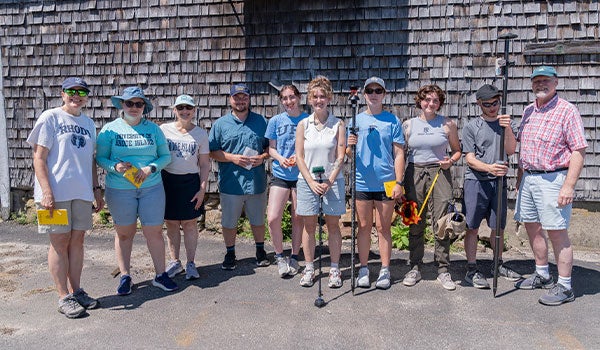
After graduating with my master’s, I hope to become an archaeologist in the cultural resource management sector. My experience with archaeology tech equipment at URI’s summer field school and my excavatory experience in both Bulgaria and Belize cemented my love for the “field” in the physical sense. URI courses, like Dr. Bovy’s cultural heritage seminar, have shown how important it is to handle heritage responsibility, which cemented a sense of purpose, too.
This story was written by Rebecca Minichino, an intern for the Harrington School Social Media Agency.