

Sometimes the best decisions begin with a simple instinct. After a service year with City Year AmeriCorps in Providence, Harper Glisczinski ’26 kept hearing students speak highly of the University of Rhode Island. She applied without overthinking and quickly found her place. At URI, Harper built a strong connection with Dr. Brittany Martin, who guided her into meaningful research on Rhode Island’s justice system. She has conducted her own study, worked with court professionals, and gained hands-on experience as a Behavioral Health Intern at Bradley Hospital. Her studies in criminology and psychology have strengthened her understanding of people and complex systems. After graduation, she plans to attend law school and pursue a career focused on advocacy and criminal justice policy.
Why did you choose URI?
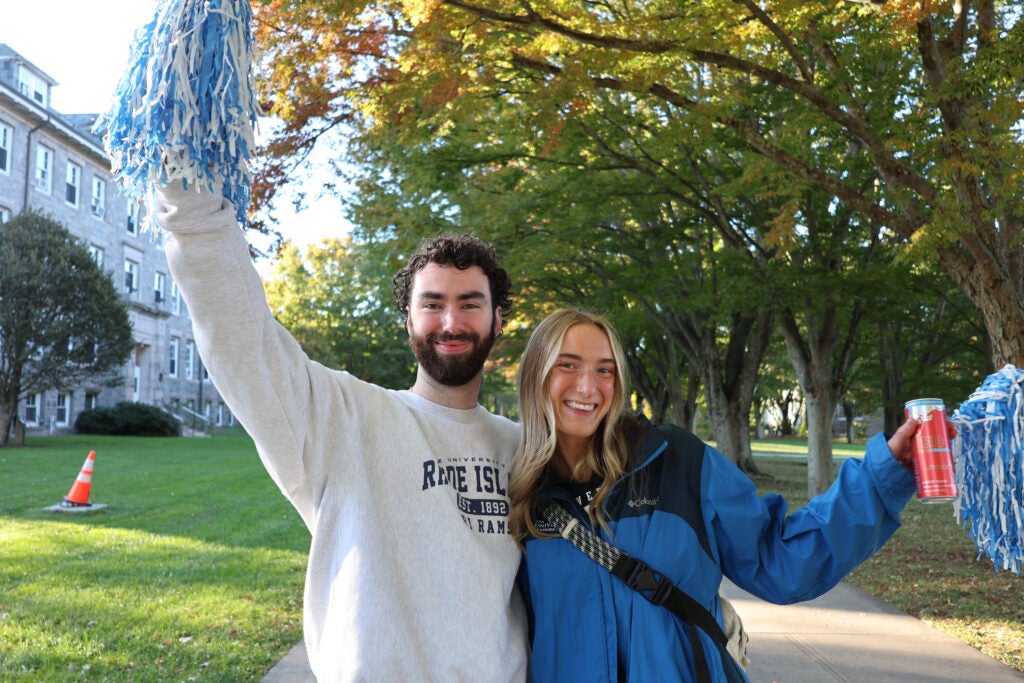
After high school, I deferred my enrollment to a university in Minneapolis, Minnesota, to complete a service year with City Year AmeriCorps in Providence. While working in a local middle school, I kept hearing students talk about URI with excitement and admiration, and their enthusiasm inspired me to look into it myself. On a whim, I submitted an application, and when I was accepted, I committed without hesitation. I hadn’t toured, I didn’t know anyone in Rhode Island, and I had no particular plan, but something told me this was where I belonged, and I haven’t looked back since.
Is there a professor or experience at URI that really impacted you?
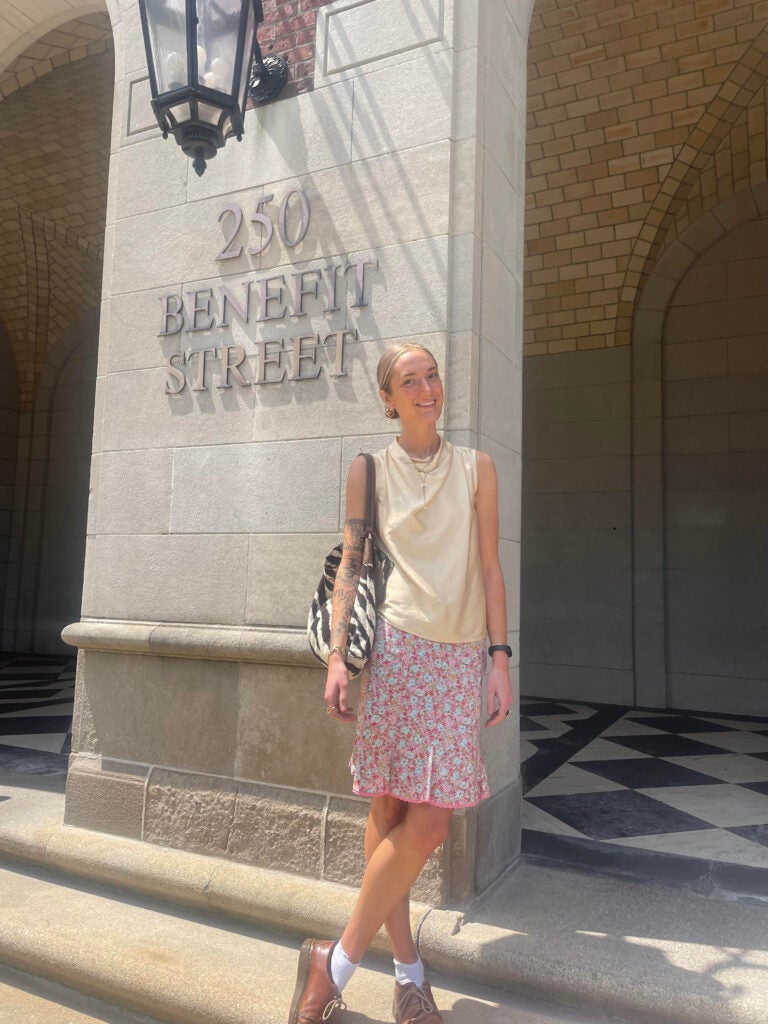
Dr. Brittany Martin in the Criminology and Criminal Justice Department has had a lasting impact on my personal, academic, and professional development. What began as a student-professor relationship deepened when she encouraged me to apply for the A&S Summer Fellows Research Grant. Being selected to design and conduct an independent study under her mentorship sparked a genuine love for research that has shaped my entire trajectory at URI. I now serve as her research assistant on a grant-funded study examining the impact of recent LFO legislation in Rhode Island. This work has connected me with faculty across disciplines, court decision-makers statewide, and a cohort of like-minded coworkers turned friends. I am a different person because of her mentorship, and I am endlessly grateful for everything she has given me.
Have you done any internships, research, or hands-on work related to your majors?
As a competitively funded undergraduate research fellow, I designed and conducted an original qualitative study examining how defendants navigate gender and power dynamics across five divisions of Providence County’s criminal court system. I’ve continued that work as a research assistant to Dr. Martin, whose mixed-methods study examines the implementation and reintegration impact of Rhode Island’s LFO reform legislation on system-involved individuals statewide. Through that work, I’ve had the opportunity to interview court actors, conduct quantitative fieldwork, clean and code confidential data, and build proficiency in data analysis software. Clinically, I served as a Behavioral Health Intern at Bradley Hospital, co-facilitating CBT and DBT groups and providing crisis intervention support for adolescents in acute psychiatric care. This experience continues to inform how I engage with my psychology coursework and how I think about my future career.
Has studying these subjects changed how you see people or behavior in everyday life?
Absolutely! I’ve always been drawn to observing and trying to understand people and social dynamics, but before URI, I didn’t have the frameworks to analyze what I was seeing in a meaningful way. Studying CCJ and psychology has given me theoretical grounding and critical thinking skills to engage more thoughtfully with the complex systems and questions I care about and to make more informed decisions.
What drew you to study criminology, criminal justice, and psychology specifically?
Psychology has been a longstanding passion, and I wanted a scholarly base to work from. URI was the first university I encountered that offered Criminology and Criminal Justice, and I was immediately drawn to it. The program gave me an interdisciplinary space I hadn’t known existed, where sociology, criminal justice, and psychology intersect with policy, and that combination has been exactly what I was looking for.
What are your plans after graduation?
I plan to continue working in research while applying to law school, with the goal of pursuing a J.D. or Ph.D. and a career in public interest law or criminal justice policy. I’m particularly interested in the intersections of law, trauma-informed practice, and advocacy as they relate to supporting individuals navigating substance use and survivors of intimate partner violence.
This story was written by Sonie Zilian, intern for the Harrington School Social Media Agency.