Interdisciplinary Neuroscience Program, Ryan Institute for Neuroscience host annual symposium in Avedisian Hall
The University of Rhode Island’s Interdisciplinary Neuroscience Program (INP) and George and Anne Ryan Institute for Neuroscience highlighted student research in a variety of neuroscience specialties at the fourth annual URI Neuroscience Symposium on April 13 in Avedisian Hall, home of the URI College of Pharmacy.
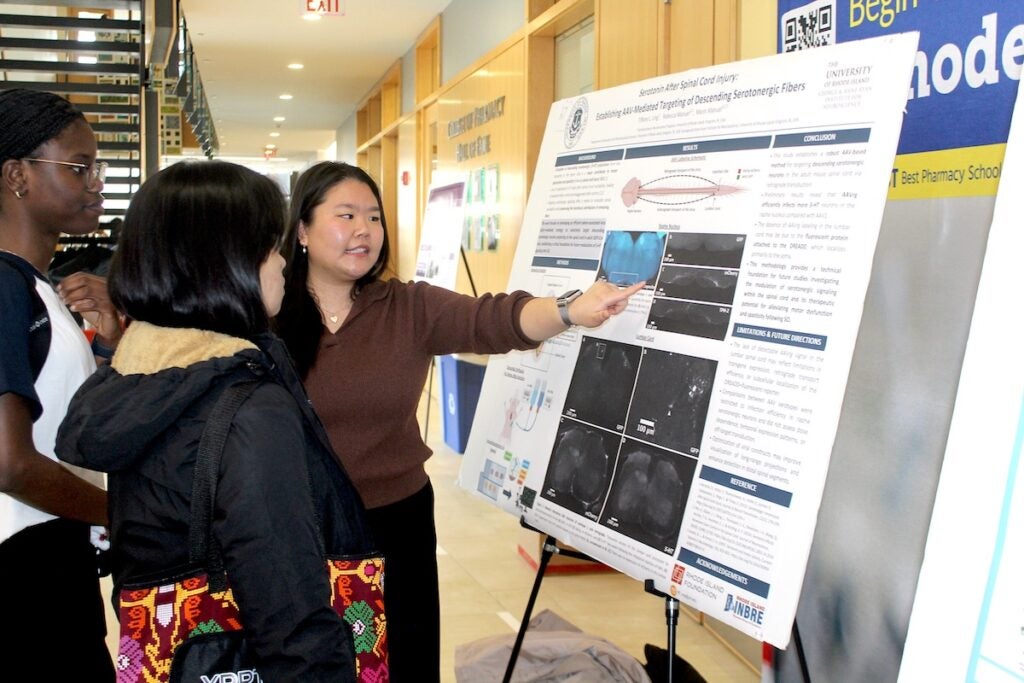
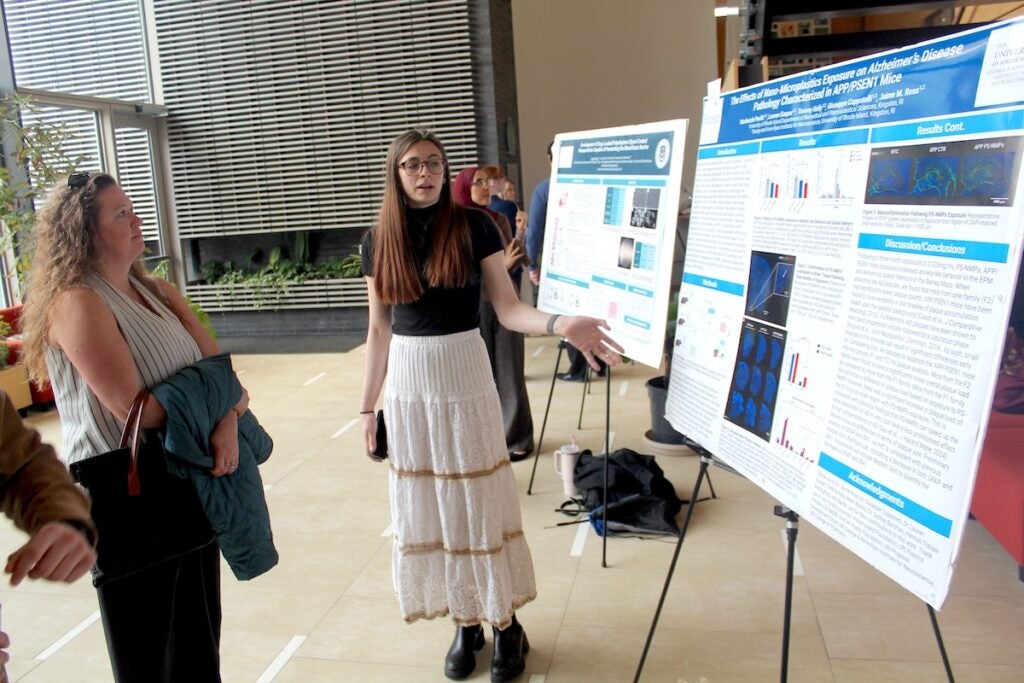
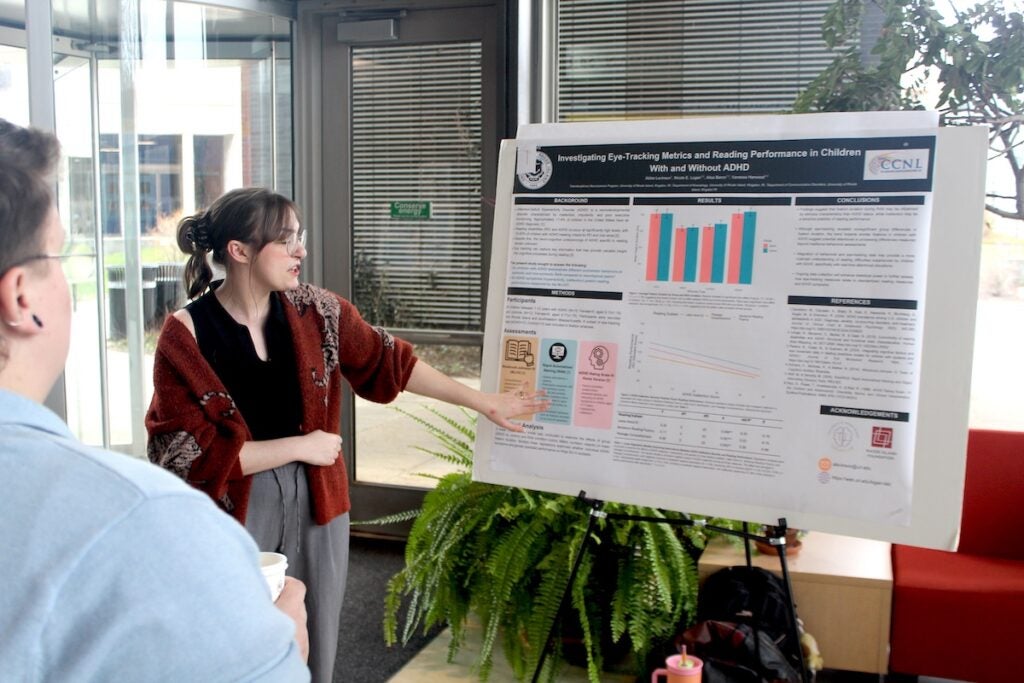
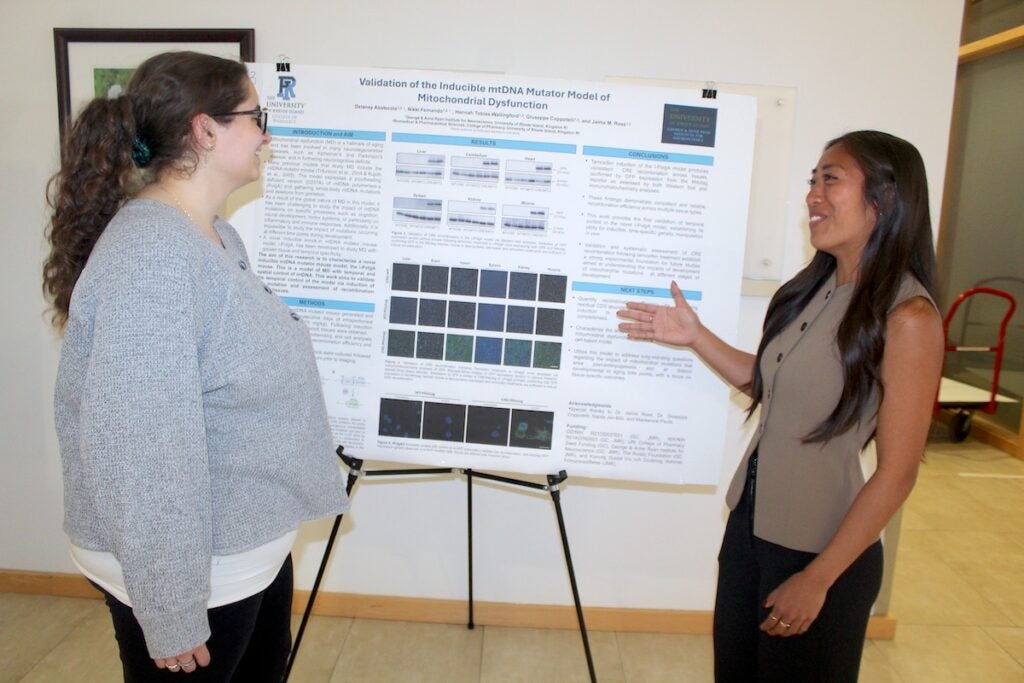
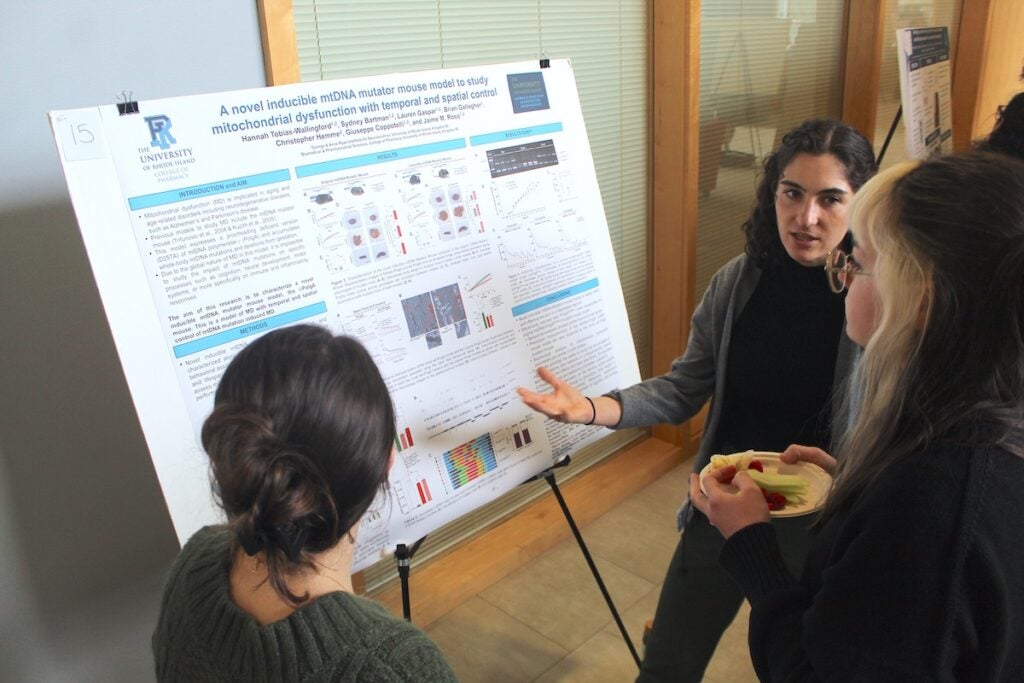
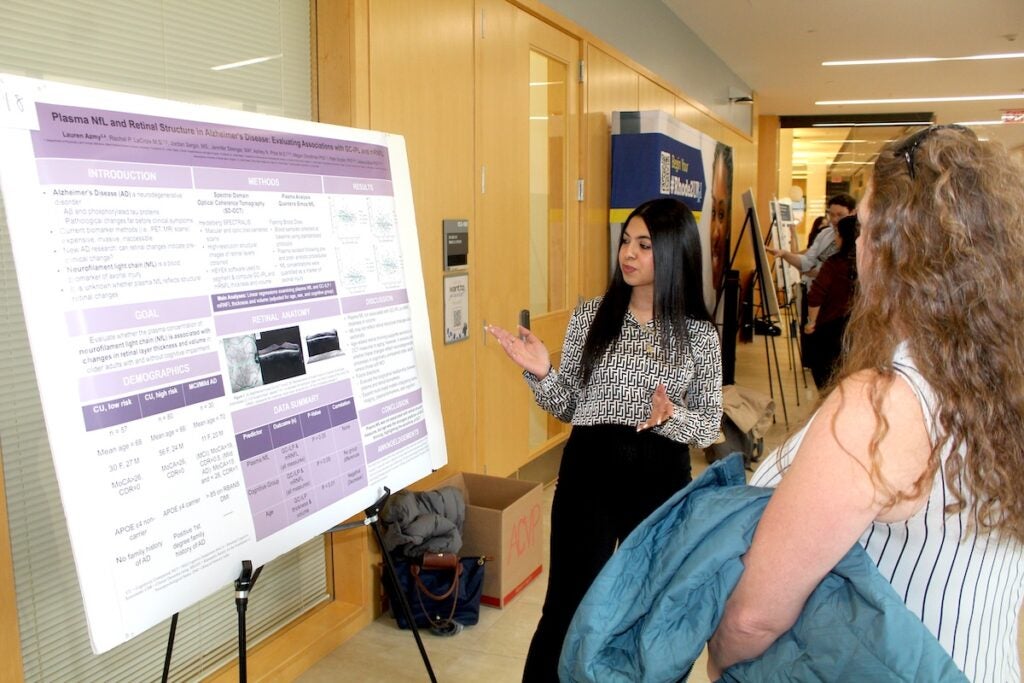
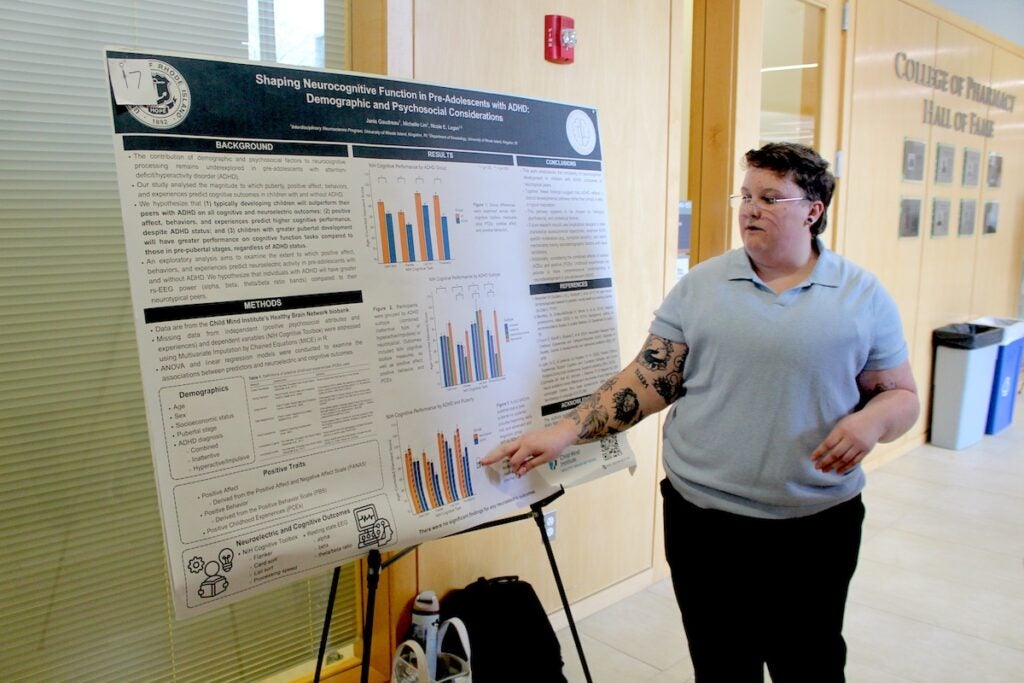
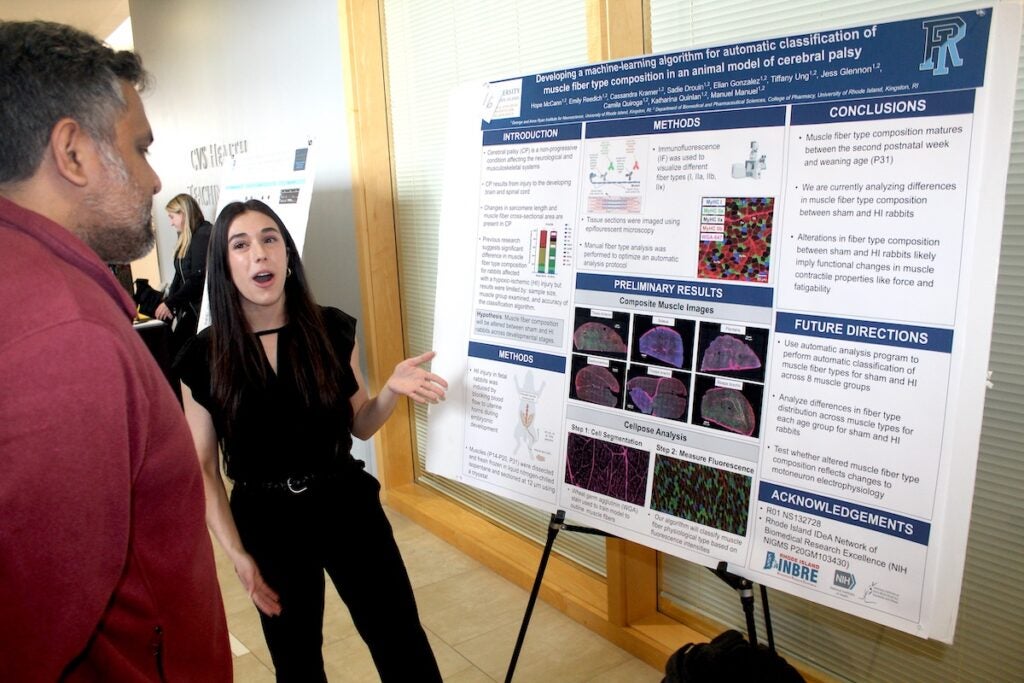
Dozens of URI INP graduate and undergraduate students shared dynamic research projects in a range of areas during an afternoon poster session, many including work done under the mentorship of Ryan Institute faculty members. Students researched such topics as Alzheimer’s disease, mitochondrial dysfunction, microplastics exposure, and Attention Deficit Hyperactivity Disorder.
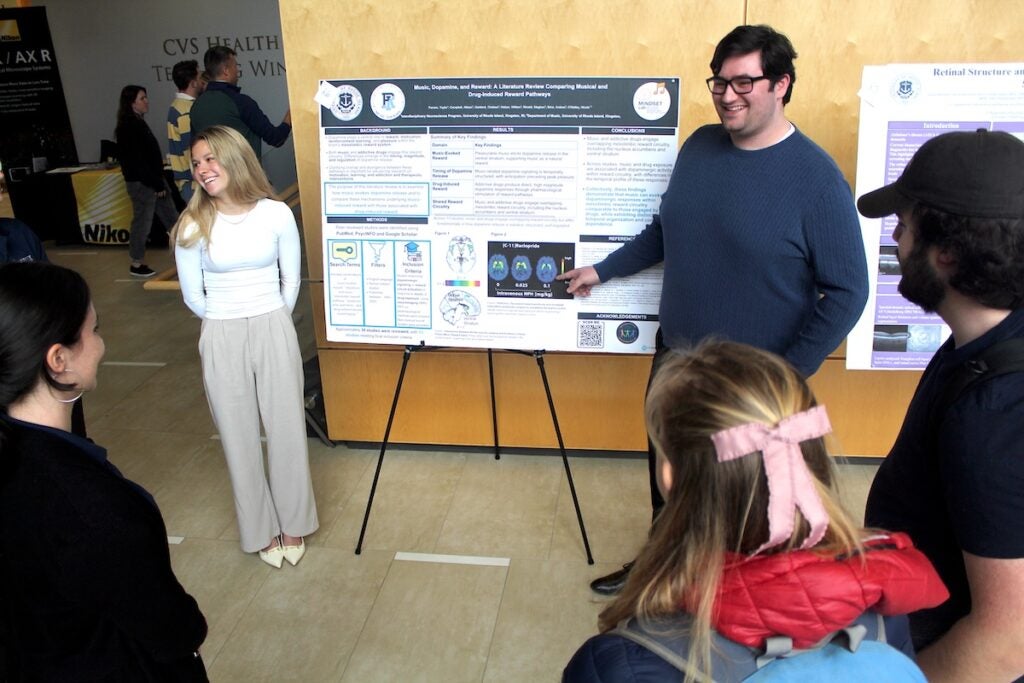
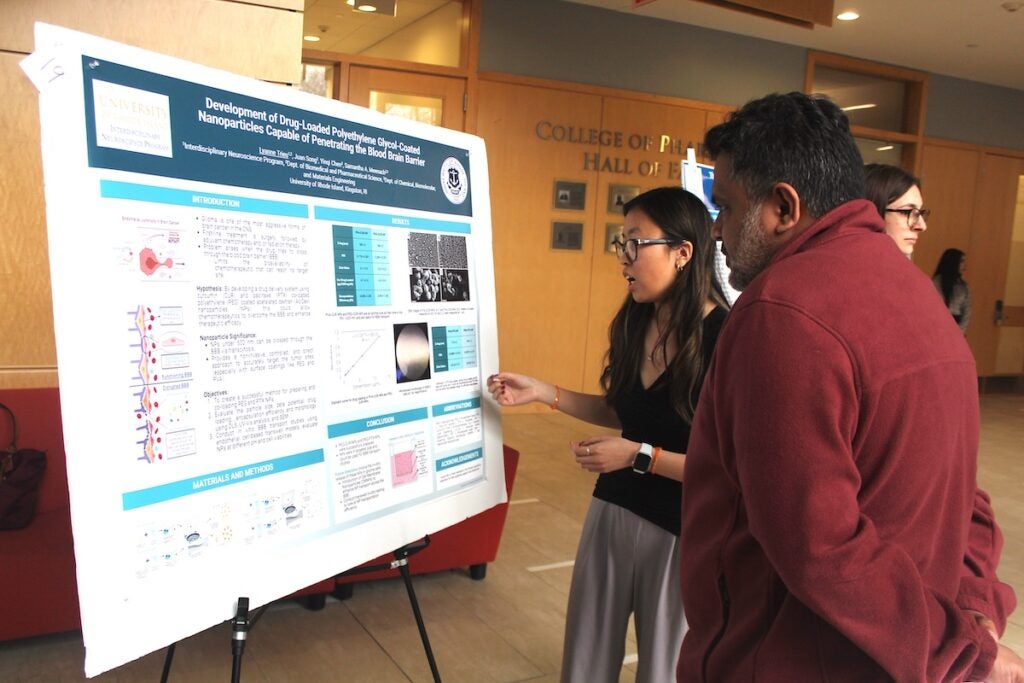
One study compared how listening to music induces dopamine releases in the brain, versus how drugs induce release of the brain’s pleasure hormone. Another examined serotonin receptors during the development of cerebral palsy. Some students also researched drug-loaded nanoparticles with the ability to penetrate the blood-brain barrier.
“I am so impressed with the students,” said Lisa Weyandt, professor and director of URI’s INP program. “It’s a beautiful example of molecular neuroscience, really at the cellular level; clinical neuroscience involving humans; and medicinal neuroscience. So, it’s a nice blend of all aspects of the INP. And that’s what’s unique about our program compared to other neuroscience programs; we have those three distinct tracks that our students are really drawn to.”
Neuroscience professors evaluated the projects and assigned each an overall score. The highest-scoring student researchers are:
- Anna Schumacher, who studied the rare genetic disorder, Prader-Willi Syndrome.
- Seema Alarachi, who studied retinal structures and cognitive impairment.
- Abbie Levinson, who studied eye tracking in children with ADHD.
The INP program combines a wide range of disciplines—from basic research and clinical studies to new drug development—allowing for a more thorough study of neurological diseases and disorders. URI’s unique neuroscience program offers students access to training and faculty expertise from multiple colleges, including pharmacy, psychology, health sciences, and engineering.
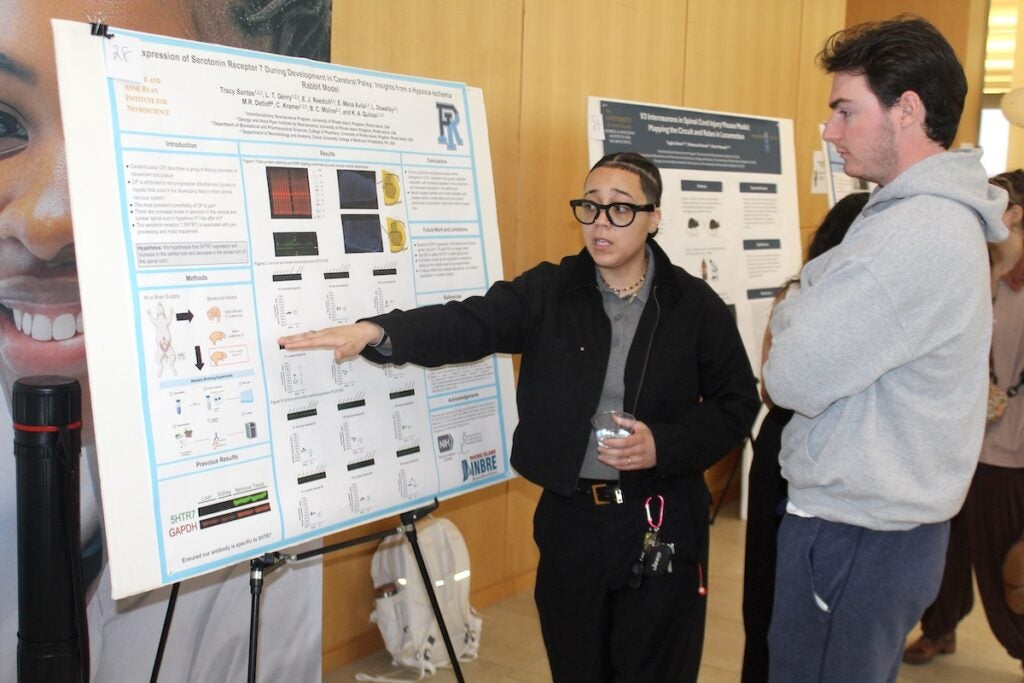
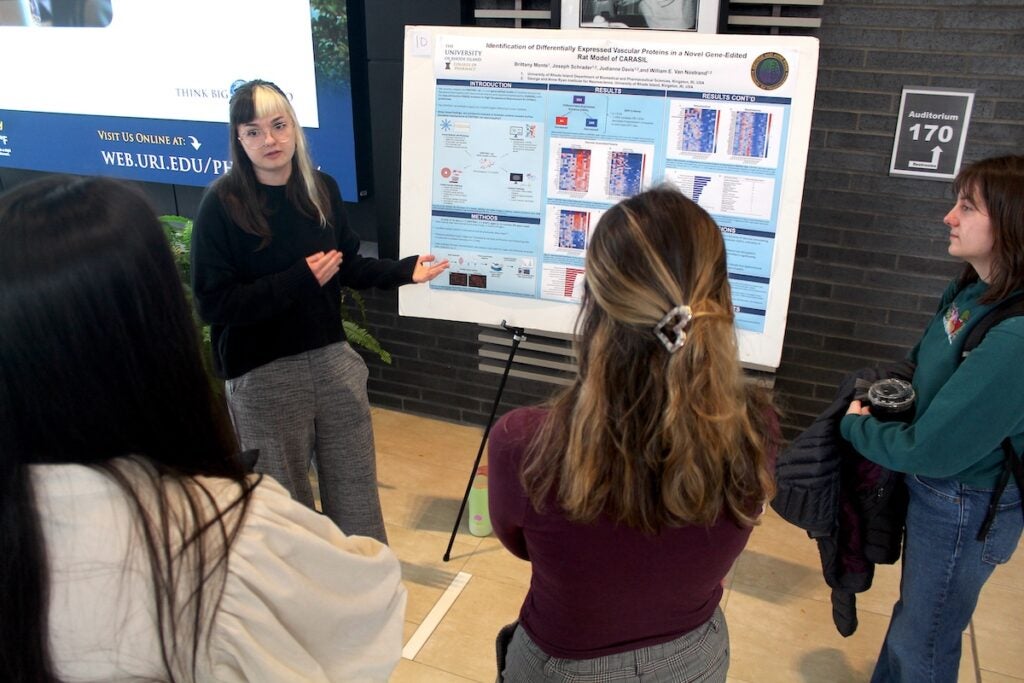
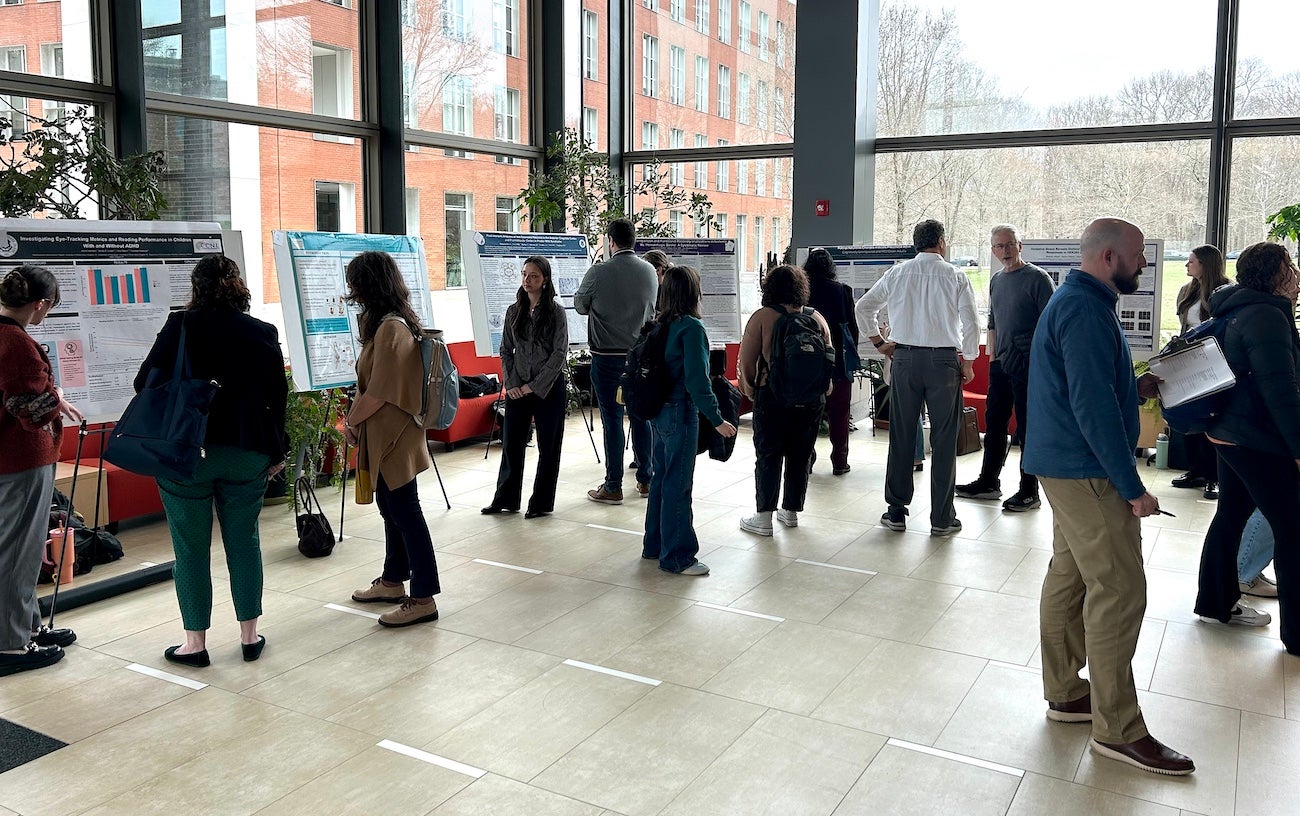
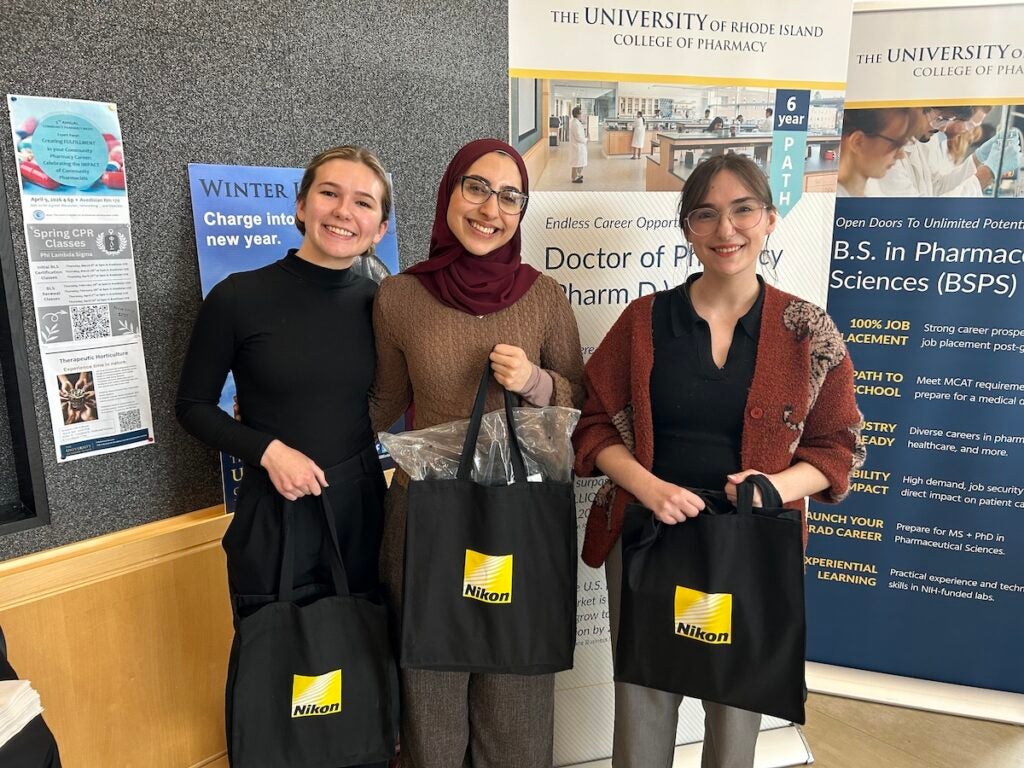
The symposium—sponsored for the first time this year by photography and biomedical instrument producer Nikon—has grown significantly since its launch in 2022, which included 15 student research presentations. Interdisciplinary neuroscience faculty member Walter Besio, a URI professor of electrical, computer and biomedical engineering, kicked off the symposium with a keynote address, “Transcranial Focal Stimulation Rapidly Shifts Epileptic Brain Dynamics: Real-Time EEG Feedback,” before 34 poster presentations were displayed in the Avedisian Hall lobby. Students shared their impressive research with professors, fellow students and passers-by, which is an important skill to develop for the budding scientists, Weyandt said.
“It’s an opportunity not only for students to showcase their research, but to discuss it, to be able to answer difficult questions and think about different perspectives that maybe they had not thought about before,” Weyandt said. “This is a professional experience for them and will help them present their research at other conferences, too. This is the first trial run a lot of students will have to get their feet wet presenting. And it helps them think on their feet, which is a good critical skill in life regardless of what they end up doing.”