About Aquaculture and Fisheries Extension
URI Cooperative Extension’s Aquaculture and Fisheries Program provides science-based information, education and hands-on learning opportunities that support Rhode Island’s aquaculture and commercial fishing industries, marine ecosystems and coastal communities.
Through applied research, industry training, technical assistance, educational programs and partnerships, we connect aquaculture growers, commercial fishermen, students, educators and community members with practical knowledge and current marine science. Our work promotes sustainable seafood production, responsible fisheries, workforce development, safety at sea and stewardship of Rhode Island’s coastal resources.
Explore the sections of this site to learn more about aquaculture production, commercial fisheries training, marine and seafood education, research, resources and opportunities to get involved. For more on coastal and marine research, education and outreach across Rhode Island, visit Rhode Island Sea Grant.
Aquaculture
Aquaculture is a form of agriculture in which marine and freshwater fish, shellfish, algae and aquatic plants are the farmed crop. Since aquaculture statistics for the State of Rhode Island have began to kept by the Rhode Island Coastal Resources Management Council, since 1995, growth of aquaculture production in Rhode Island has averaged about 18% per year, making it one of the fastest growing industries in the state, and a contributor to Rhode Island’s growing local food economy. The URI Aquaculture Extension Program provides the most current science-based information in sustainable and profitable aquacultural crop production practices to growers through site visits, periodic publications, workshops and more. The program is formally linked to the Northeastern Aquaculture Extension Network through the Northeastern Regional Aquaculture Center, a program of USDA-NIFA.
Resources to Explore
- Archives of the ‘Shellfish Corner‘ from Dr. Rice’s column “The Shellfish Corner” in Aquaculture Magazine. This archive has has several short articles on a variety of topics of interest to the commercial aquaculturists.
Fishing Apprentice Program
The Commercial Fishing Apprenticeship Program (CFAP) is a crew training program designed and offered by the East Farm Commercial Fisheries Center of Rhode Island, in cooperation with the University of Rhode Island Cooperative Extension, commercial fishermen, and the supporting shoreside businesses of Point Judith.
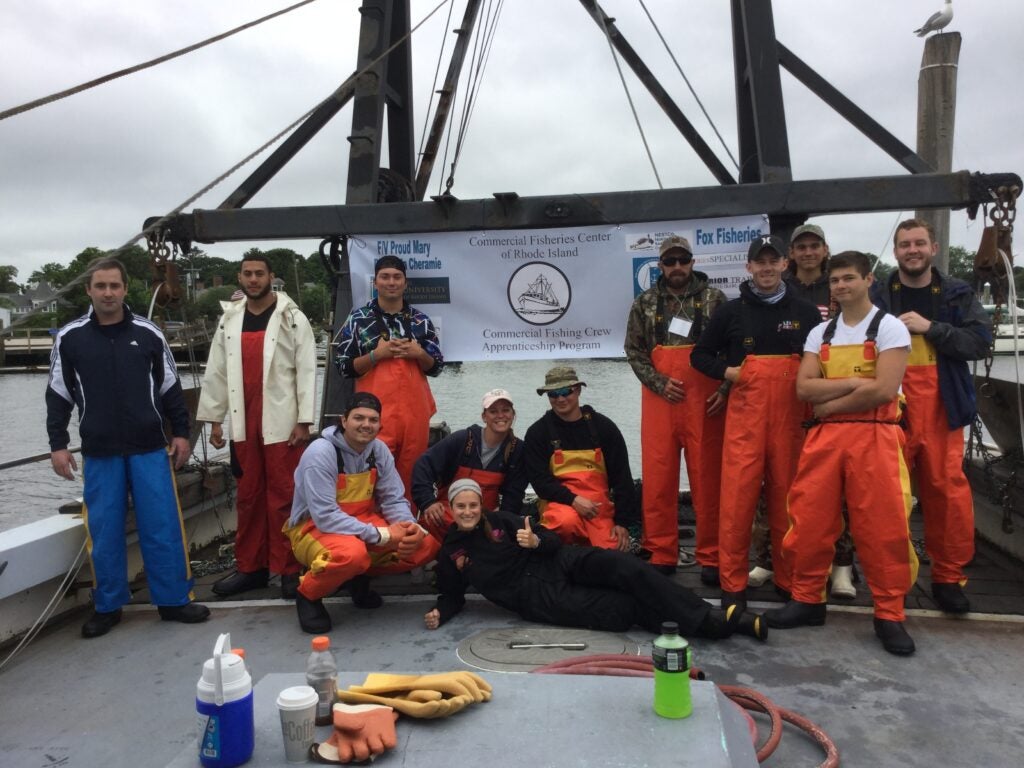
The program runs from the day after Labor Day to late June each year. After the initial training, apprentices will be given opportunities to work as crew members on RI vessels to begin on-the-job learning.
The training provides essential knowledge and skills to hard-working, self-motivated, and dependable men and women. Upon completion of the month-long training, participants will have the potential to become the next generation of conservation-minded fishermen and secure full-time employment aboard local commercial fishing vessels.
The program consists of hands-on, classroom-based training sessions, and at-sea training. Hands-on componentsl include safety training, seamanship, navigation, basic vessel maintenance, gear design and repair. Classroom sessions will include Fishing as a Business, Rhode Island Fisheries Management and Regulations, Cooperative Research, Data Collection, Species Identification, and the Ethics of Responsible Fishing Practices. As part of the program, apprentices get 3 days at sea and get to experience different types of fishing and gear types. Training locations are both Point Judith and Kingston, Rhode Island.
If you are interested in applying , you can find more information by visiting: https://www.cfcri.org/apprenticeship.html. Applications are accepted from early February through April 15th of each year.
Commercial Fishing Industry Safety Trainings
A variety of trainings are offered to the commercial fishing industry through Fishing Partnership, a non-profit support services organization dedicated to improving the health, safety, and economic security of commercial fishermen, their families, and their communities. Founded in 1997, they bring critical support services and programs to more than 20,000 New England fishing families. With five offices in Gloucester, New Bedford, Plymouth Chatham and Point Judith, RI, they deliver Health and Wellness, Safety at Sea, and Economic Security support services in the communities where fishing families live. All programs and training are free for commercial fishermen. URI Cooperative Extension is proud to support the efforts of Fishing Partnership by providing an instructor at many of their trainings.
Safety at Sea & Survival Training
To be safe, fishermen must have access to safety training, investment in their safety infrastructure, and regulations that do not force them to put themselves in danger to earn a living. With education and preparedness, fishermen can be safer at sea.
This training is designed for all fishermen, including crewmen, to learn or hone fundamental safety and survival skills. Through hands-on training, fishermen learn about EPIRBs, Signal Flares, MAYDAY Calls, Man Overboard Recovery, Firefighting, Flooding & Damage Control, Dewatering Pumps, Immersion Suits, PFDs, and Life Rafts. For interested fishermen, this is the first day of the 2-day AMSEA Drill Conductor Certification.
After completing the 1-day Safety and Survival Training Course, fishermen spend a second day learning how to lead monthly, on-vessel safety drills that are critical for building muscle memory and ensuring the crew retains their skills. Fishermen that complete this course become Certified Drill Conductors by the Alaska Marine Safety Education Association (AMSEA) in accordance with 46 CFR 28.270(c).
More About Safety Training
- Programs are free to fishermen.
- For all fishermen, not just Captains.
- Essential practical hands-on training.
- Delivered in port towns where fishermen live & work.
- Endorsed by leaders in the fishing industry.
- Taught by Coast Guard-certified fishing vessel safety instructors.
Learn more by visiting: https://fishingpartnership.org/safety-at-sea-training/
CPR & First Aid Training
Fishing Partnership trains fishermen as First Responders at Sea. When you’re at sea, you don’t have the convenience of emergency personnel arriving in a few minutes to care for an injured crewman. As fishermen, you are the first responders. Depending on the weather and your distance from shore, you may continue to respond for a long time until medical experts take over. Fishing Partnerships CPR & First Aid Class is enhanced to teach you the most up to date life-saving skills. Meeting the Coast Guard requirements under 46 CFR 28.21, this class certifies fishermen in CPR and First Aid. Additionally, this class will provide those with the ability to identify and respond to an opioid overdose. Fishing Partnership’s Overdose Education and Naloxone Distribution (OEND) training program provides fishermen with a greater understanding of the dangerous opioid epidemic facing our nation. While opioid use does not discriminate, it disproportionately impacts independent professionals working in strenuous, physically demanding professions with limited access to support systems, such as farmers, construction workers, and mariners. More information on Opioid awareness can be found at https://fishingpartnership.org/wp-content/uploads/2025/05/AR-24-Pg-20.pdf
To view a full list of trainings and certifications offered through Fishing Partnership Support Services, visit https://fishingpartnership.org/#open. To see the schedule of trainings and register for a class, visit https://fishingpartnership.org/calendar/
During the CPR & First Aid Course, you will receive hands-on instruction for these skills and more:
- Tourniquets
- Splinting (broken bones)
- Wound Care *Hypothermia
- Diabetes
- Overdose
- Heart Attack
- Shock
- Traumatic Injuries
- Allergic Reactions
- Burn Treatment
- Stroke
- Cuts and Lacerations
- Chemical Poisoning
- First Aid Kits
- Infections
- Patient Assessment
- Bites and Stings
- Frostbite
- Medical Emergencies (Appendicitis, Seizure, Sepsis etc.)
- Asthma
- Dehydration
- Amputation
- Heat Stroke
- Choking
- CPR
- AED use
- Patient Evacuation
- Ergonomics and more.
Learn more and sign up by visiting: https://fishingpartnership.org/cpr-first-aid-class
Environmental Youth Education
Our education programs connect youth groups and students with Rhode Island’s marine and coastal environments through engaging, science-based learning experiences. By combining classroom instruction with hands-on field activities, we help participants better understand the connections between healthy ecosystems, sustainable fisheries, aquaculture, seafood, and coastal communities. This program is provided to youth or school groups on request or through a week long summer camp for 12-15 year olds.
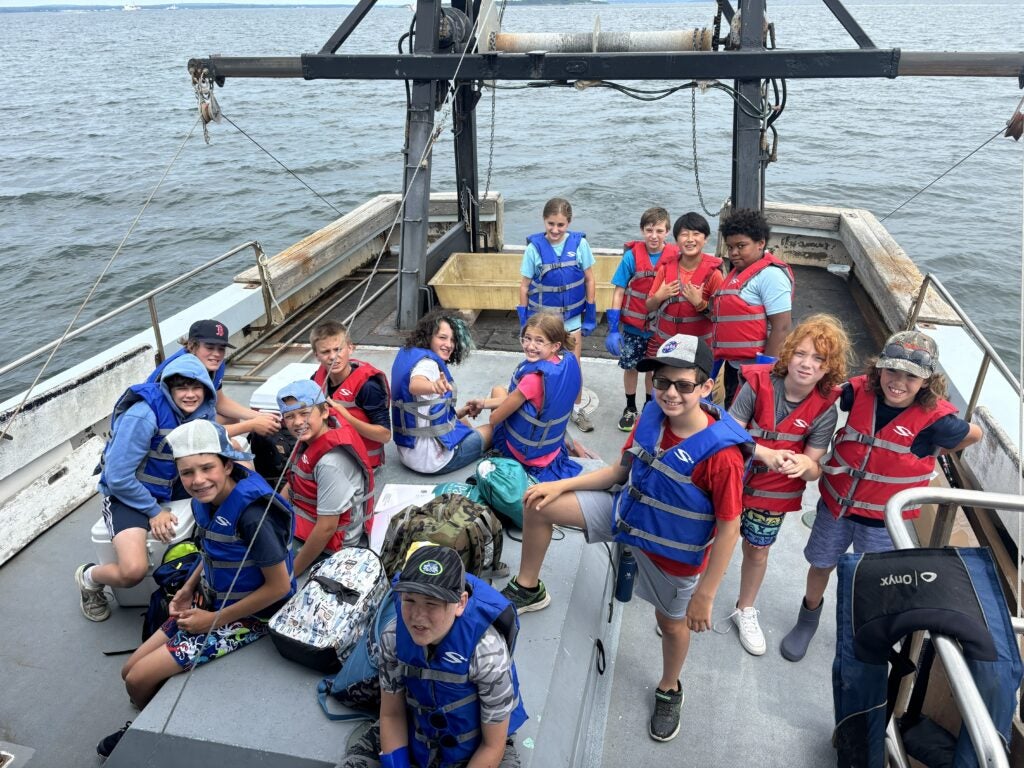
This program helps participants:
- Learn how healthy marine ecosystems support sustainable fisheries and aquaculture.
- Explore Rhode Island’s diverse coastal habitats and the species that depend on them.
- Participate in hands-on scientific investigations aboard the research vessel Cap’n Bert and at coastal field sites.
- Develop skills in fish identification, biological sampling, and marine observation.
- Understand how fisheries research informs conservation and sustainable resource management.
- Discover how climate change is affecting marine ecosystems and seafood resources.
- Build an appreciation for locally harvested seafood and Rhode Island’s working waterfronts.
- Foster environmental stewardship through experiential learning and community engagement.
- Connect students, educators, families, veterans, and community groups with current marine science.
- Inspire the next generation of scientists, educators, fishermen, aquaculture professionals, and environmental leaders.
Program includes:
- Educational bottom trawling trips aboard the R/V Cap’n Bert
- Fisheries and marine science field experiences
- Oyster farm and aquaculture tours
- Research aquarium visits
- Seafood education and sustainable seafood classroom activities
- School, youth, and summer programs
Contact Information