
Where Data Meets Society:
URI Launches New Computational Social Science Ph.D.
The University of Rhode Island is launching a new Ph.D. in Computational Social Science (CSS) administratively housed in the Department of Political Science (College of Arts and Sciences). The CSS PhD is an interdisciplinary program designed to prepare researchers to address complex societal challenges using advanced computational and statistical methods.
Bringing together expertise from across the social sciences and statistics, the program equips students with advanced skills in data analysis, machine learning, and statistical modeling while providing opportunities to investigate real-world questions related to public policy, economic development, inequality, and human behavior.
One of the program’s most distinctive features is its embedded Master of Science in Statistics, allowing students to gain advanced quantitative expertise alongside doctoral-level training in social theory, research methods, ethics, and computational analysis. This integrated approach prepares graduates for careers in academia, government, industry, and other research-intensive fields.


A Field at the Intersection of Data and Society
Computational Social Science combines questions about people and society with tools such as machine learning, artificial intelligence, and advanced statistical analysis. Researchers use these approaches to better understand issues ranging from economic development and inequality to public policy, institutions, and human behavior.
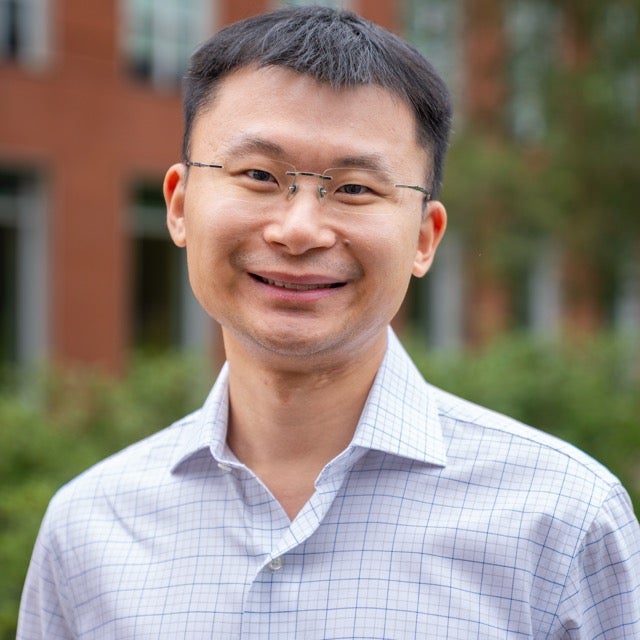
“Computational Social Science brings together questions about people and society with tools from statistics and computer science,” said Dr. Qin Huang, assistant professor of political science and one of the faculty members helping shape the program.
“The exciting part is connecting patterns in data to explanations of how society works.”
Faculty Spotlight: Dr. Qin Huang Uses Data to Understand Society’s Biggest Challenges
Learning Across Disciplines
The program was developed to meet growing demand for researchers who can bridge technical expertise and substantive knowledge.
Students will collaborate with faculty across disciplines, participate in the Computational Social Science seminar series, and develop original research projects.
“We need researchers who understand both computational tools and the social settings in which they operate,” Dr. Huang states. “URI makes that combination the foundation of a dedicated doctoral program.”
Preparing Graduates for a Range of Careers
In addition to preparing students for academic careers, the program develops skills that are increasingly valuable in government, nonprofit organizations, research institutions, and industry. As artificial intelligence and machine learning continue to transform research and decision-making, there’s a need for scholars who can responsibly apply these tools.
“The program combines technical training with the ability to formulate meaningful questions, design rigorous studies, and communicate findings clearly,” Dr. Huang said. “Graduates should be able to explain what their analysis tells us, where its limitations lie, and how it can inform decisions.”