

Catherine Scott ’14, philosophy and gender and women’s studies, found her way to social media and marketing almost by chance. She started out managing social media for a small local business and quickly discovered a love for combining creativity with strategy. Today, she creates content for the University of Rhode Island, sharing stories about campus life, research, and events. She experiments with trends and explores new ways to connect with the community. Catherine enjoys collaborating with students, faculty, and staff, and looks forward to continuing her work on campaigns that inform, entertain, and bring people together.
What drew you to work in social media and marketing?
I actually found my way into social media and marketing by chance. After graduating with degrees in philosophy and gender and women’s studies (originally planning for a career in academia), I took a job at a small local business, Peter Pots Pottery in West Kingston, RI. There, I was tasked with managing their social media, building a new e-commerce site, and running digital marketing campaigns. I quickly realized how much I enjoyed this work because it was both creative and analytical. I loved developing campaigns, seeing measurable results, and using social media to build relationships with customers. Seeing the impact of my work was incredibly fulfilling, and it ultimately inspired me to pursue a career in social media and marketing. Now, I have the privilege of doing that work for my alma mater.
What’s a typical day like, and what part do you enjoy the most?
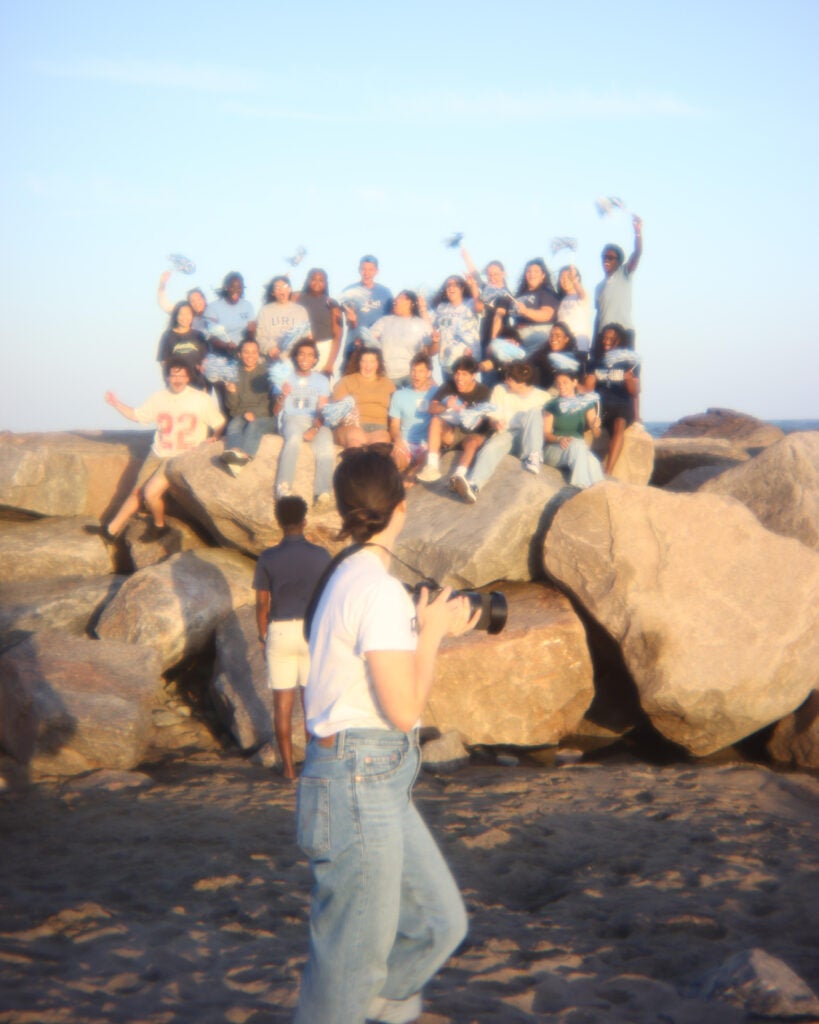
President Parlange often says he has the best job on campus. I want to challenge him for that title. One of the perks of working in central Communications and Marketing is getting to collaborate with so many different people across the university. I get to learn about and share the incredible work folks are doing in their research and scholarship, attend a wide range of events, and even find fun or humorous ways to tell stories about campus life. My favorite thing by far is content creation, especially when we get to involve members of our community.
What’s been the biggest challenge you’ve faced in your role?
The biggest challenge in the role is probably staying creative while adapting to an ever-changing landscape of trends and algorithms. I’m lucky to have a great team of people to help brainstorm ideas and create content. We have numerous group threads where we share posts and ideas, and we meet regularly to discuss how we can put our own spin on a trend or tap into something we think the algorithm will favor. I’ve also had to learn not to take a “flopped” post personally. Experimentation is essential in this job, and if something underperforms, it usually just means not many people saw it, anyway!
If a student wanted to get into social media or marketing, what’s one tip you’d give them?
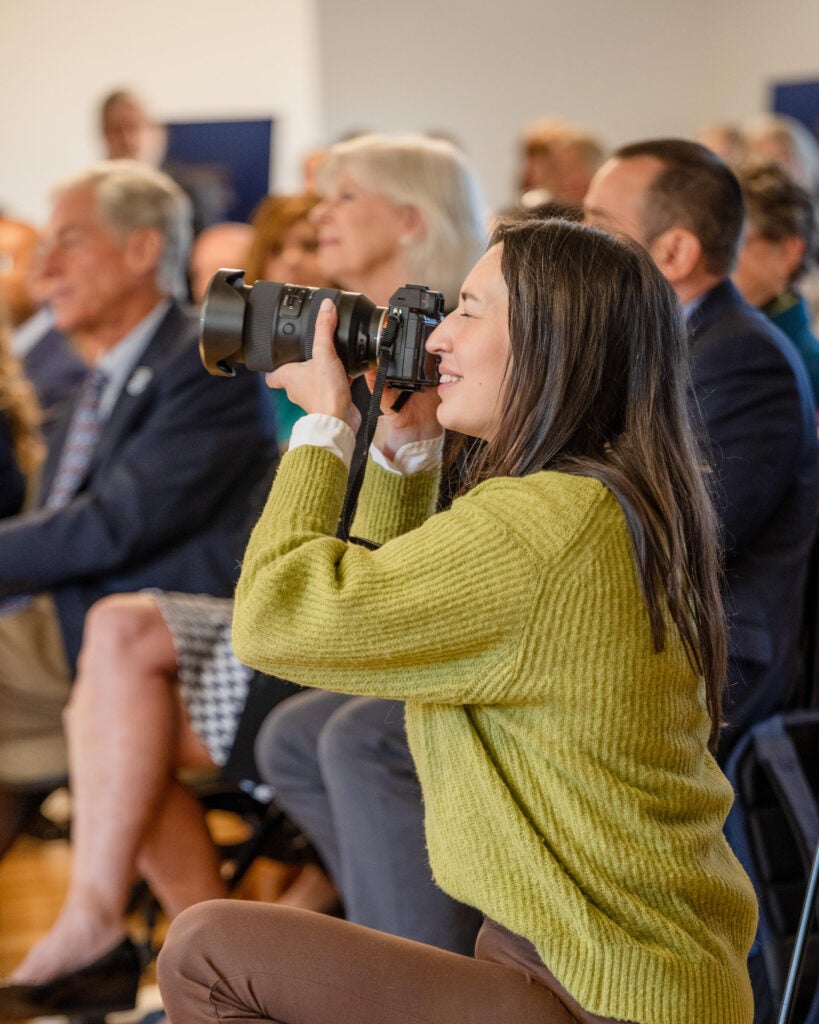
For students interested in social media or marketing, my biggest tip is to get hands-on experience in the skills this work requires and to build a portfolio that shows not only the work but also its impact. Social media managers, in particular, are often expected to have a wide variety of skills, including strategy, photography, videography, graphic design, copywriting, and analytics. Pick a few areas to specialize in, but make sure you have some experience across the board. Social teams tend to be small, so versatility is key. You could start by running your own creator account, managing a student organization’s account, or helping a local business. Be sure to track your analytics and include those results in your portfolio and on your resume.
Are there any people, brands, or creators that inspire how you approach your work?
One of my favorite brand accounts on TikTok is Alexis Bittar. They’ve created an entire reality-TV-style universe with absurd, immaculately dressed characters whose messy lives you can’t help but follow. It’s so much fun. On Instagram, some of my favorite photographers and artists are Sinna Nasseri (@strange.victory), a photojournalist who uses compositions and lighting in ways that are simultaneously beautiful, captivating, and a little unnerving; and Paul Octavious (@pauloctavious), a multidisciplinary artist who transforms everyday scenes into stunning surrealist perspectives. I also look to several other university accounts for inspiration regularly. These creators influence my work by modeling a truly unique approach to creativity that I find both inspirational and aspirational.
This story was written by Leili Mahrouk, intern for the Harrington School Social Media Agency.