
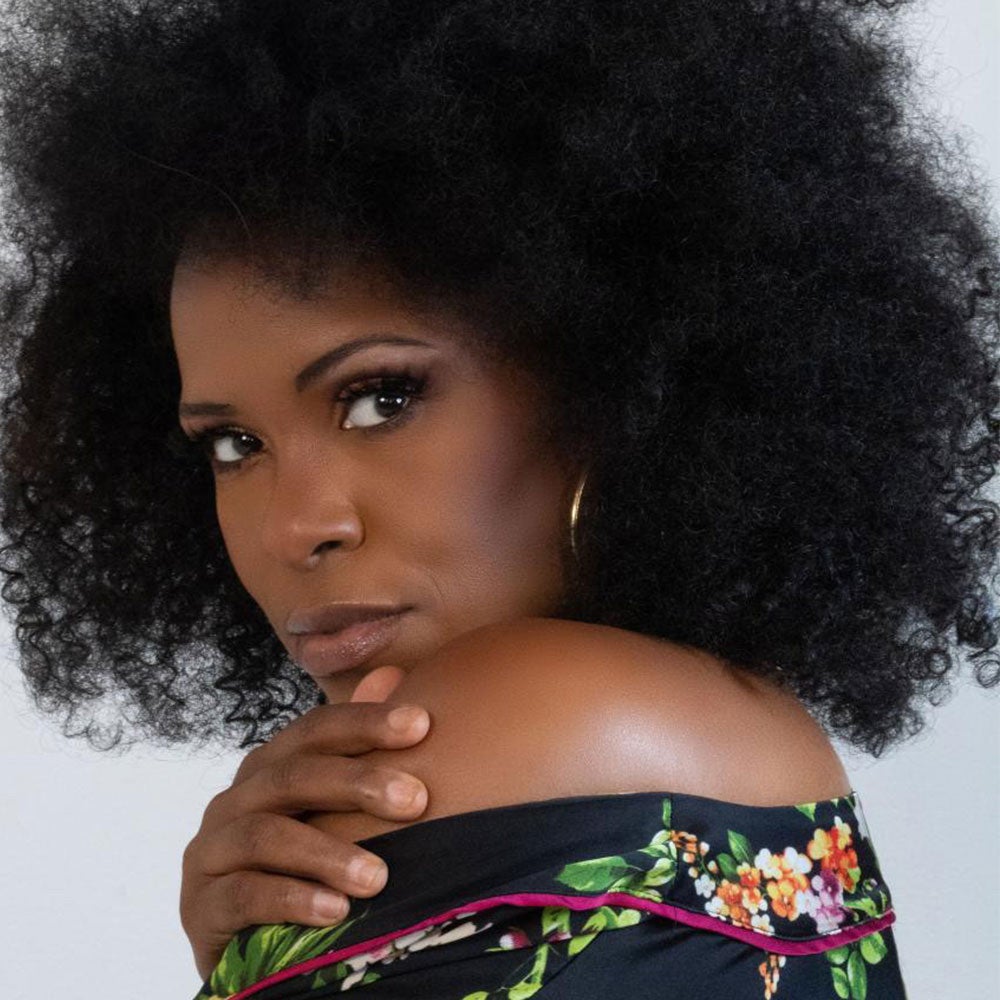
KINGSTON, R.I. – March 4 – Cruz Bueno, professor of Africana Studies and Economics, brings storytelling and art to the forefront by welcoming guest artist and intimacy coordinator Sacha Comrie to the University of Rhode Island campus. Comrie will visit theatre classes to teach intimacy coordination, serve as a guest speaker with Catherine John, professor of Africana studies, and consult with two Africana Studies students on a documentary created for their capstone project.
“Art is about expanding community. If we didn’t have to think about money, we could focus more on sharing and connecting with one another,” said Bueno.
Originally from Orlando, Comrie and Bueno met in high school. As first-generation young women of color, the pair clung to each other and maintained a deep friendship ever since. While the day-to-day was challenging for them both, Comrie found her solace in the arts, particularly dance.
“I loved telling stories with my body as a dancer,” said Comrie. “It was a respite for me.”
Comrie pursued her dreams at Spelman College in Atlanta, Georgia, studying drama with a concentration in dance; an area that intersects with what she does as a professional intimacy coordinator. During her time at the iconic HBCU, she worked with artists such as Eartha Kitt and Spike Lee. She also worked as a choreographer and teacher in the area. After an injury, she also began training as a singer to round out her skillset before moving to New York City.
Booked and busy, Comrie lived in New York City for three years, continuing her vocal training and dancing. After her stint in NYC, she moved back to Orlando to open her own dance studio and to engage in community theatre. As a lifelong advocate, Comrie leaned into a career pivot by enrolling as a graduate student to study social innovation and change.
Unexpectedly, she received a call from a former Spelman professor who recommended Comrie for a job working on a touring musical, Ain’t Too Proud To Beg: The Life and Times of the Temptations. After she interviewed and booked the job, she left graduate school to be a health and safety manager, as the tour was scheduled during COVID-19.
“This was the moment that solidified my interest in a professional career,” said Comrie. “I was watching a lot of television during the pandemic, including Bridgerton, and zoned in on the intimacy scenes in particular. I did research and learned that intimacy coordinating is an actual job! It combined everything important to me: advocacy, movement, and creativity.”
Comrie began taking classes with the UK company, Intimacy for Stage and Screen, trained with the intimacy director Anne James, MFA, and shadowed professional intimacy coordinators. One of which, Kaja Dunn, professor and intimacy professional, diversity consultant, and associate faculty at Theatrical Intimacy Education, invited Comrie to work on a production of Choir Boy in Seattle. Slowly, but surely, she secured television work, and through a series of referrals found her way to One Spoon of Chocolate (Tribeca Film Festival) and Netflix’s His & Hers.
Intimacy Coordination and the Theatre
An Intimacy coordinator is a trained professional who acts as a liaison between actors, directors, and production to choreograph intimate scenes on stage or screen, ensuring physical safety and emotional comfort. They also advocate for performers’ boundaries and facilitate consent.
The URI Theatre Department is familiar with this practice and has utilized it in past productions as an opportunity for students to express themselves freely in a safe environment. Tracy Liz Miller, associate teaching professor and director of URI’s upcoming A Midsummer Night’s Dream, hosted Comrie as a guest teaching artist for her “THE 241 Introductions to Boundaries, Intimacy, and Consent Practices for the Actor,” along with “THE 314/418 Boundaries, Intimacy, and Consent Practice and Principles of Choreography.” Comrie also supported a dance and movement rehearsal for A Midsummer Night’s Dream.
In the “Introductions to Boundaries, Intimacy, and Consent Practices for the Actor” course, students entered the J Studio black box theatre with smiles and yoga mats. Each student had an opportunity to share what they hoped to get out of the class by the end of the semester. Answers ranged from the desire to better connect the mind and body, to getting in the practice of sustaining disappointments. A sage piece of advice from Comrie suggested that actors should think about their auditions as an opportunity to perform; it’s part of the job.
After initial introductions, Comrie guided the class of roughly ten students through a discussion about boundaries. Her philosophy is rooted in the premise that human beings are social creatures who engage in consent and that boundaries help us, as a population, protect the connections we have with others. This contributed to the safe space she built with students, offering them time to share their definitions of boundaries and experiences if they felt a boundary had been crossed in a theatrical setting.
“No is a full sentence,” said Comrie.
What Does Success Mean to You?
David Campbell ‘26, Film and Africana Studies, and Kyle Jordan ‘26, Creative Writing and Africana Studies, approached Bueno to create a documentary for their Africana studies capstone project. The students were tasked with finding artists who inspired them and researching 3-5 clips of their work to discuss in class. Through these exercises, they figured out the values and stories Campbell and Jordan wanted to pursue.
“I immediately thought of Sacha because of her experience with documentary work. I can guide them academically, but would love a creative person on the project,” said Bueno. “Together, we came up with assignments for Dave and Kyle.”
Through this exploration, the students asked 8 of their peers and 2 faculty members about their ideas of success and excellence while contending with the American Dream. Moreover, the documentary also considers the concept of well-being in Western culture. Through the lens of Africana Studies, Afrocentric perspectives are centered on community well-being; not individual well-being as is the focus of a Eurocentric perspective.
Campbell and Jordan split responsibilities on the project: the former edited and shot, and the latter wrote questions for the interviewee and helped structure the documentary. Campbell was surprised that many of the stories were not centered on money or materialistic values. Much like his own beliefs in success and excellence, participants shared their thoughts on familial pressure, vulnerability, community, and personal growth and understanding.
With Sacha’s guidance, Campbell hopes to learn what goes into the film industry as a professional and what it takes to push his art and message to their limits.
“I want to tell stories that bring awareness to things that Hollywood wouldn’t talk about, like celebrity idolization, how propaganda is used to push racism, religion , showing more love to Black women (especially dark-skinned women), and bringing different cultures together. I’m very passionate about showing love to everyone, regardless of gender, sexual orientation, or race. The world is already difficult as it is; I want to bring unity among all humans,” said Campbell.