
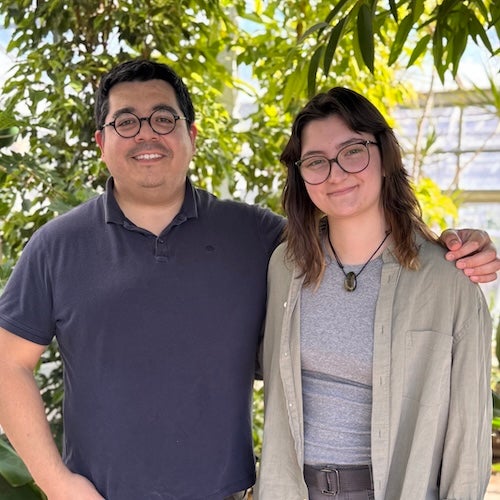
Blending the study of plant science and biology has given University of Rhode Island junior Ava Russell a comprehensive lens for understanding life—an approach she will carry into an internship at Harvard University’s Arnold Arboretum studying how plants develop and evolve over time.
The competitive DaRin Butz Internship involves 10 weeks of research at Harvard University’s Friedman Lab. Russell, a junior from North Scituate, describes the opportunity as both exciting and pivotal for her future.
“This opportunity is a huge step towards my goals of applying to plant biology master’s programs, pursuing a Ph.D. in a related field, and eventually teaching and conducting research,” she said. “The Arnold Arboretum is a leading institution in plant science, and the skills I’ll learn there will add to my skill set as a learner, researcher, and science communicator.”
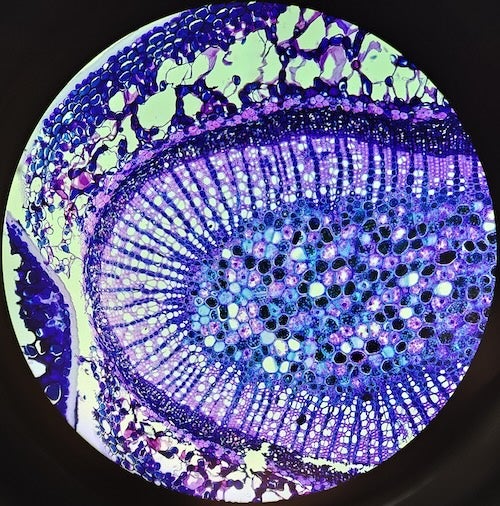
The Friedman Lab examines patterns in plant morphology, anatomy, and physiology to better understand complex evolutionary lineages. “I’m excited to learn from Dr. William Friedman and his lab members because of their curiosity, experience with resin microscopy, and passion for science communication,” she said. While there, Russell’s research will focus on evolutionary history and plant development.
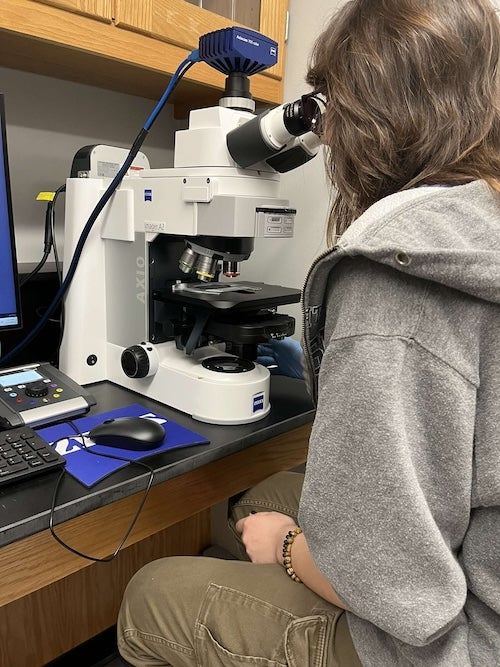
At URI, working in Professor Camilo Villouta’s Controlled Environment Agriculture lab has given Russell invaluable hands-on experience across all stages of the research process. “Working closely with his graduate student Deniz Camli-Saunders and developing independent and collaborative research projects over the past couple of years has built my confidence in the lab and grown my skillset as a researcher,” Russell said. “Under their mentorship, I’ve learned so many new techniques, equipment, and lab skills that I’ll use at every step moving forward in my career.”
In addition to strengthening her technical skills, the experiences have deepened her appreciation for the broader scope of plant science. “Something unique about plant science as a field is its range,” she said. “There is almost always a connection between plant systems and all other aspects of an environment. There is always something to be curious about in plant science—no matter which discipline you approach it from.”
Her academic path at URI has further fueled her passion for interdisciplinary and hands-on approaches. “Taking BIO 101 with Dr. Daniela Lopes Paim Pinto opened my eyes to biology and enhanced my passion for plant science,” she said. “Working with Dr. Pinto as an Undergraduate Learning Assistant, while doing research in Dr. Villouta’s lab, expanded my interests in plant systems. I have also taken courses with Dr. Neils-Viggo Hobbs and Dr. Patrick Sorensen that broadened my interests and pushed me to explore a wider range of research opportunities for this summer.”
Russell encourages prospective students to consider the versatility of plant science as a major. “Plant science is a diverse field,” she said. “The major is great to consider for double majoring. It can complement many different studies like landscape architecture, biology, environmental science, conservation, and more.”
“Remember to keep an open mind, talk to professors, go to office hours, email faculty about their projects, ask around, and be curious,” she added. “Small steps are better than no steps.