
When discussing issues related to environmental crises, what often gets left out or overlooked is the social or cultural impact such crises have on the communities most affected. In an article published in the environmental journal Ambio, members of Professor Yoshitaka Ota’s Ocean Nexus team – consisting of URI post-doctoral researchers Jess Vandenberg and Eliana Ritts, Professor Yoshitaka Ota, and Coastal Carolina’s HTC Honors College Assistant Professor Russell Fielding – describe the specific, and often ignored, impacts that ocean pollution has on coastal communities, highlighting the need for greater advocacy and representation of vulnerable populations impacted socially, culturally, and economically by marine pollution. The authors introduce a “cultural tipping point,” a framework which aims to draw attention to the interconnected physical and cultural effects of ocean pollution on coastal communities.
Cultural Keystone Species and Food Sovereignty
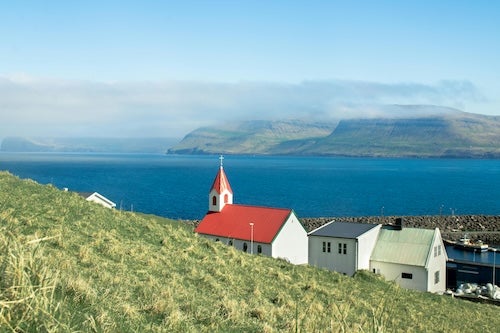
For coastal or island populations, many marine species are important not just as a source of nutrition, but also as cultural beings that are deeply embedded in a society’s ceremony, ritual, history, and collective identity. These plants or animals that lie at the intersection of nutritional value and cultural significance are known as “cultural keystone species” (CKS). Fielding’s work studying the Faroese traditional diet of pilot whales presents an example of a cultural keystone species and was the start of the team’s larger exploration into CKS that are regularly consumed. Vandenberg and Ritts were brought in to examine the governance aspects of ocean pollution and marine CKS, adding a deeper understanding of CKS as a food sovereignty and environmental justice issue under the framework of cultural tipping points. “When we only think about declining access to CKS from a physical health or food security lens,” Ritts says, “these broader consequences are often ignored. A food sovereignty lens allows for a more holistic view of the tradeoffs and risks when thinking about ocean pollution and its impacts on cultural keystone species.”
As a governance framework, the cultural tipping points introduce a more equity-centered approach to explore how ocean pollution impacts coastal communities. It provides an interdisciplinary perspective on human-nature dynamics and the overlooked dimensions of pollution and its accumulation in both marine species and humans. Through the cultural tipping point framework, the authors aim to expand considerations of health impacts from ocean pollution beyond just the physical, into the cultural aspects and collective identity of a community. Vandenberg and Ritts note that this line of thinking draws from Indigenous critical theory and seeks to expand how societies think about the impacts of pollution as it pertains to the cultural traditions and dietary significance that marine species hold to communities. In turn, contamination of a cultural keystone species not only harms the physical health of a community, but it also impedes their access to a key cultural resource that has been used and consumed for generations.
Broader Applications
The cultural tipping point framework, though established in the context of ocean pollution, could provide insight into other environmental issues that lie at the intersection of physical and socio-cultural dimensions. The authors note that the model holds implications for other issues affected by anthropogenic environmental change, such as biodiversity loss or climate change. What the authors hope to highlight through this framework is that addressing ocean pollution requires addressing larger systemic issues of food sovereignty, equity, and justice. “The people most affected by pollution are not the ones who are responsible for producing it,” Vandenberg says. “From a governance perspective, it offers a new framework to hold polluters accountable and call for increased regulations of pollutants.”
Professor Ota and his colleagues are not simply documenting the cultural costs of pollution; they are advancing a transformative vision for ocean governance that places social equity at its core. Ocean Nexus was founded by Ota as a global scholarly network dedicated to confronting systemic injustices in how oceans are managed. Its mission is to ensure that ocean policy and research do not reproduce the very inequities they aim to solve. By framing pollution’s impacts through the lens of cultural tipping points, amplifying voices historically marginalized in ocean governance, and connecting interdisciplinary scholarship to real world policy and community needs, the team’s work exemplifies Ocean Nexus’s commitment to bridging ecological understanding with human experience and equity‑centered action.
This article was written by Yvonne Wingard, CELS Communications Fellow.