
Soil sustains life, yet climate change and human activity are rapidly degrading this vital resource. World Soil Day, observed annually on December 5th and first initiated by the International Union of Soil Sciences in 2002, brings global attention to the importance of maintaining healthy soils—the most biodiverse habitat on Earth. The day highlights the essential role soils play in agriculture, ecosystem functioning, and food security.
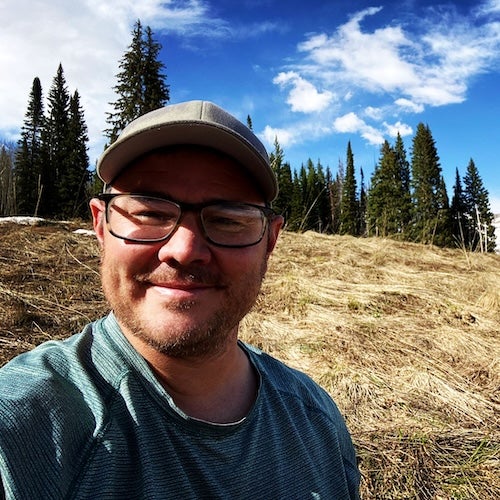
At URI, Patrick O. Sorensen, assistant professor of soil ecology and biogeochemistry in the Department of Natural Resources Science, pays attention to soil year-round. His work focuses on the vast and largely unexplored world of soil microbes—microorganisms that are abundant but challenging to observe directly in their natural environments.
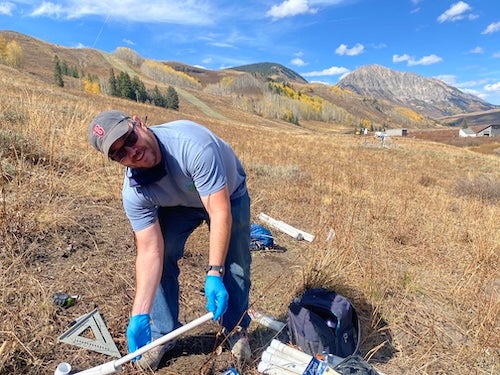
Sorensen’s lab seeks to understand the identities and functions of these microbes, how they interact with each other and with plants, and how they drive key transformations of chemical elements and energy in soils and other ecosystems. By integrating field studies, laboratory experiments, and tools such as DNA sequencing, his research reveals how microbial communities shape nutrient flows, support water quality, and sustain essential ecosystem services. His findings can ultimately guide improved soil management in both natural and managed landscapes.
Q. What sparked your interest in microbial biogeochemistry and soil ecology?
A. My interest in soil microbes was first sparked in my Intro Bio class as a freshman in college. My professor, Dr. Dotty Douglas, was talking about how everything in the environment, like every surface in that lecture hall and even your skin, was covered by millions of invisible microbes. For some reason, that really fascinated me! Later on as an undergraduate I also had a research internship culturing environmental microbes collected from soils and sediments. The goal of the research project was to isolate microorganisms that take nitrogen gas out of the atmosphere and transform the nitrogen into forms that can be used by plants and animals. A byproduct of their metabolism is hydrogen gas, so we were trying to design small bioreactors that could generate electricity from hydrogen gas produced by the soil microbes – essentially a biofuel. I thought it was so interesting that we could use these microbes collected from ordinary soils for biotechnology applications and that led me to consider the possibility of doing more soil research as a graduate student.
Q. How would you describe your research to someone with no scientific background?
A. It is kind of like 23andME, but for soil microbes. Similar to how you might take a swab of your cheek and send it in to a company to determine your ancestry and/or risk for certain medical conditions, we can use the genetic information found in microbes’ genomes to better understand their ancestry and potential functions in the environment.
Q. How do soil microbes influence ecosystem services like forest health, clean water, and air quality?
A. Soil microbes influence forest productivity, water quality, and air quality though their metabolism. Microbial metabolism is so interesting to me because soil microbes can eat and breathe a much larger variety of things than either plants or animals. For example, all of us are breathing oxygen, but a lot of soil microbes can breathe things like iron or even sulfur. Microbes have also evolved to be able to extract energy from nearly all chemical compounds that we know. This capability makes microbes essential in recycling chemical elements and also mobilizing elements from dead and decaying organic matter. Healthy soil microbiomes, through their metabolism, provide the most essential nutrients to plants which are needed to grow, they prevent pollutants from entering groundwater supplies, and also produce gases that affect atmospheric chemistry and the capacity of our atmosphere to warm the planet.
Q. What do you wish people understood better about soil as a living ecosystem?
A. I wish people had a better understanding about how dynamic soils are. Soils are very responsive to changes in the environment, just like plants and animals. Soils are unique habitats because there are extreme gradients in things like oxygen or water availability, pH, and the supplies of essential nutrients. These extreme environmental gradients also occur over very small, microscopic scales, which is one of the reasons why there is so much biodiversity in soil. It takes a lot of different ecological strategies to survive as an organism living in soil. I wish people also better recognized that soils are essentially a non-renewable natural resource. It takes many thousands of years for soils to develop, and once they’re degraded or lost, it will take many thousands of years for them to form again.
Q. Why should we all care about what’s happening in the soil beneath our feet?
A. Everybody should care about soil because most of the food we eat comes from soil, the water we drink has been filtered by soil, the construction materials that we use to build our houses come from soil, and much of the fibrous materials that we use for our clothing comes from soils.
Q. Any surprising facts about soil you’d like to share?
A. Soil can also be art! I recommend checking out Kirsten Kurtz’s ‘Painting with Soil’ website here. And here is a fun YouTube video showing students painting the ‘Three Sisters’ on World Soil Day a few years ago.