
These important guidelines are for sponsoring companies and their appointment of a Technical Director for a ELECOMP Capstone Design Team. Our electrical (ELE) and computer (COMP) engineering students, in their senior year, are very excited to work on real-world engineering problems with excellent corporate clients.
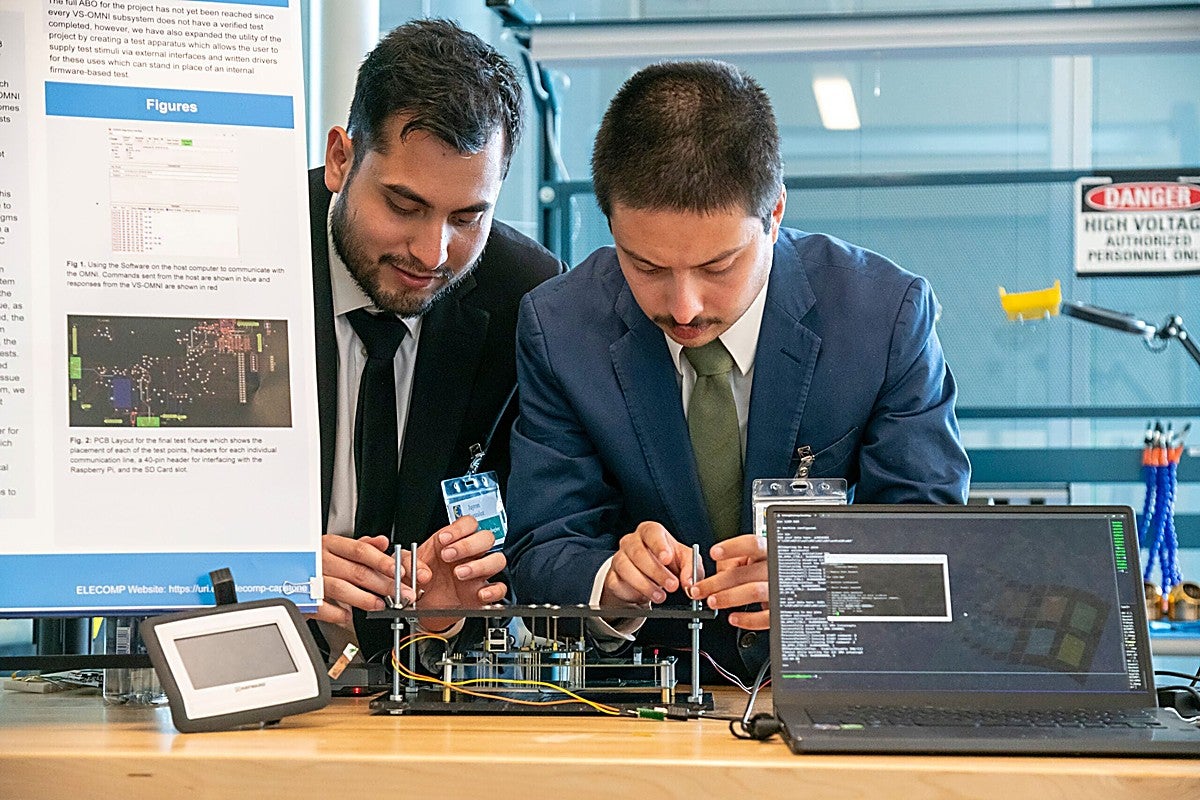
All electrical and computer engineering seniors in our department are required to work on a multi-disciplinary and team-oriented capstone design project, for 2 full semesters, over the academic year. This project will allow them to fully engage in the design process, teamwork and project management as well as use their problem-solving skills.
Key Roles in the ELECOMP Capstone Design Program
Capstone Design Program Director
Professor Harish Sunak recruits corporate sponsored projects and department faculty advisors on an as-needed basis, assigns students to teams based on their “passion statement,” and stewards the URI and corporate relationship. He oversees all activities, including instruction, and posts the final grades after receiving feedback and evaluation scores from the Technical Director of each project.
ECE Department Faculty Advisors
These advisors, approached on an as-needed basis by the Program Director, provide subject-matter expertise and knowledge specific to the project requirements. They provide guidance to the team as they execute their project. The onus is on the team to seek these advisors whenever needed. (ECE stands for our department: Electrical and Computer Engineering.)
Technical Director
An individual from the sponsoring company who serves as the technical point of contact for the team, represents the company’s interests, directs the team as they work on the project, and facilitates technology transfer during the project. The Technical Director provides the subject-matter expertise and is the point of contact for the project from the industry side.
The Technical Director also recruits other key subject-matter experts from within the company to further guide the team on specific aspects of the project. These “associate” Technical Directors acknowledge that time and support will be required, as determined by the Technical Director; this could be significant depending on the importance of the project and the phase of the project.
Importance of the Technical Director Role
The role of the Technical Director is extremely important in the learning process of our students and the success of the sponsored project. To help the team achieve success, the Technical Director needs to:
- Mentor the team throughout the project so that students get a corporate experience.
- Mentor the students on new technology used in the company.
- Guide the team to meet benchmarks.
- Foster teamwork.
- Foster high quality communication and professionalism.
Expectations of the Technical Director
As a Technical Director, you can expect to spend an average of 3 to 5 hours per week working with your team, plus time for emails and for reviewing reports submitted by the team. This varies depending on the scope of the project and the number of students on the team, which can range from 2 to 5 members.
Fridays, 2 to 5 PM, is dedicated capstone project time for teams to work with their Technical Directors, either on campus or at the company facility. Depending on the availability of the team members, other mutually convenient times during the week can be arranged. Each phase of a project may require more or less supervision than another; more will be required during October and November, at the start of the project.
Key Tasks
- Provide a clear description of the project, with expectations, goals and the Best Outcome for the team.
- Present a 10-minute overview of your project to all students in the second week of September so students can rank their project choices. Students will contact you to set up a kick-off meeting soon after the teams are formed by the Program Director.
- Regularly check the progress of the project. Each student uploads a Weekly Progress Report (WPR) to their Google Drive folder every Sunday evening, starting in late September of the Fall Semester.
- Maintain open communication with the Capstone Design Program Director.
- Provide guidance while the team writes reports and prepares presentations.
- Develop an effective team by engaging students to work together effectively.
- Participate in assessments by scoring the progress reports described below.
- Hold regular team meetings. Weekly meetings, on Friday afternoon or another agreed time, are required so that project timelines are met.
What Technical Directors Grade and Review
Technical Directors are the primary evaluators of the team’s technical work. Your scores go straight into the final grades that the Program Director posts, so this is the most important part of the role after mentoring the team.
What you grade
- Fall: Major Progress Report #1 (MPR#1), late October. One team document. Each designer writes their own Individual Technical Contributions section, and you score each designer on that section out of 20.
- Fall: Major Progress Report #2 (MPR#2), mid December. One team document covering the entire fall semester. Each designer writes their own Individual Technical Contributions section, and you score each designer on that section out of 50.
- Spring: Major Progress Report #3 (MPR#3), early March. Same structure, scored per designer.
- Spring: Comprehensive Progress Report (CPR), mid April. Final team document covering the full capstone year, scored per designer out of 50.
For every report the program emails you a short Google Form a few days before the due date. You read the report in the team’s shared Google Drive folder, enter your scores and comments in the form, and the program handles everything after that. No URI account is needed. Exact due dates are in the semester roadmap sent to you with the team introduction.
Presentations, slides and posters are scored by ELECOMP leadership, not by the Technical Director. Your job there is to coach the team on the technical content before they present.
What you review but do not score
- Weekly Progress Reports (WPRs). Every student uploads one to their Drive folder each Sunday evening starting in late September. Read them to catch problems early and raise anything that concerns you with the team or the Program Director.
- Digital logbook and automated timesheet. Each student keeps both in their Drive folder. They are graded by the program, but you can open them at any time to see how the team is spending its hours.
Other things to know
- Parts and purchasing. The team builds the parts list with you, you approve it, and the students submit a purchase order request to the program. The program buys the parts and ships them to the Capstone Lab. You do not need to procure hardware unless it is company specific.
- AI Use Policy. Appendix A of your project proposal states which AI tools the team may use and for what. You set that policy and can revise it during the year by telling the Program Director.
- Google Drive access. The program shares the team’s folder with the Google account you provide. If your corporate network blocks Drive, tell us and we will arrange another way to get you the reports.
- Events. The ELECOMP Capstone Mid-Year Conference in mid December features each team’s recorded 12 to 15 minute video, poster and demo, and Technical Directors are invited to attend and may be asked to join a panel. The ELECOMP Summit in early May closes the year.
Tips for Success
- If possible, have successful and experienced Technical Directors give training to new Technical Directors.
- Communicate regularly with the team and, whenever necessary, with the Program Director.
- Be available throughout the project.
- Set clear and achievable goals; define the Best Outcome of the project and how it will benefit the company in the near term.
- Provide the students with the tools necessary to succeed.
- Demand constant professionalism and high performance from the team.
- Be realistic about what a team of 2 to 5 students can accomplish.
- Scope the project to about 400 to 600 hours per team per semester.
- Recruit other key subject-matter experts from within the company to further guide the team on specific aspects of the project.
Questions about the Technical Director role can be sent to Professor Harish Sunak at harishsunak@uri.edu.