
During summer 2026 we will be implementing a comprehensive update to the Kuali curriculum management system. This essential update includes revisions to proposal forms and workflow processes to improve usability, reduce errors, and align with recent Faculty Senate Legislation that modified our course approval process.
Because this update affects both forms and workflow functionality, a temporary pause in all proposal submissions (courses, programs, and specializations) is necessary to ensure a smooth transition.
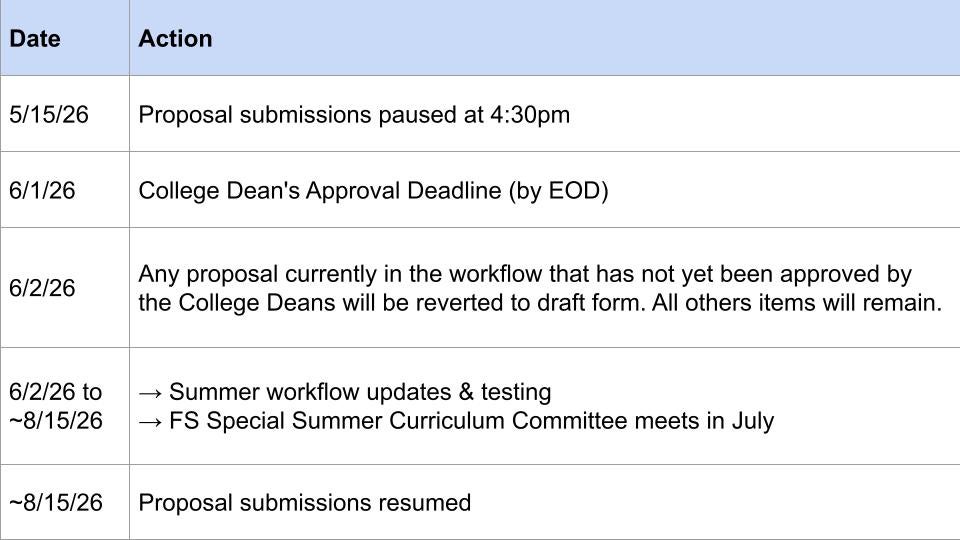
During the submission pause:
- Proposals already in workflow will continue to move forward and may still be approved
- Draft course, program, and specialization proposals can still be created and edited, but not submitted
On June 2, any proposals that have not advanced beyond the College Dean level will be returned to draft status. This step is necessary to reduce the number of proposals in workflow during system updates and minimize the risk of errors. Faculty will receive an email notification once the updates are complete and Kuali operations have resumed. At that point, they may resubmit any drafted proposals into the workflow.
During this update period, undergraduate curriculum items will be reviewed by the Special Summer Curriculum Committee, and in necessary cases, may be approved during the summer on behalf of the full Senate by the Faculty Senate Executive Committee per UM Appendix C, 4.3. Graduate curriculum items will be held for review by the Graduate Council at their first meeting of AY 2026–2027.
This temporary pause is an important step to ensure the system can better support our curriculum processes moving forward. This update also establishes a foundation for smaller, annual improvements in future years.
BTS: What this Process Involves
This update is a collaborative effort between the Office of the Registrar, Faculty Senate leadership, Kuali technicians, and URI IT staff who support integration between Kuali and eCampus.
Key Partners
- University Registrar (Jack Humphrey)
- Catalog Coordinator (Taylor Flynn)
- Kuali technical team
- URI IT staff supporting eCampus integration
Process Overview
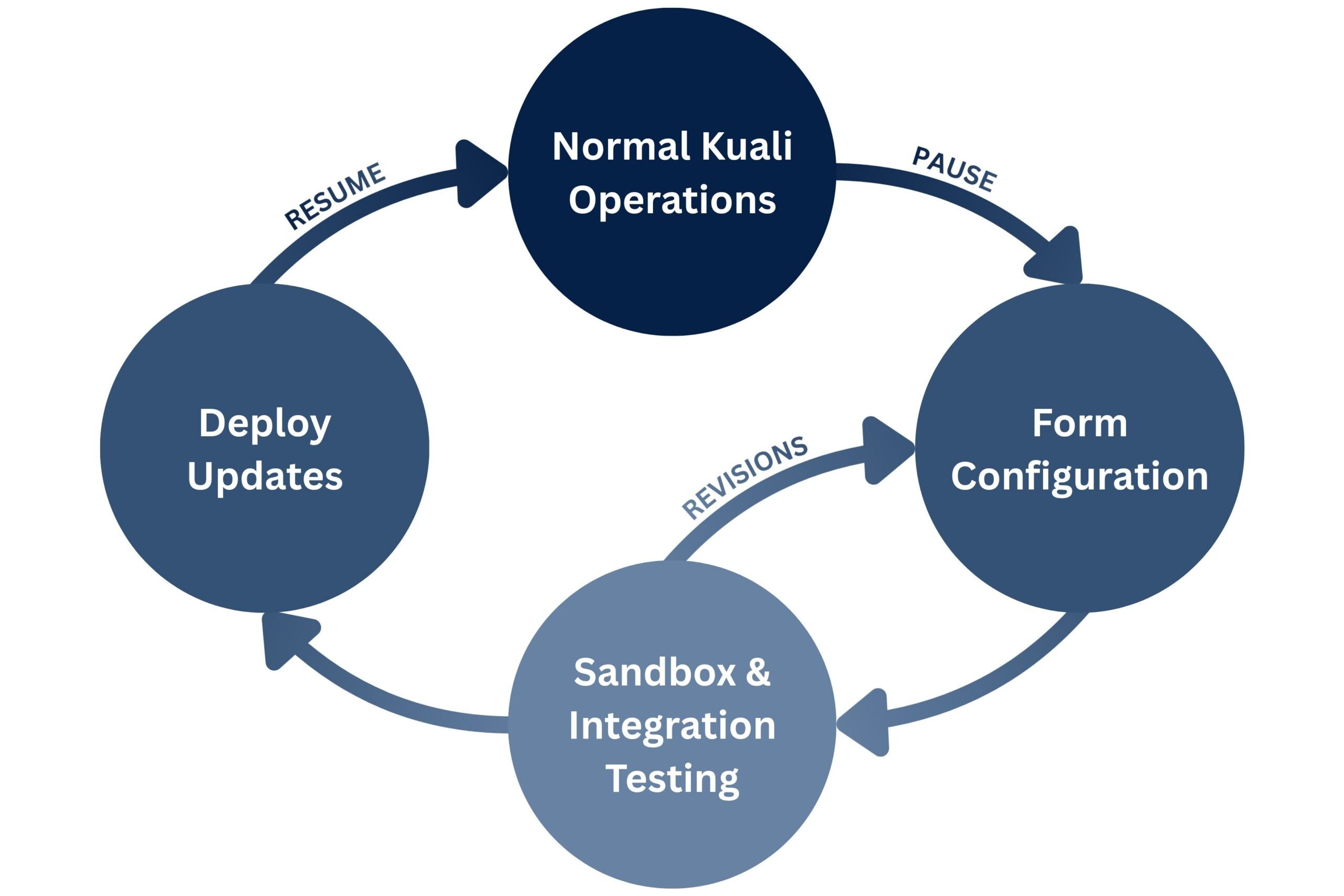
1. System Updates in Kuali
We begin by working with Kuali technicians to update existing forms. This may include adding, removing, or modifying form elements (“gadgets”) to improve functionality and alignment with institutional needs.
2. Testing in Sandbox Environment
Updated forms are tested in the Kuali sandbox environment to ensure they function as intended before any live changes are made.
3. Integration Testing with eCampus
In collaboration with URI IT, we test how the updated Kuali workflows interact with eCampus to confirm system compatibility and data integrity.
4. Review and Refinement
Based on testing results, necessary adjustments are made to ensure the workflows and integrations function correctly and efficiently.
5. Production Deployment
Once testing is complete and the system is fully validated, Kuali technicians deploy the updates to the live production environment.
6. Return to Normal Operations
After deployment, standard Kuali operations resume with the updated system in place.
FAQs
General Questions
Why are we doing such a major update now rather than incremental changes?
- This is the first full system-wide update since Kuali was implemented in AY 21-22.
- It addresses accumulated system and workflow issues and aligns Kuali with FSEC Bill 25-26-01.
- Going forward, we will make smaller, annual updates so the system can evolve incrementally rather than requiring large-scale overhauls.
How will these updates improve usability for faculty who regularly submit proposals?
- Proposal forms will be more intuitive and streamlined, reducing errors during submission.
- Workflows will better match updated approval processes, making it easier to track proposals and understand what’s required at each step.
Are there any risks to data or proposals during this update?
- There is a risk for proposals currently in the workflow, which is why we are pausing submissions and controlling which proposals remain under review.
- This allows us to monitor a smaller, manageable set of proposals and catch errors before they affect final approvals.
Will these updates become the standard for annual summer updates going forward?
- Yes. The goal is to transition to smaller, regular updates each summer so the system evolves alongside university needs.
Deadlines
What happens if a proposal isn’t approved by the College Dean by the June 1 deadline?
- It will remain in draft status in the proposer’s dashboard until the ability to submit proposals to the workflow is resumed, and the proposer can re-submit it to the workflow.
- Faculty can continue to edit it but cannot submit it until the system resumes full operations after the update.
Can the deadlines be extended if there are delays in approvals or testing?
- The deadlines are set to provide a predictable workflow, but if unexpected technical issues arise, we can adjust timelines and communicate changes clearly to faculty.
Workflow and Submissions
How strict is the May 15 pause for submissions—what if someone misses it?
- After May 15, new submissions cannot enter the workflow.
- Drafts can still be created and edited, so nothing is lost, but proposals cannot be submitted until the update is complete.
Can proposals already in the workflow be edited during the update?
- Yes, drafts can still be edited. Proposals under review remain accessible, but submission of new proposals is temporarily paused to reduce risk.
If my proposal is returned to draft status, will I lose any data or attachments?
- No. Returning proposals to draft preserves all information; it simply prevents them from moving through the workflow until the system update is complete.
How will faculty know if a proposal encounters an error during the update?
- We will monitor all proposals actively and communicate directly with affected proposers if any issues arise.
- Support contacts will be provided for troubleshooting.
What about Temporary Courses?
- Remember: Temporary Courses require approval by:
- A vote of the department faculty
- The department chair
- The college curriculum committee
- And the dean.
- They also require a 7-day commenting period by faculty – this is accomplished by the monthly Temporary and New Course Email that is distributed on the last week day of every month.
- If any temporary courses in the workflow as of June 2 have a Fall 2026 effective date, I will contact the proposer and the relevant approvers to assess the likelihood that the course can be fully approved before the June Temporary Course email is distributed. Those proposals with a likelihood of being approved by the college dean prior to the June Temp. Course Email will remain in the workflow.
Summer Review and Approvals
How will proposals approved by the Special Summer Curriculum Committee (SSCC) and have an effective date for Fall 2026 be handled?
- The Faculty Senate Executive Committee (FSEC) has authority to approve these on behalf of the Senate over the summer per UM Appendix C, Section 4.3.
- These proposals will appear on the September 2026 Senate report for formal acknowledgment.
Will faculty need to resubmit proposals if errors occur during testing?
- Our goal is to prevent errors through careful testing.
- If any issues occur, faculty will be contacted with clear instructions, but resubmission should be minimal and will likely be handled by the Kuali System Admins.
How does the FSEC’s emergency approval authority work?
- It allows curricular items eligible for a Fall effective date to be approved over the summer by FSEC.
- This ensures timely implementation without waiting for a full Senate meeting.
Technical
Will there be training or guidance on the updated forms and workflows?
- Yes. We will provide resources for faculty to navigate the updated forms in the “Curriculum Toolkit” Faculty Senate website.
- Additional support will be available during the transition period.
What changes can faculty expect in the proposal forms themselves?
- Forms will be more intuitive, with clearer fields and streamlined options to reduce errors.
- Some steps are being automated to align with the updated approval workflows.
How will integration with eCampus be tested, and will it affect course registration?
- Integration will be tested in a sandbox environment with URI IT and Kuali technicians.
- The goal is a seamless transfer into eCampus with no disruption to registration once updates are implemented.
Support
Who should faculty contact if they run into issues after the update?
- Faculty can continue to contact Genviéve Spitale for Kuali questions, or Enrollment Services for eCampus questions
Will there be a sandbox environment for faculty to practice using the updated forms?
- No, the sandbox environment is only available to URI IT and Kuali System Administrators
How will feedback from this update cycle be incorporated into future improvements?
- Feedback from faculty and staff during this summer update will inform subsequent enhancements, keeping Kuali aligned with user experience and workflow needs.