
MACRL’s work falls mainly into two main research areas: Decision Support for Coastal Hazards and Ports and Maritime Infrastructure Resilience. Project descriptions are linked below.
Decision Support for Coastal Hazards Projects
CHAMP (Coastal Hazards Analysis, Modeling and Prediction) is a real-time storm forecasting platform built in partnership with Rhode Island state agencies. It takes high-resolution storm surge, wind, and flood model outputs and puts them in front of emergency managers in a form they can actually use during a hurricane or nor’easter. The projects below track CHAMP’s development and expansion across agencies and states, alongside related research on what makes decision-support tools work (or not work) in operational settings.
Current Projects
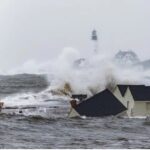 Understanding the Role of Community-based Organizations in Emergency Management Planning, Response, and Recovery: A Study of Maine Island Communities
 WARREN CHAMP: Integrating rainfall-generated flood models into the Rhode Island Coastal & Inland Flood Hazards, Analysis, Modeling & Prediction System for Warren, RI
 USCG CHAMP
 New England Community-Driven Coastal Climate Research and Solutions (3CRS) Hub
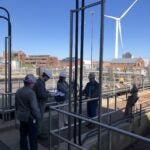 Rhode Island Coastal Hazards, Analysis, Modeling and Prediction (RI-CHAMP)
Completed Projects
 Coastal Resilience Risk Analysis of Rhode Island Coast Guard Units: A CHAMP Approach to Hazard Consequence Prediction
 Connecticut CHAMP
 From Prediction to Practice: Barriers to Adoption of Tools for Emergency Management – (Noah Hallisey – Dissertation)
- Points of Interest: Implementing Simulation-Based Storm Hazard Consequence Prediction for Emergency Management (Sam Adams – Dissertation)
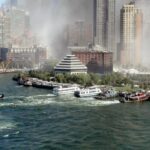 Applying Lewin Force-field Analysis to Enable Evacuation by Sea in the United States Evacuation by Sea: Overcoming Technological, Behavioral, and Institutional Barriers to Save Lives and Alleviate Suffering – (David Ostwind – Dissertation)
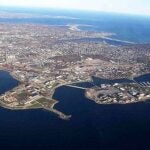 A Hazard Resilient Future for Naval Station Newport within its Coastal Community: Military Installation Resilience Review for Short-term Preparedness & Long-term Planning
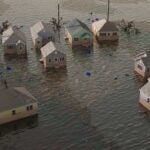 Visualizing Consequences and Perceptions of Risk (Peter Stempel – Dissertation)
Port and Maritime Infrastructure Resilience Projects
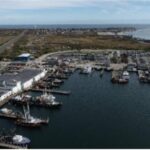
This line of research examines how seaports, shipyards, and maritime supply chains account for coastal hazards. Projects range from baseline surveys of global and national industry practices to vulnerability and risk assessments for specific facilities.
Current Projects
Completed Projects
 Cruise Industry Considerations of Coastal Hazards Resilience of Cruise Ports: A Baseline Survey (Abigail Murray – Masters Thesis)
  Designing Port Infrastructure for Sea Level Change: A Survey of U.S. Engineers and Designers (Ben Sweeney, Masters Thesis)
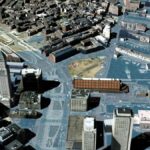 Incentives for Closing the Resilience Gap in Port Planning – (Rosemarie Fusco – Dissertation)
 Implementing CISA’s IRPF across three case study sites
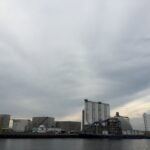 Working Together to Plan for Resilient Infrastructure in ProvPort, Rhode Island
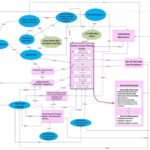 Navigating Flood Risk in Municipal Urban Planning: A Mental Model Approach – (Kyle McElroy – Dissertation)
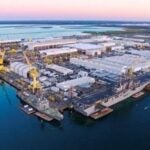 U. S. Domestic Shipbuilding and Repair Industry’s Considerations of Coastal Hazards Resiliency: A Baseline Survey (Dave Hill – Masters Thesis)
- How do seaports value resilience assessments? Decision making, capacity building, and implementation (Ellis Kalladjian – Masters Thesis
 Seaport Vulnerabilities to Climate Change
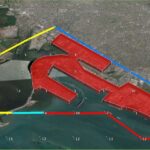 Climate Critical Resources