Testing Drinking Water for Lead in Public Schools and Daycares
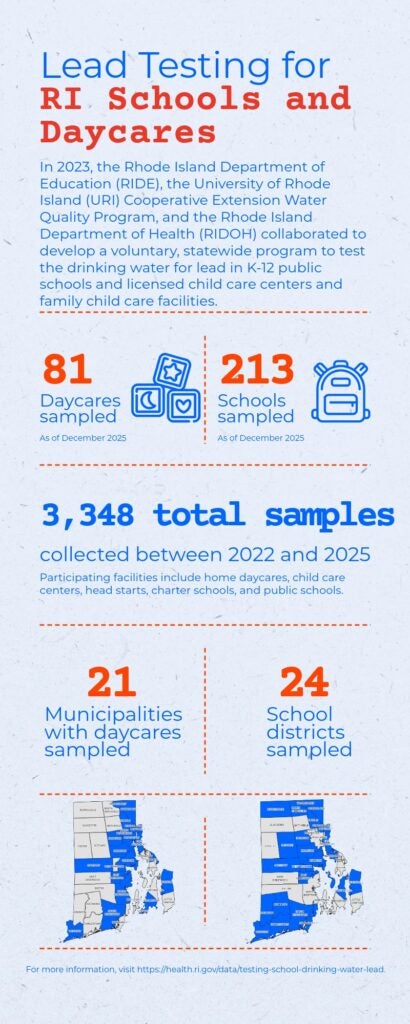
The Water Infrastructure Improvements for the Nation Act (WIIN Act) addresses, supports, and improves America’s drinking water infrastructure, and federal grant funds from the WIIN Act have been used to develop a program to test drinking water for lead at Rhode Island schools, licensed child care centers, and licensed family daycare facilities. This program is a collaboration among the URI Cooperative Extension Water Quality Program, the Rhode Island Department of Health (RIDOH), and the Rhode Island Department of Education (RIDE).
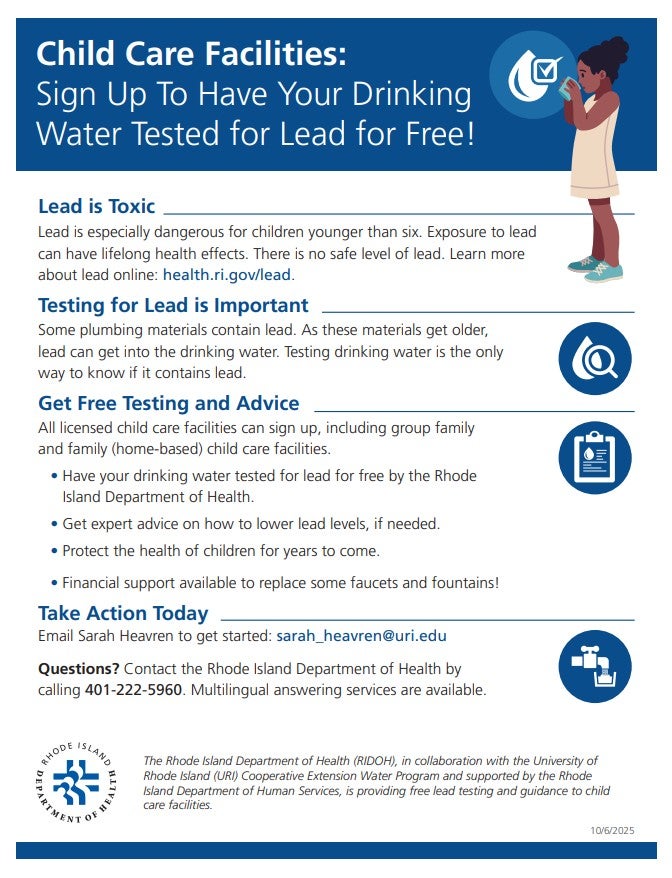
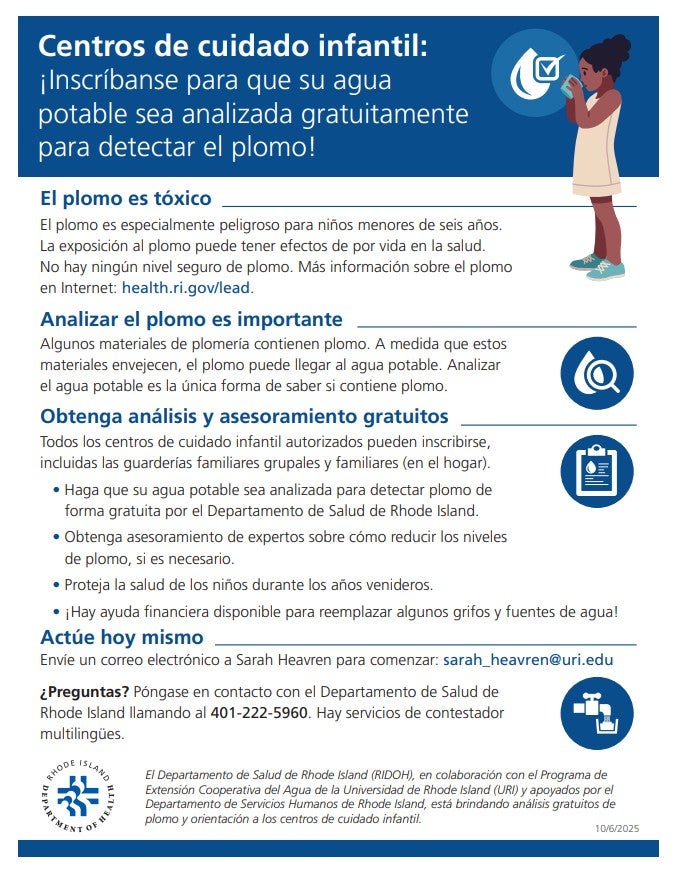
All public schools, licensed child care centers, and licensed family daycare facilities who have not previously participated in the program are eligible to participate. Spanish-speaking providers can work with a Spanish-speaking sampler to coordinate water sampling. Sign up by completing this form or by emailing Sarah Heavren (sarah_heavren@uri.edu). Visit the RIDOH project webpage for more information on participating in the program. See the flyers below for details.
Sampling results from participating schools and daycares are complied and posted on the RIDOH project webpage. Results and information to assist with interpreting results are shared with school superintendents and daycare providers. RIDOH-approved guidance on how to respond to varying levels of lead is also shared. Participation in the program is entirely voluntary, so RIDOH cannot take any regulatory or legal action based on the results of this voluntary testing.
Lead in drinking water typically results from the use of old pipes, lead-based solder, or brass fittings on faucets or water fountains. Lead exposure can cause lifelong health problems. Babies, young children and people who are pregnant are more susceptible to experiencing negative health effects from lead exposure. Learn more about lead in drinking water from RIDOH’s lead contamination webpage.