
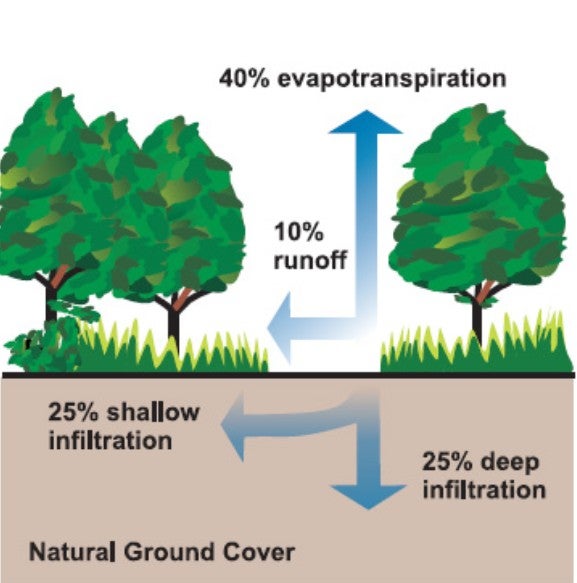
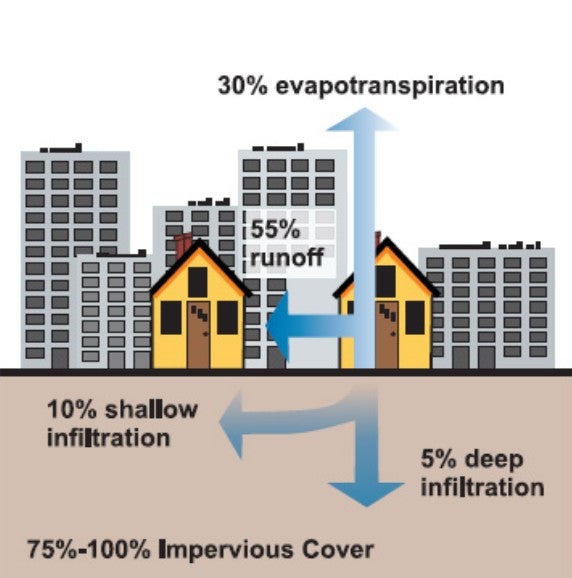
Stormwater runoff, the leading cause of water pollution according to the EPA, is becoming more of an issue as impervious surfaces increase, more chemicals are used, and rain events intensify. At RI NEMO, we are working with local communities to give them the tools they need to tackle stormwater issues and implement more low impact design measures. We offer training materials, manuals, and other guidance to both educate on stormwater issues and help communities take action to implement sustainable stormwater management.
Rhode Island Local Officials’ Stormwater Training for Planning Boards

RI NEMO has worked with the Rhode Island Division of Statewide Planning and the Southern New England Program (SNEP) Network to produce a stormwater training for Rhode Island planning board officials. The training includes a general background on stormwater issues in Rhode Island and walks through using the Low Impact Design (LID) Municipal Self-Assessment, a great tool for understanding areas in a municipality where low impact design can assist with stormwater management.
LID Site Planning and Design Techniques: A Municipal Self-Assessment
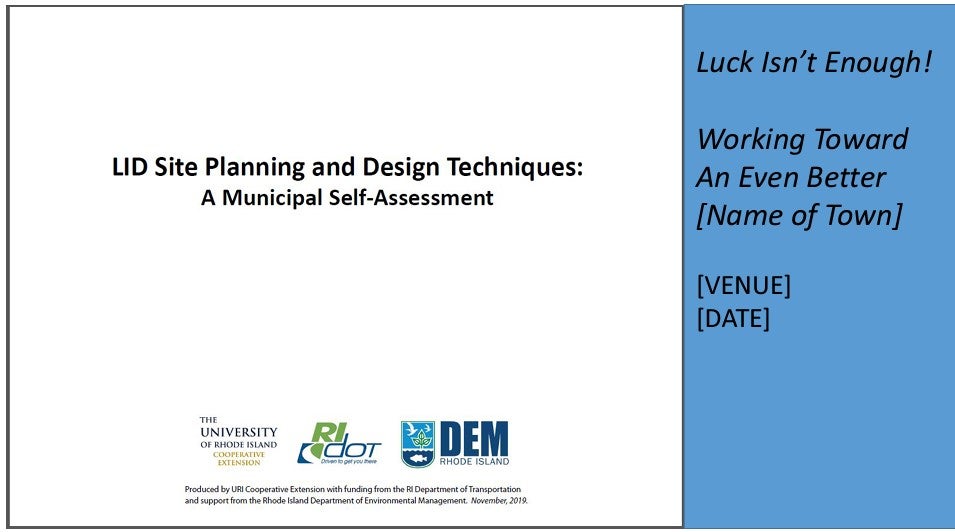
To assist municipalities with incorporating LID and managing stormwater RI NEMO produced a municipal self-assessment with funding from Rhode Island Department of Environmental Management (RIDEM) and Rhode Island Department of Transportation (RIDOT). The guide and its accompanying resources walk municipal officials through assessing infrastructure in their municipalities and identifying areas for improvement.
RI State Regulations, Manuals, and Guidance

Find guidance documents on state stormwater and LID regulations, various manuals about installing LID, and guidance on how to maintain LID infrastructure.
Additional Stormwater Resources, Websites, and Factsheets

Explore factsheets and resources co-produced by RI NEMO on RIDEM’s Stormwater Solutions page. Learn about other organizations in the state who are working towards better stormwater management through the use of LID and GI.
Soil Mapping, Soil Erosion, and Sediment Control
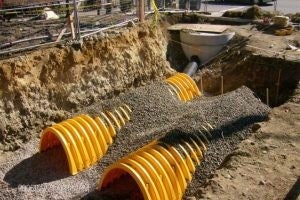
Review the Standards and Procedures for Site Specific Soil Mapping in Rhode Island guide and explore resources on RIDEM’s Soil Erosion and Sediment Control webpage. Find factsheets, a training for construction professionals, RIDEM’s Soil Erosion and Sediment Control website, and a checklist for soil erosion control violations at construction sites.