
The University of Rhode Island’s Cooperative Extension Water Quality Program is testing private well water and wastewater at selected households to better understand the presence of PFAS (per‑ and polyfluoroalkyl substances) in Rhode Island homes. PFAS, which is a group of chemicals widely used in both industrial processes and consumer products, have been detected in drinking water across the United States, and exposure to PFAS is linked to potentially adverse health effects. This University of Rhode Island Institutional Review Board-approved study will provide residents with information to help reduce PFAS exposure in the home and contribute to a better understanding of PFAS exposure and contamination in local drinking water supplies.
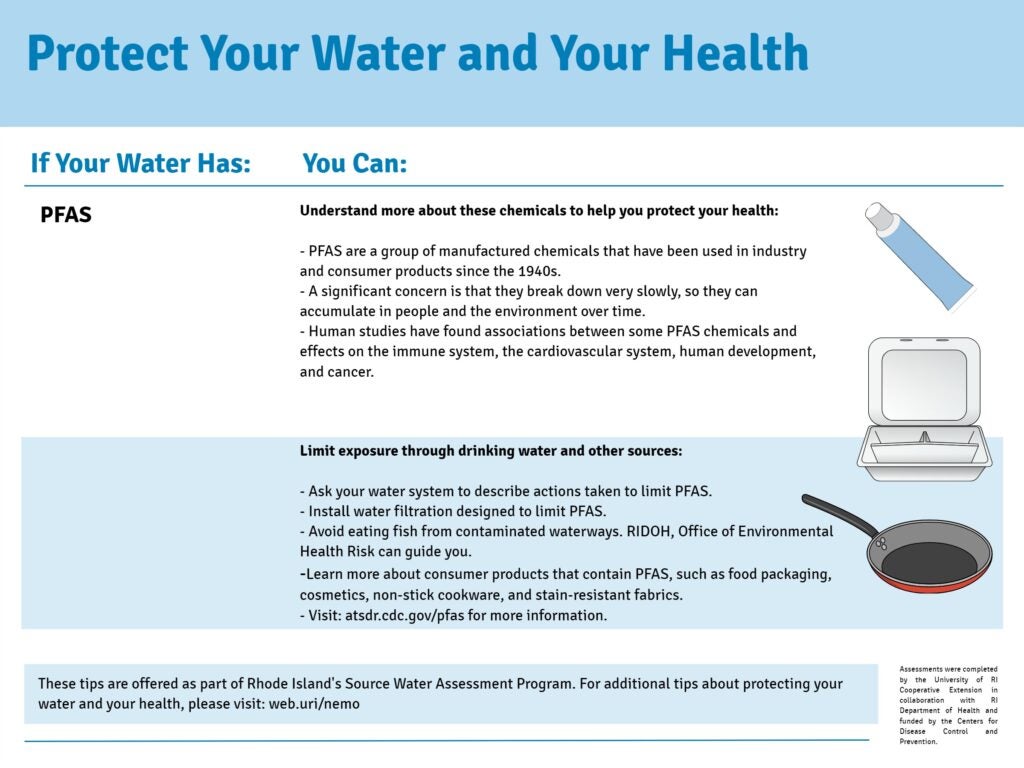
PFAS are often referred to as “forever chemicals” due to their ability to persist in the environment. Because PFAS are commonly used in everyday products, such as non-stick cookware, stain-resistant fabrics, food packaging, and firefighting foam, they have ben detected in surface water, groundwater, drinking water, and soil throughout the United States. PFAS exposure can occur through drinking water, eating food, or breathing air containing PFAS.
Public water systems are required to monitor for PFAS under the Safe Drinking Water Act (SDWA) in order to meet federal regulations protecting human health, and the Rhode Island Department of Health (RIDOH) regularly oversees public water systems to ensure compliance with state and federal regulatory requirements. However, little information is available about PFAS in drinking water from private wells, which are not required to complete routine testing for PFAS or any other contaminants.
In coordination with RIDOH, we selected the towns of Charlestown and Exeter to begin our sampling efforts. Both communities fall within a RIDOH Health Equity Zone and have documented PFAS detections in one or more public water systems within their municipal boundaries. Households located within a 1/2-mile radius of a public water system with a PFAS detection will be chosen to sample private wells and wastewater for PFAS at no cost to the homeowner. No public water system within our study area exceeded the current Rhode Island Interim Drinking Water Standard of 20 parts per trillion (ppt). All samples will be analyzed by a state‑certified laboratory to determine the presence and concentration of PFAS, if detected. Participation in this University of Rhode Island Institutional Review Board–approved study is voluntary. Some funding is available to assist homeowners with treatment costs if private well results show PFAS levels above 20 ppt- the level at which public water systems are required to take action to lower the level of PFAS under state regulatory requirements.
For more information about the project, the signup link for eligible homeowners, and resources on PFAS, visit the PFAS in Rhode Island Homes project website.