
Neonatal expert spearheads efforts for new lab, increased research experience
Nurses, nurse practitioners and nursing students continue to spend more time at the bench conducting lab science, which not only contributes to the advancement of medical research, but also helps them achieve a deeper understanding of their patients’ condition, improving the care they provide.
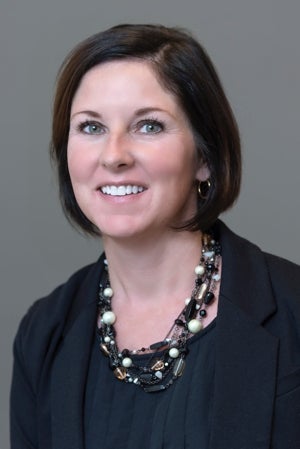
University of Rhode Island College of Nursing Assistant Professor Amy D’Agata spent much of her early career as a neonatal intensive care nurse at the bedside of her patients, assessing their condition and caring for their every need. As she transitioned into academia, she took on more of a research role, which she said is a natural transition for a nurse or nurse practitioner who is essentially practicing science every day.
“There are nurses whose entire careers are bench science. It’s becoming more and more important for practicing nurses,” D’Agata said. “This access to research science is relatively new in colleges, but there are plenty of schools of nursing that are focused on bench science.”
Among that group is the URI College of Nursing, where students have access to the state-of-the-art Nursing Education Center, which opened in Providence in 2017. The center is the educational anchor of a regional hub for health care learning, practice and biomedical research sprouting up on land once occupied by Interstate-195. It houses URI’s graduate nursing programs, from its master’s degree offering — which U.S. News & World Report ranks in the nation’s top 100 — to doctor of nurse practitioner and Ph.D. degree tracks. The NEC contains multiple research and practice labs, including advanced simulation labs, where nurse practitioner students hone their skills in a lifelike hospital or in-home setting.
“Working in this type of environment gives nurses and nurse practitioners a different way to look at the patient experience,” D’Agata said. “Being able to understand what’s happening to a patient from a more physiological perspective will help them improve nursing practice, and ultimately care.”
The College should soon have another state-of-the-art research lab for students to utilize, thanks to D’Agata’s efforts to secure a RO1 grant from the National Institutes of Health for a genetics and epigenetics research lab. The College anticipates receiving the funding in Spring 2019.
The grant and the lab are part of D’Agata’s biobehavioral research into the environment of the NICU and how it may influence neurodevelopment. Treatment received in intensive care can be stressful for the patient, particularly premature newborns who have a biological predisposition to stress, D’Agata said. She has broken down the levels of stress infants experience into four categories — Extreme (such treatments as intubation or chest tube insertion; Very (blood work, IV insertion); Moderate (diaper changes, position changes); and Mild (everyday activities like taking a bath).
“We measure daily stress and pain exposure over a period of time,” D’Agata said. “When babies are very premature or very sick, even moderate stress can be perceived. What does that stress mean for brain development?”
In the new bench lab, D’Agata and her team will measure stress hormones like cortisol, study genotypes and examine biomarkers through saliva, blood and urine samples to help determine those infants who are predisposed to stress, and how standard care in the NICU is impacting them.
“The end goal is to look for opportunities to modify practice to decrease stress exposure at such a vulnerable time,” D’Agata said. “Really, all the work is focused on finding ways to better support infants.”
In addition to continuing her research, D’Agata teaches pediatrics, pediatric simulation and genetics to undergraduate and grad students, and is adding an online course on precision medicine in the Spring 2019 semester. Her research isn’t limited only to infants. She works collaboratively with other faculty members focused on biobehavioral research into children and adults. Working in a research lab helps expand students’ experience, improve their patient care skills and expose them to new opportunities in the profession.
“There are many different ways faculty members can expose you to the profession,” D’Agata said. “It’s all about providing a well-rounded growth experience for students.”