
Welcome to the Heber W. Youngken Jr. Medicinal Garden, a medicinal garden centered on connection, healing, and education. Home to over 300 species of medicinal plants, the garden provides a space where visitors can explore the history and uses behind plants used for traditional healing and modern medicine. This audio tour provides an immersive experience, where visitors can hear stories told by Silvermoon Mars LaRose, a member of the Narragansett Tribe, about the cultural and medicinal significance of some of the many plants housed in the garden.
The following audio tour takes visitors through an immersive storytelling experience of the medicinal plants in the garden. Specifically, this tour shares details, descriptions, and stories about the traditional Indigenous knowledge of some of the plants that have long inhabited Rhode Island. Visitors are welcome to start and stop at any point along the tour – simply tap your phone to the black circular chips by a sign to listen to the audio. Each audio clip is around five minutes long or less, allowing time to stop and observe the plant, read the descriptions, and connect the plant to the story you hear.
Audio Tour Collaborators
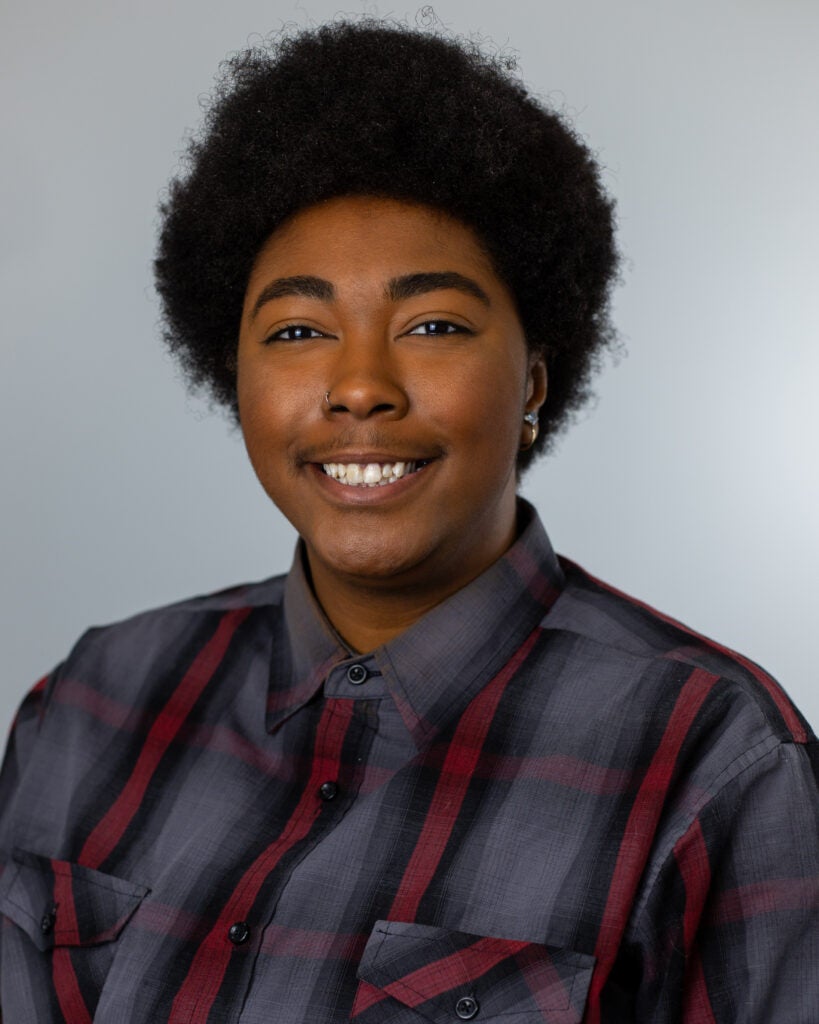
Yvonne Wingard is an alum of the Master of Environmental Science and Management (MESM) Program at the University of Rhode Island (M.E.S.M. ’26). Their work and research interests center on conservation, environmental anthropology, and science communication. The garden audio tour was started as part of their internship component for the Science Writing and Rhetoric (SciWrite) Certificate under advisor Dr. Madison Jones.
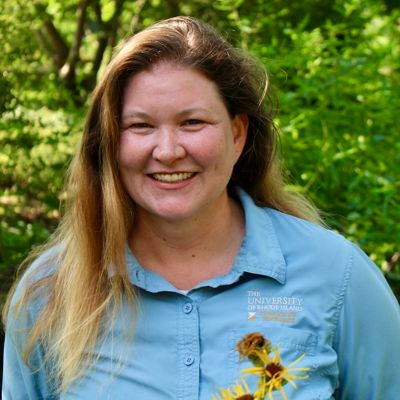
Elizabeth Leibovitz is the Garden Coordinator for the Youngken Medicinal Garden housed in the College of Pharmacy. She is also an experienced educator with an interest in ethnobotany and horticulture. Leibovitz was inspired to create the audio garden tour as a way to center Indigenous tribes in the history of plant medicine, shedding light on the unique ways in which plants have been used in Native history, culture, and medicine.

Madison Jones is an associate professor in the Professional & Public Writing and Natural Resources Science departments. He also directs the Digital Writing Environments, Location, and Localization (DWELL) Lab, which focuses on innovative approaches to science communication and provides immersive, experiential opportunities through the use of digital technology.
Next: Storyteller Introduction