
Digital Writing Environments, Location, and Localization (DWELL) Lab
The DWELL Lab investigates how location-based media are changing the ways that writers and readers interact with place. DWELL is a collaborative initiative between the Departments of Professional & Public Writing and Natural Resources Science that focuses on innovative approaches to science communication. We provide funded experiential learning opportunities to graduate and undergraduate students through student grants and awards as well as through our funded community-engaged digital projects. Projects in the lab focus on the use of mobile, locative, and wearable technologies for community-engaged science communication, social justice, and environmental advocacy.
DWELL works at the nexus of science and technical/professional writing, rhetorical field methods, and digital production to create high-impact experiential learning initiatives in support of public interests and local communities. Through a foundation in the study of rhetoric, we combine spatial theories, user-localization, and place-based methods with emerging technologies to build platforms that foster equitable knowledge-production within local communities.
Connect with us on social media.
News
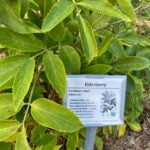 Medicinal Garden Audio Tour - Yvonne Wingard, a DWELL Affiliate and recent graduate of Master of Environmental Science & Management (MESM), has created a site-specific audio tour of the Youngken Medicinal Garden to cultivate care for six important medicinal plants. This immersive work brings Indigenous knowledge and experience of medicinal plants to the forefront through an audiovisual tour accessible via […]
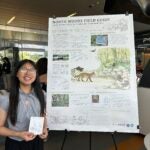 DWELL Affiliate Ellie Lin Presents Research on the North Woods Field Guide - The landscape of URI’s North Woods holds layered histories–evidence of Narragansett inhabitance, alongside the walls left by colonial settlers, a solar panel array built on a remediated Superfund site, and an intricate ecosystem of vernal pools, wetlands, and dense undergrowth. The North Woods is a testament to the ways humans relate to and shape their […]