
Iceland’s striking landscapes—shaped by volcanoes, glaciers, and the North Atlantic—have long benefited from a natural isolation that limited the spread of non-native species. Today, that isolation is no longer enough.
Invasive species are increasingly present, arriving through imported plants and soil, goods moving within the country, organisms entering harbors and rivers, and even seeds carried on tourists’ clothing and shoes. With a population of roughly 400,000 and over two million annual visitors, tourism in particular has become a major pathway for new species, creating risks for both Iceland’s ecosystems and its economy.
“Those feeling the greatest impacts are those whose livelihoods depend most immediately on Iceland’s land and waters,” says Laura Meyerson, professor of natural resources science at the University of Rhode Island and a Fulbright–National Science Foundation Arctic Scholar.
Salmon-river managers, anglers, and communities connected to wild fisheries are monitoring escaped farmed Atlantic salmon to protect native stocks. In coastal areas, fishers and port communities are paying closer attention to changes in marine ecosystems and emerging risks for fisheries. On land, farmers, foresters, and restoration practitioners are increasingly working within a biosecurity framework, carefully considering what species to plant, monitoring imports for pests and pathogens, and sometimes navigating contentious decisions about land use. Local residents also play a role, as gardens and settlement areas can serve as entry points for invasive species, requiring vigilance and preventive actions.
Meyerson emphasizes that Iceland’s vulnerability is often underestimated. Historically, harsh weather provided a natural barrier to biological invasions, but climate change is shifting conditions, making the country more hospitable to new species. Restoration and afforestation projects can unintentionally support the establishment of previously absent organisms. This creates what Meyerson calls an “invasion debt,” where species introduced today or in the past may only show their full ecological and economic impacts in the future.
The challenge is not simply managing individual species, Meyerson notes, but building a coordinated national response. That need became clear during a recent international workshop she organized.
More than 80 researchers, policymakers, and environmental practitioners from across Iceland and abroad convened last month at the Marine and Freshwater Institute in Hafnarfjörður for the workshop Alien Species in Iceland. Sponsored by the Natural Science Institute of Iceland and Fulbright Iceland, the event brought together participants from the United Kingdom, Czechia, Germany, Canada, and the United States to address the growing threat of invasive species.
“It is incredibly important for people from all of these sectors – industry, the public, academia, and the government – to talk to one another and learn about how each sees the issue of biological invasions, and what the impacts are,” Meyerson says.
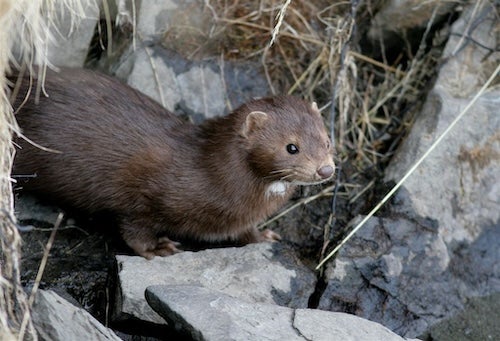
Multisector groups help reveal who benefits from introducing non-native species and who bears the costs, which are often very different. For example, while the fur industry profited from American mink in Iceland, escaped mink have harmed native birds like puffins, ultimately affecting biodiversity, conservation efforts, and tourism. Bringing stakeholders together fosters understanding and collaborative solutions to complex challenges.
Ultimately, participants emphasized the need for stronger collaboration, increased investment in monitoring and research, and improved public communication. “Success would be a national biosecurity strategy for Iceland that included strong regulations on invasive species and to establish a coherent national framework for regulations, research and best practices, invest in monitoring and pathway surveillance, improve communication and outreach, and ensure that horizon scanning and risk assessment are linked directly to prevention and management decisions,” Meyerson says.
The workshop also highlighted the importance of addressing gaps in coordination across institutions. “Conference participants were eager for a clearer regulatory structure, stronger collaborations, and a national framework or action plan,” Meyerson says.
Organizers view the workshop as a critical first step toward sustained action—one that can help safeguard Iceland’s ecosystems, economy, and communities from the growing challenge of invasive species. “We are already following up on this conference with efforts to make these changes happen,” Meyerson adds.