
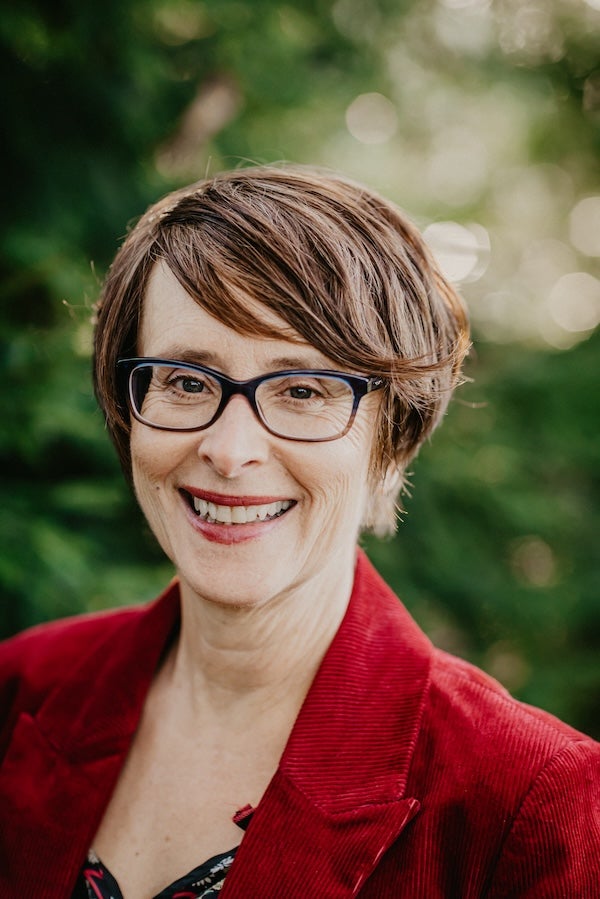
Climate change can feel overwhelming. Fara Warner believes science communication doesn’t have to make it worse.
As the executive director of the University of Rhode Island’s Metcalf Institute, Warner first took part in the Media Transformation Challenge, a competitive leadership program for journalists and communicators, in 2020. As part of that program, she set herself a goal: “shift the coverage of climate change from unsolvable and apocalyptic to actionable and engaging.”
That philosophy has guided her work ever since, shaping programs at the Metcalf Institute that help journalists and scientists communicate climate and environmental topics in ways that inform communities, build trust, and inspire action.
Now, Warner has been selected for an advanced “deep strategy” cohort of the Media Transformation Challenge, bringing together alumni for another round of coaching, collaboration, and strategic planning this month in Washington, D.C.
Returning to the program
Warner says the original program “transformed the way I approach problem solving and strategic thinking.”
The next phase begins this month at an important time for Metcalf Institute as it continues to strengthen its role in helping journalists and scientists communicate climate and environmental issues with the public. Warner will be coached by Doug Smith, one of the program’s founders and a mentor to her since 2020.
“I’m looking forward to applying the tools and strategies to my role as executive director at Metcalf Institute,” she says, noting that a focus of her time in the program will be on how Metcalf accelerates its work with scientists and communicators beyond its traditional trainings and fellowships.
Asked how the experience might influence her leadership, Warner says she does not yet know exactly what the outcome will be.
“I wish I knew,” she says. “That’s the beauty of this strategic work. You can come in with a plan and a strategy already in place, and the coaching and peer support can transform those in ways you never expected.”
From climate doom to community action
While Warner does not yet know what new ideas will emerge from the experience, she has already seen how the program’s approach can help turn ideas into meaningful action.
“The wonderful thing about this program is that you set big lofty goals and then you also have tools to actually go about achieving it,” she says.
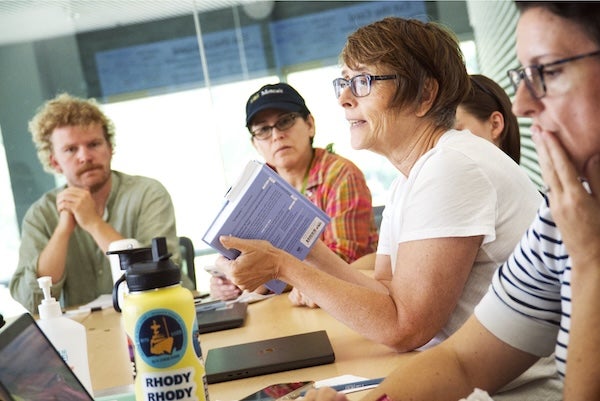
That mindset has shaped Warner’s work throughout her career. In her previous role as climate director at the Solutions Journalism Network, she helped build climate journalism fellowships and trainings focused on solutions and community, helping journalists understand how to create stories that engage audiences.
“The solutions focus helped with the ‘unsolvable’ aspect of climate journalism because this type of reporting can help communities find agency and action in what can seem insurmountable issues related to climate,” she says.
Since joining Metcalf Institute, Warner has carried that philosophy into the institute’s programs. “At Metcalf, I’ve built this ethos into our existing programs such as the Annual Science Immersion Workshop for Journalists but also in our new Climate Ready Newsroom fellowship, which centers community and solutions so that the outcome of the work is journalism that doesn’t cast climate change and its effects as unsolvable, because we know what the solutions are, and importantly that are something anyone can be engaged.”
Communicating hope without sacrificing truth
Warner says that approach is especially important as communities experience the growing impacts of climate change firsthand.
“It is really easy to descend into climate doom these days,” she says. “This summer we’ve experienced heat domes and then dangerous air quality levels as smoke from wildfires in the Midwest and Canada swept across New England.”
But she believes journalism should do more than document those challenges—it should help people understand how to respond.
“While we need to be honest and truthful about what is happening, we also need to be honest about what we can do both as a society and as individuals,” she says. “Building action and engagement into our communication and journalism can also help people who have different views or opinions of climate change come together for the common good of their communities.”