
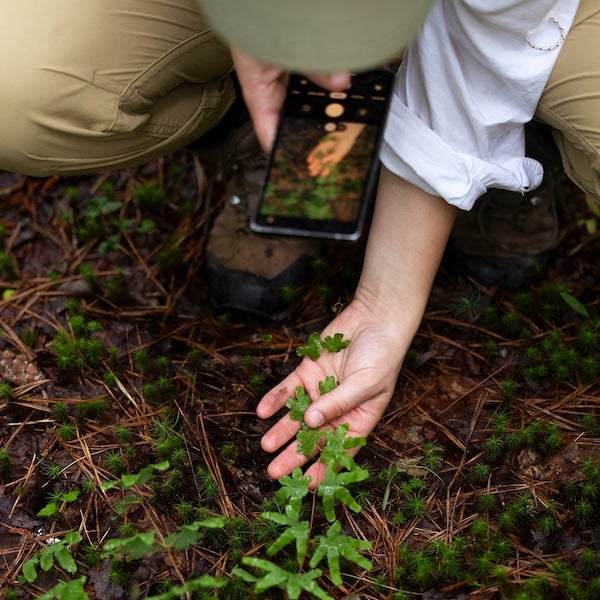
URI Botany Fellow used decades-old records to find rare plants, uncovering clues about Rhode Island’s changing landscapes along the way.
KINGSTON, R.I. – October 2, 2026 – This summer, Raven Szewczok spent long days hiking through forests, wetlands, and meadows across Rhode Island, searching for plants that, in some cases, had not been documented in decades.
The University of Rhode Island student was armed with old records, GPS coordinates, and field notes. Sometimes the search led exactly where an old record said it would. Other times, the plants were nowhere to be found. And, occasionally, the team found something they weren’t expecting at all.
The hunt might seem highly specific — looking for one plant in one corner of Rhode Island. But knowing where rare plants still exist can help scientists understand how the state’s ecosystems are changing and inform decisions about conservation, land management, and which places may need protection.
For Szewczok, the work has also meant discovering just how much biodiversity can be hidden in Rhode Island’s relatively small landscape.
Tracking plants through Rhode Island
Szewczok, of East Greenwich, Rhode Island, is now in her senior year at URI, where she majors in environmental science and management, wildlife conservation biology, and art. Those interests merged this summer in her role as URI’s 2026 Botany Fellow.
Launched in 2025, the Botany Fellows program is a collaboration between the Rhode Island Natural History Survey, based at URI, and the Brown University Herbarium. It brings together undergraduate students from URI and Brown to work together with professional and community botanists to revisit historical records of rare plants and document their current condition.
The resulting information is entered into a state-wide biodiversity database maintained by the Survey and supports conservation, research, education, and land-management decisions.
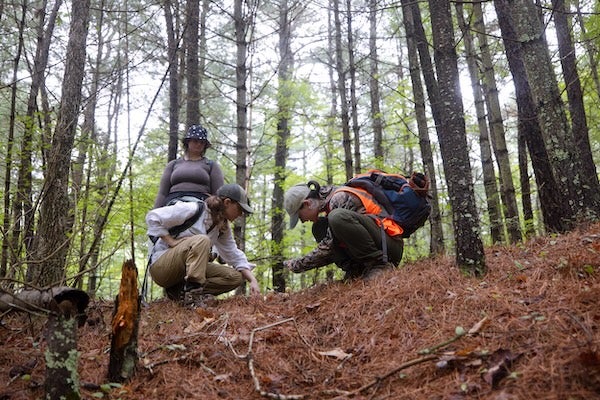
On a typical field day this summer, Szewczok and her team met at a predetermined site with a list of plants to search for and a rough route. They studied documents with photographs, habitat descriptions, and identification tips, then used Gaia GPS to navigate toward locations where rare plants had previously been recorded.
When the team found a plant, they confirmed its identity, often using a hand lens and GoBotany identification keys. They photographed the plant and recorded details about its location, habitat, and neighboring species. Then they kept looking – typically for four to six hours, sometimes in extreme heat or challenging weather.
The work required patience, stamina, and a willingness to keep searching when the evidence suggested a plant should be somewhere nearby but refused to reveal itself. Because sometimes the old directions were precise, but sometimes they were inaccurate, nonspecific, or misleading.
“It literally feels like finding a needle in a haystack,” Szewczok said. “You never know exactly what or when you’re going to find something, but if you have faith to keep going because you believe in the importance of the cause, the reward of finding them is so worth it.”
Across 37 sites, the team surveyed 172 plant populations, rediscovering 50 populations. They identified 27 new ones and marked 95 populations absent.
Finding clues to a changing landscape
One of the most surprising experiences for Szewczok was finding individual plants documented decades earlier in precisely the same locations. “The oldest plant we found was last seen in the 1960s,” she said. “It both is validating to the effort of our work, and hugely impressive to the plant’s resilience.”
At some sites, the team walked “from a swampy wetland through hardwood forests to open dry meadows,” with each habitat supporting different plant communities and ecosystems. That diversity is precisely why updating rare-plant records matters.
“Plants affect everything,” Szewczok said. “They are the building blocks of ecosystems. Their health and presence support the existence of animals, other plants, and the landscape itself, which we all live on and enjoy the benefits of.”
“We’re really proud of the work done by Raven and the Botany Fellows from Brown,” said David Gregg, executive director of the Natural History Survey. “In times of such great environmental change, institutions and interested people need to work together to have the best chance for preserving biodiversity; just like in ecology, everything is connected!”
The fellowship, funded by the Narragansett Bay Estuary Program, connected Szewczok to a network of people, from Brown students and faculty to professional botanists and experienced community volunteers.
“I learned so many skills from the people I worked with regarding many facets of botany, but more importantly I came out of the experience inspired and nourished by a community of people who are also passionate about botany and conservation,” she said. “It gave me an incredible amount of hope!