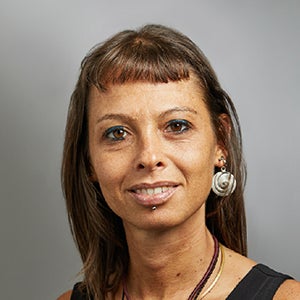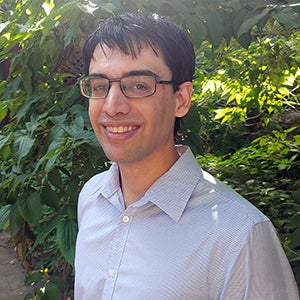
[Talk] Jiajun Tang: Network Goodness-of-Fit for the Block-Model Family

When: Wednesday, February 4, 10:00 AM Where: Tyler 053 Abstract The block-model family has four popular network models (SBM, DCBM, MMSBM, and DCMM). A fundamental problem is how well each of these models fits with real networks. We propose GoF-MSCORE as a new Goodness-of-Fit (GoF) metric for DCMM (the broadest one among the four), with […]

Continue reading "[Talk] Jiajun Tang: Network Goodness-of-Fit for the Block-Model Family"

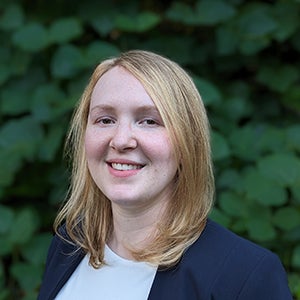
[Talk] Harini Suresh: From universal models to local agency: opportunities for more community-controlled AI

When: Friday, January 30, 3:00 PM Where: Tyler 055 Abstract As AI systems are increasingly introduced into our everyday lives and high-stakes domains, it’s critical that decisions around their use, design, and governance center the specific contexts and communities they affect. My research explores participatory approaches that support community control, domain specificity, and local agency […]

Continue reading "[Talk] Harini Suresh: From universal models to local agency: opportunities for more community-controlled AI"

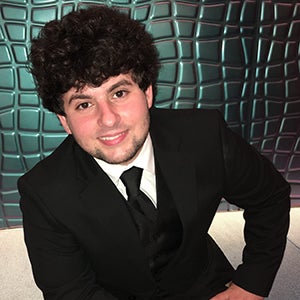
[Talk] Krishna Venkatasubramanian: Designing for accessibility for adults with intellectual and developmental disabilities around traumatic contexts

When: Friday, December 5, 3:00 PM Where: Tyler 055 Abstract There are over 7 million people with intellectual and developmental disabilities (I/DD) in the US. I/DD (e.g., Down syndrome, Williams syndrome, Autism, Smith-Magenis syndrome, etc.) are a set of disabilities that negatively affect the trajectory of an individual’s intellectual, emotional, and/or physical development. The abuse […]

Continue reading "[Talk] Krishna Venkatasubramanian: Designing for accessibility for adults with intellectual and developmental disabilities around traumatic contexts"

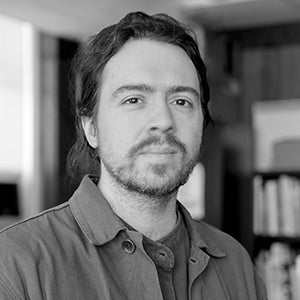
[Talk] Elizabeth Bersson: Feature aware covariance estimation, with application to mixtures of chemical exposures

When: Friday, November 14, 3:00 PM Where: Tyler 055 Abstract The motivation of this research is to improve inferences on the covariation in environmental exposures, motivated by data from a study of Toddlers Exposure to SVOCs in Indoor Environments (TESIE). The challenge is that the sample size is limited, so empirical covariance provides a poor […]

Continue reading "[Talk] Elizabeth Bersson: Feature aware covariance estimation, with application to mixtures of chemical exposures"

[Talk] Will Tomlinson: Providing Reproducible and Equitable AI Access in Academia

When: Friday, November 7, 3:00 PM Where: Tyler 055 Abstract: This presentation introduces Boston University’s Retrieval-Augmented Generation (RAG) Framework, an open-source, low-code platform developed by the Software & Application Innovation Lab (SAIL) to make large language model (LLM)–powered applications accessible, reproducible, and secure across academic environments. The framework can integrate seamlessly with university research computing […]

Continue reading "[Talk] Will Tomlinson: Providing Reproducible and Equitable AI Access in Academia"

[Talk] Orit Shaer: Tangible, Embodied, and AI-Augmented Interaction for Work and Learning

When: Friday, October 24, 3:00 PM Where: Tyler 055 Abstract: For several decades, tangible and embodied interaction (TEI)—human-computer interaction that engages our bodies and physical environment—has been the topic of intense research. My recent book Weaving Fire into Form: Aspirations for Tangible and Embodied Interaction (Spring 2022, ACM Books), co-authored with Brygg Ullmer, Caroline Hummels, […]

Continue reading "[Talk] Orit Shaer: Tangible, Embodied, and AI-Augmented Interaction for Work and Learning"

[Talk] Rithmbhara Singh: Spatial and temporal modeling of single-cell gene expression using deep learning

When: Friday, October 17, 3:00 PM Where: Tyler 055 Abstract: Our current understanding of the regulation of cells is akin to solving a jigsaw puzzle. Many genomic factors governing cell development have been identified, resulting in vast data collection efforts. For example, obtaining single-cell-level spatial DNA organization or gene expression measurements at a continuous time […]

Continue reading "[Talk] Rithmbhara Singh: Spatial and temporal modeling of single-cell gene expression using deep learning"

[Talk] Daniel Votipka — Vulnerability Discovery for All: A Human-Centric Approach to Software Vulnerability Discovery

When: Friday, October 10, 3:00 PM Where: Tyler 055 Abstract: Software vulnerabilities persist as an important and costly challenge. Significant effort has been exerted toward automatic vulnerability discovery, but human intelligence generally remains required, and will remain necessary for the foreseeable future. Unfortunately, the pool of experts qualified to perform vulnerability discovery is small and […]

Continue reading "[Talk] Daniel Votipka — Vulnerability Discovery for All: A Human-Centric Approach to Software Vulnerability Discovery"