
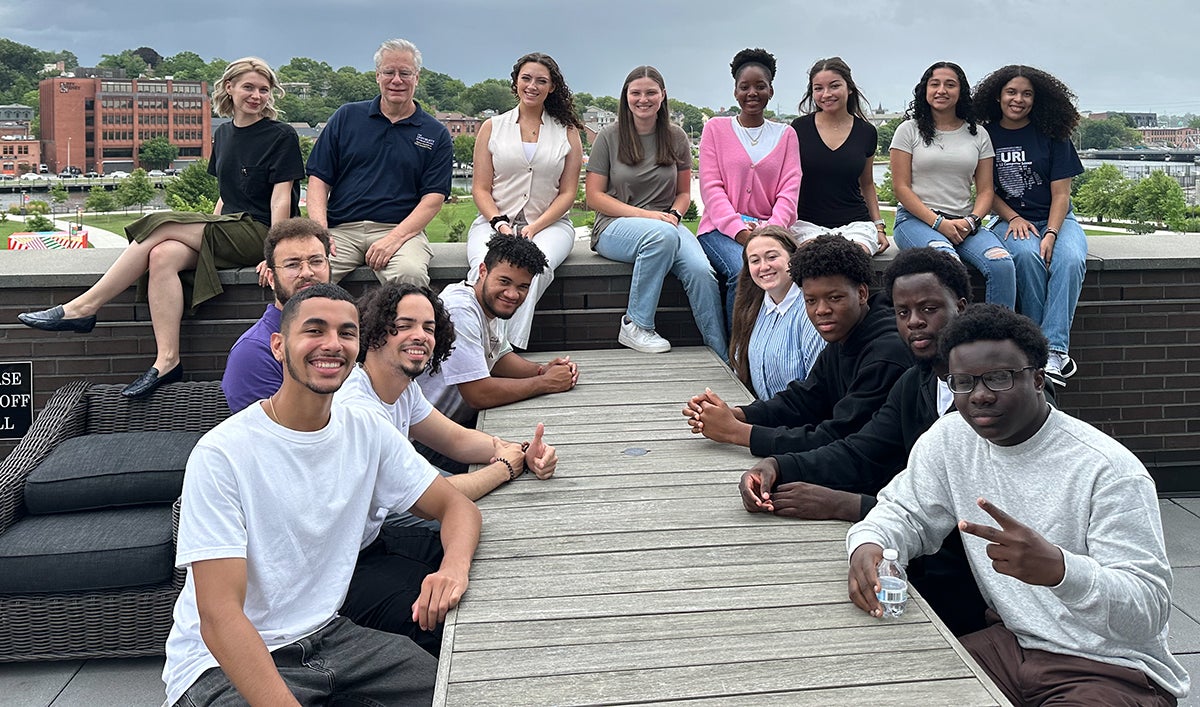
Welcome to CSta
We combine Computer Science, Statistics, AI, Data Science, and Cybersecurity to enhance multidisciplinary learning and research for undergrads and grads. Cross campus and industry collaborations involve faculty, students, scientists, artists, health care researchers, historians, and engineers.
Undergraduate & Graduate Courses
See our courses in Computer Science, Statistics, Data Science, and Cybersecurity, ranging from computing foundations to theory and statistics to systems and artificial intelligence.

Announcements
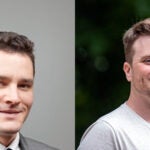 Noah Daniels and Shaun Wallace Receive NSF FAIROS Grant with Tufts Collaborators (5/13/2026) - Professors Noah Daniels and Shaun Wallace have been awarded a $600,000 National Science Foundation FAIROS (Findable, Accessible, Interoperable, Reusable, and Open Science) grant, shared between URI and Tufts University. The project addresses a gap in scientific research: while researchers across many domains generate vast amounts of data, existing metadata schemas are largely inaccessible to non-programmers. […]
 [Talk] Ed Lamagna: From Punched Cards to Quantum Cryptography: A Personal Retrospective on 50 Years of Computer Science (4/22/2026) - When: Friday, April 24, 3:30 PMWhere: Beaupre 105 Abstract:Ed Lamagna, Professor of Computer Science at URI, has served on the URI faculty for 50 years, arriving in the Fall of 1976. His professional interests lie at the intersection of computer science and mathematics. In particular, Ed contributes to the fields of computer algebra and the […]
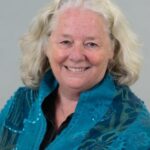 [Talk] Suzanne Mello-Stark: Election Security After 2020: Systems Held, Trust Didn’t (4/22/2026) - When: Friday, April 24, 3:30 PMWhere: Beaupre 105 Abstract:This talk argues that the biggest threat to elections today is not hacking, but doubt. Since 2020, election systems have become more secure. Paper ballots, risk-limiting audits, and improved coordination have made large-scale tampering with votes extremely difficult. But while the systems held, confidence in them did […]
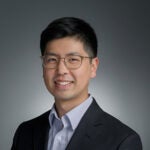 [Talk] Hoon Cho: Enabling Collaborative Genomic Studies with Privacy (4/15/2026) - When: Friday, April 17, 3:00 PMWhere: Tyler 055 AbstractThe sensitive nature of genomic data poses major challenges for data sharing and collaboration in biomedicine. Traditional safeguards often lead to fragmentation across data silos, hindering large-scale analysis. I will describe our recent work on secure federated (SF) algorithms, which combine cryptography and distributed computation to enable […]
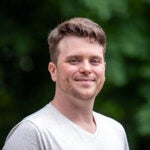 Shaun Wallace Named 2026 URI SSIREP Public Policy Fellow (4/3/2026) - Assistant Professor Shaun Wallace has been selected as a 2026 Public Policy Fellow through URI’s Social Science Institute for Research, Education, and Policy (SSIREP). Wallace’s fellowship project, “Exploring Cyber Dating Aggression in Real-Time Among Young Adults,” will prototype a web-based user-first privacy-preserving extraction pipeline for identifying cyber dating aggression (CDA) from their naturally occurring digital […]
 [Talk] Anny-Claude Joseph: Causal Inference under Spatial Interference (4/2/2026) - When: Friday, April 10, 3:00 PMWhere: Tyler 055 AbstractEnvironmental epidemiologists are increasingly interested in establishing causality between exposures and health outcomes. A popular model for causal inference is the Rubin Causal Model (RCM). An important assumption under RCM is no interference, that is, the potential outcomes of one unit in the study are not affected […]